Schools
Canonsburg Middle School Students Partner with CONSOL Energy
Students used project-based learning to research and present findings on fossil fuels
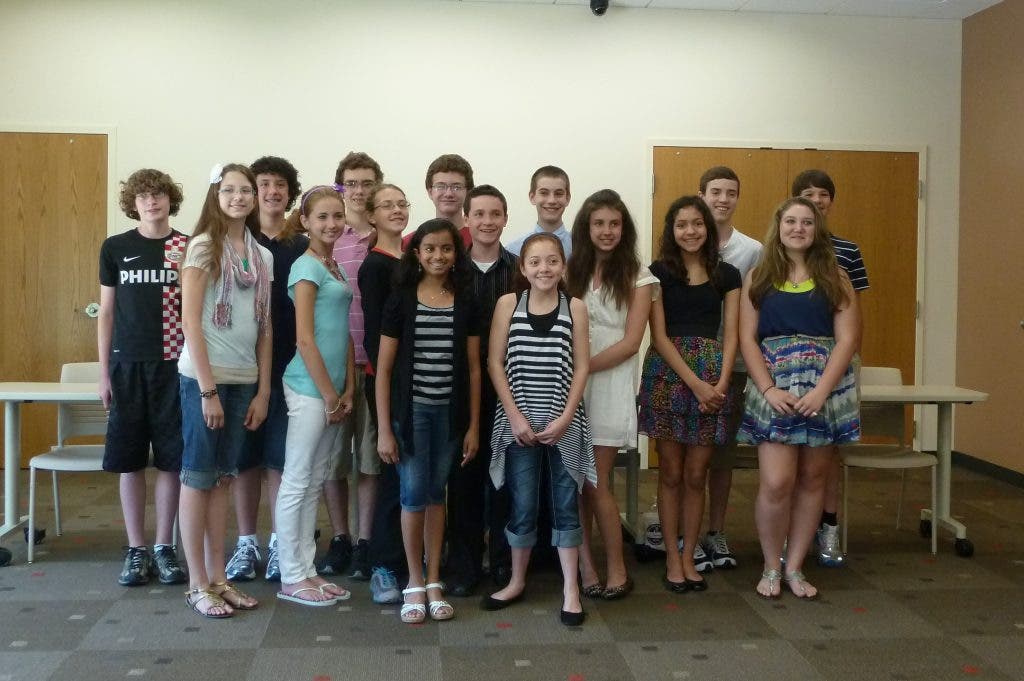


What started as a pilot program at , grew to become an interactive and cooperative learning experience between students, science teachers, and working scientists and engineers at CONSOL Energy.
CONSOL Energy readily agreed to sponsor a project-based, science learning program incorporating the STEM (science, technology, engineering, and math) disciplines to educate and emphasize the benefits and challenges of fossil fuel-based energy production.
The CMS Science Department chose the fossil fuel industry because of the great impact fossil fuels will have on students’ lives and the fact that there is a shortage of scientists and engineers in that industry as well as others.
Find out what's happening in Canon-Mcmillanfor free with the latest updates from Patch.
“This (project) shows students the importance of pursuing education and careers in science and engineering,” said Chris Nairn, one of the science teachers involved in the project.
Eighteen gifted students were divided into six groups with a science teacher and working scientist or engineer from CONSOL. Students chose a variety of different ways to present their findings to an audience of teachers, parents and CONSOL employees yesterday at the Frank Sarris Public Library.
Find out what's happening in Canon-Mcmillanfor free with the latest updates from Patch.
“Project-based learning allowed the students to choose what aspect of the topic to work on and use their skills best,” said Stephanie Kubik, science teacher and advisor to one of the seventh grade teams.
CONSOL provided $7,000 to help offset the costs of the project, which allowed the students to use Google Chromebooks as “digital backpacks.” They also utilized Web 2.0 and cloud technology. In addition to the money, CONSOL also provided the opportunity for the students to interact with professionals working in fossil fuels where they could ask questions, test equipment and even tour their facilities.
Specific topics chosen by the groups included how technology is used in protecting the environment during fossil fuel extraction, the capturing and storing of carbon dioxide, clean coal production and how technology has influenced the past, present, and future of fossil fuel extraction.
Several groups chose to present their findings by designing a website while others used a Learning Center format. One group created a documentary film with interviews, photos, voiceovers and more.
The website information was included in a glog, which is a digital posterboard with interactive sections including videos, Quick Response (QR) codes, surveys, tables, data and more. Each component is clickable and leads to more detailed information that the students discovered during their research.
Students interacted with each other, teachers and CONSOL professionals via the use of a Wikispace where all of their project information was stored and used toward their final projects.
“The true learning experience for the students is that this project was not graded and they volunteered. Sometimes they struggled, but they learned to work together, just like the real world,” Principal Greg Taranto said.
“I am extremely proud of the students. They are going to be future leaders.”