The Truth in Fiction
Find out what's happening in Doylestownfor free with the latest updates from Patch.
"Events at home, at work, in the street - these are the bases for a story." Maguib Mahfouz
I've learned wonderful things from reading, not the least of which is empathy. A writer who has been in my thoughts a great deal lately is Naguib Mahfous. Thanks to this man, who won the Nobel Prize for Literature in 1988, I feel a special kinship with the people of Egypt. They are more than the TV images of a deadly riot after a soccer game or a street filled with an angry mob. I don't mean to say that those images don't tell a story in their own right, but rather that, having read Mahfouz's Cairo trilogy, it's easy for me to empathize with the individuals who make up the crowd.
Find out what's happening in Doylestownfor free with the latest updates from Patch.
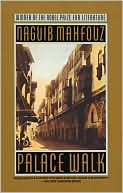
The first book in the trilogy, Palace Walk, set in the period during and immediately following World War I, introduces us to the family of el-Sayyed Ahmed Abd Gawad, a successful merchant; his wife, Amina; their two daughters, and three sons. I found it both fascinating and frustrating to spend time with Amina. Here's how the book begins:
"She woke at midnight. …Habit woke her at this hour. It was an old habit she had developed when young and it had stayed with her as she matured. She had learned it along with the other rules of married life. She woke up at midnight to await her husband's return from his evening's entertainment. Then she would serve him until he went to sleep."
It would be hard to imagine a life and attitude more different from mine than Amina's. Yet, due to the skill with which Mahfouz drew his setting, I vicariously live her life and respect her attitude, even if I only partially understand it.
Palace of Desire, the second book of the trilogy, takes place mostly in the 1920s and shows the effect of modern influences and political turmoil on the various family members. Kamal, the youngest son, goes to college and falls in love. He meets people whose ideas challenge the orderly world in which he grew up. Sugar Street covers the period from roughly 1935 through the end of World War II. As in the Palace Walk, Mahfouz draws his setting with exquisite detail, so that I absorb the culture and feel a part of this household.
I take vicarious part in the rapidly changing social and political climate of Egypt from World War I through the 1950s. I watch as the old ways disappear and a new world, seemingly without rules, takes its place, bringing unique challenges to each individual. Perhaps the most poignant for me was the plight of Amina. I turned the pages of the first book, longing for changes to occur that would give her some freedom, some control over her own destiny, only to realize that, after a lifetime of knowing exactly what was expected of her, freedom was a bewildering concept. Taken as a whole, the three books helped me understand a little better why change does not come easy in that part of the world. Having been given a glimpse into the life of one Egyptian family, I look into the faces in the crowds in the street and wonder where each member of that family would be in this situation. Watching the news, I am reminded that change continues to occur and that it is still not easy. Thinking of the books of Mahfous, I remember that each face in the angry crowd is a person with hopes and dreams much like mine.