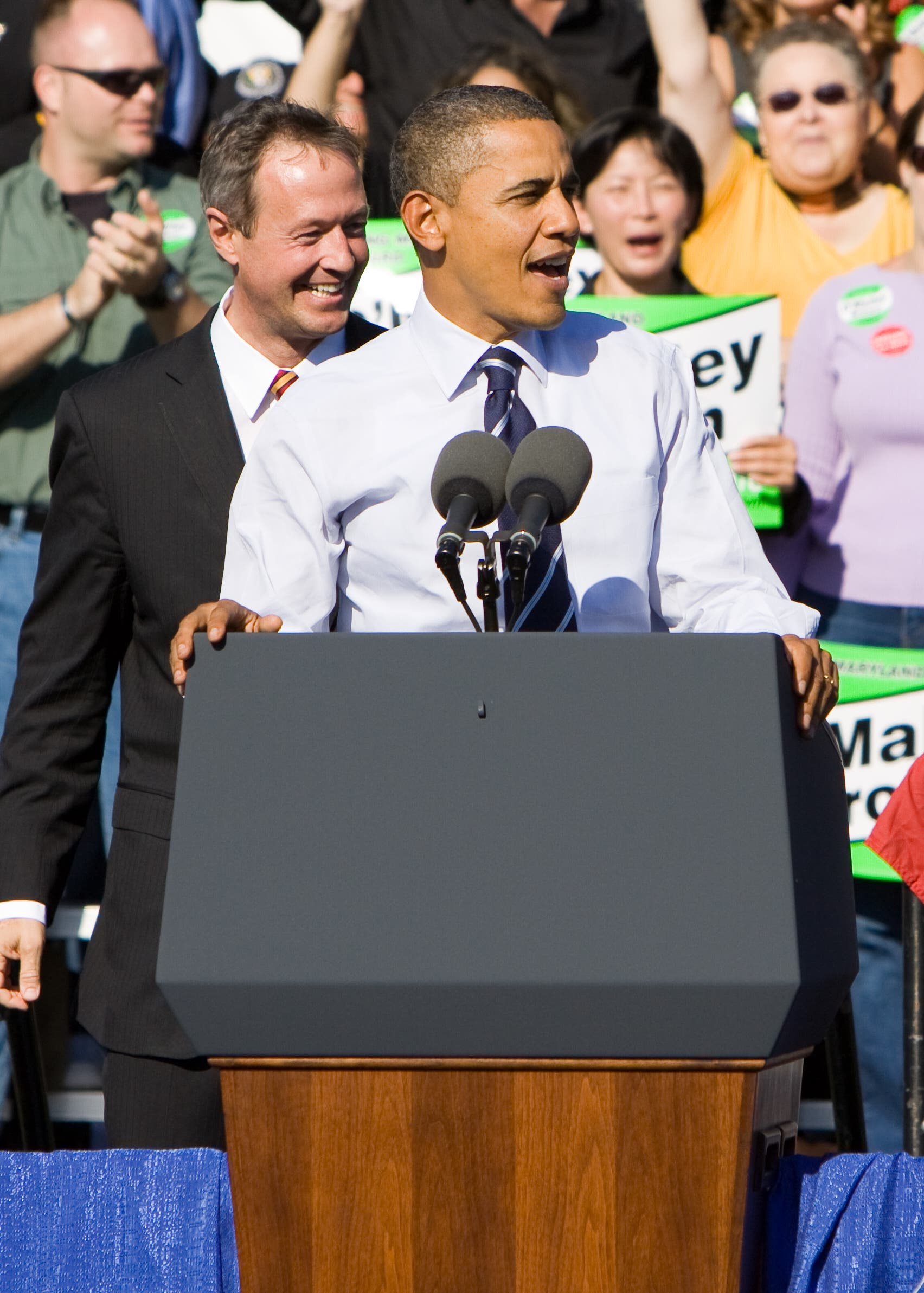
No one wants her grammar corrected on a date. But there are times when you really do want to speak correctly.
Since at least the beginning of his political career President Obama has bowdlerized the English language with an oft-repeated, "The reason is because..."
But the reason is never "because"... The reason is "that"... Someone must finally have pointed this error out to the President. The reason I believe this to be true is that he spoke the correct phrase in his 60 Minutes interview, televised May 8.
Find out what's happening in Eastonfor free with the latest updates from Patch.
Speaking about his knowledge of the risk to those Americans going into the bin Laden compound—in the dead of night—not knowing what they'd find inside, President Obama said, "The reason I concluded it was worth it is that we had devoted enormous blood and treasure in fighting back against al Qaeda ever since 2001..." I was unprepared for this euphony.
To someone who knows the rules, Obama's former grammatical deviance sounded like fingernails on a chalkboard. The way one speaks give authority to the subject one is speaking about. Scientists use the language and symbols of science to give authority to their papers in reputable journals.
Find out what's happening in Eastonfor free with the latest updates from Patch.
Journalists and other word crafters use grammar, as well as logic, to give authority to their insights and conclusions. Poets use the rules of poetry to create perfect poems. (Hint to biblical literalists: the Hebrew of the creation story follows the rules of poetry, not of science.)
When I was in the tenth grade in Freeport NY, Mrs. Albert told our English class that the department chair had recently discovered that they had forgotten to teach us grammar in grade nine and that poor Fredericka Albert had to do it now. But Mrs. Albert hated grammar (a confession we relished) and announced instead that she would distribute the text to be mastered but we'd have to teach each other.
Walking up and down the rows, she paired us off--assigning each dyad a chapter to present in the coming days and weeks of class. When she got to Debbie Katz and me she said something like, "You two have Chapter 8—Verbals. You can divide the three up any way you like." Without missing a beat, I responded, "OK, how about if Debbie teaches the gerund, I'll teach the participle, and we split the infinitive."
After friends pulled Mrs. Albert's fingers from around my throat we retreated in our groups and prepared our chapters. Since then (1963) the grammatical sin of splitting an infinitive has been sanctioned by popular usage. But just as the grammar of music makes the melody of a song beautiful, so the grammar of language makes our speech sound pleasing to the ear.
When we speak correct English it needn't sound stuffy or elite. It announces to the listener, without taking up time and without boasting, that we are likely well informed and well-read. If you want to argue that our schools were fine for you and thus they are fine, without investment of more money and resources, for our kids, your argument will not carry much weight if it contains error after grammatical error.
President Obama has tried to be a model father and a model husband during his presidency. He also believes that in a democracy there is something sacred about a consensus reached by rival political parties and so he seems to value such consensus over winning political victories for his own ideal vision for America.
In this sense he is a model politician for the new world economy and the emerging politics it demands. In his sometimes painful effort to give up smoking—even during periods of enormous stress—he has modeled self-discipline. And now, in this matter of language, he is also showing a willingness studiously to model the mellifluous music of our native tongue.