Politics & Government
Fish Hatchery Gets Approval
City Planning Commission unanimously approved an experimental fish hatchery at Hugh Moore designed to restock the Lehigh River with shad.
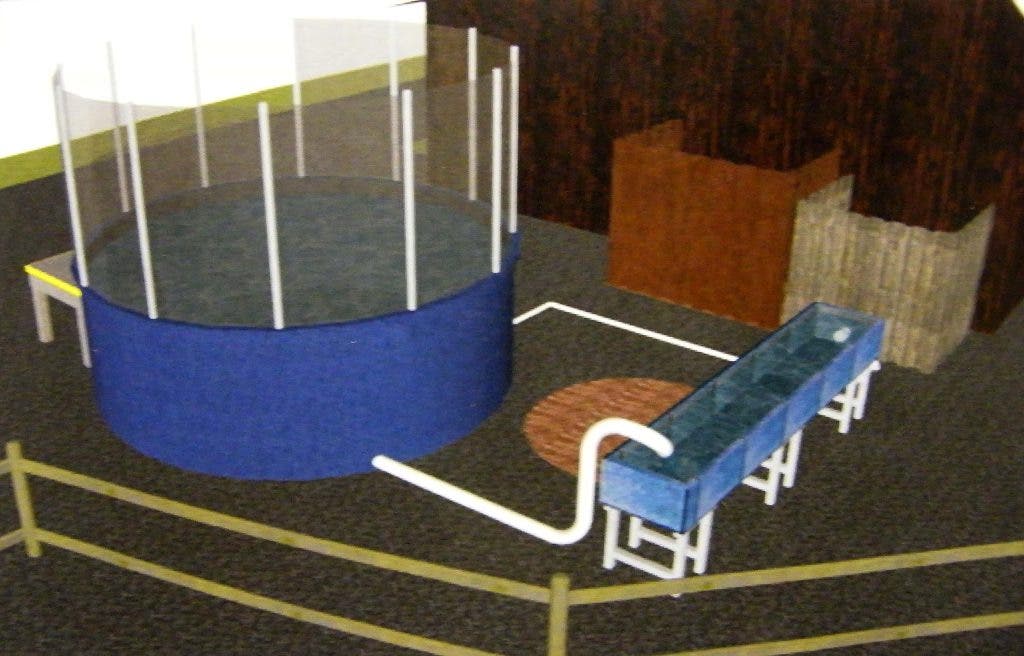
The Easton Planning Commission has approved an experimental fish hatchery for Hugh Moore Park.
Consisting of a 12-foot round modular tank and an accompanying assembly that will circulate water through the tank, incubate the water to the optimum temperature and sterilize it with UV light, the unit is the beginning of an attempt to restock the Lehigh River with shad, said Gerre Mohler, of the U.S. Fish and Wildlife Service told the commission Wednesday night.
“The intent is to restock the Lehigh with shad,” Mohler said, adding that numerous dams on the river have taken their toll on the river's shad population and that even though there are fish ladders designed to aid the fish overcome the dams, they are “not as effective as they could be.”
Find out what's happening in Eastonfor free with the latest updates from Patch.
The set-up will be temporary, with it being placed in the park for the duration of April and May. It will hold about 100 breeding fish, at a ratio of three males for every two females, and if the hatchery is successful, it could produce several million eggs.
At the end of the breeding season, the breeding shad will be released back into the Delaware River where they came from, and the eggs will be placed in the Lehigh, Mohler said. Shad locationally imprint when they are young, he added, so it makes sense to return the adults to their original location and the fry to the area the state wishes to repopulate, he added.
Find out what's happening in Eastonfor free with the latest updates from Patch.
Fry will be chemically marked before release so authorities can check the success rate of the specially spawned fish in years to come.
The Nanticoke River Shad Hatchery in Seaford, Del., upon which the Easton shad hatchery pilot program will be based, has had a very good success rate with low mortality of breeding fish.
During the duration of the pilot program, a hatchery technician will be monitoring the project and will also be on hand to answer any question park guests may have about the set up. Explanatory signs and posters are also planned.
Because shad are 'skittish' fish, the tank is opaque to lessen their stress. A mirror or a monitoring camera is likely to be set up to give the public a view of the shad, Mohler said.
The tank is planned for a location near the mule barn and the park's main building, so it will be accessible to the public.
The set up is to be removed within one month of the end of spawning season, according to the one condition of the commission's approval. If the hatchery project shows promise, it may be done annually, officials indicated.