Politics & Government
Local Government Makes Fracking Hard to Handle
Neither side can be expected to deal with the regulations of more than 2,500 municipalities.
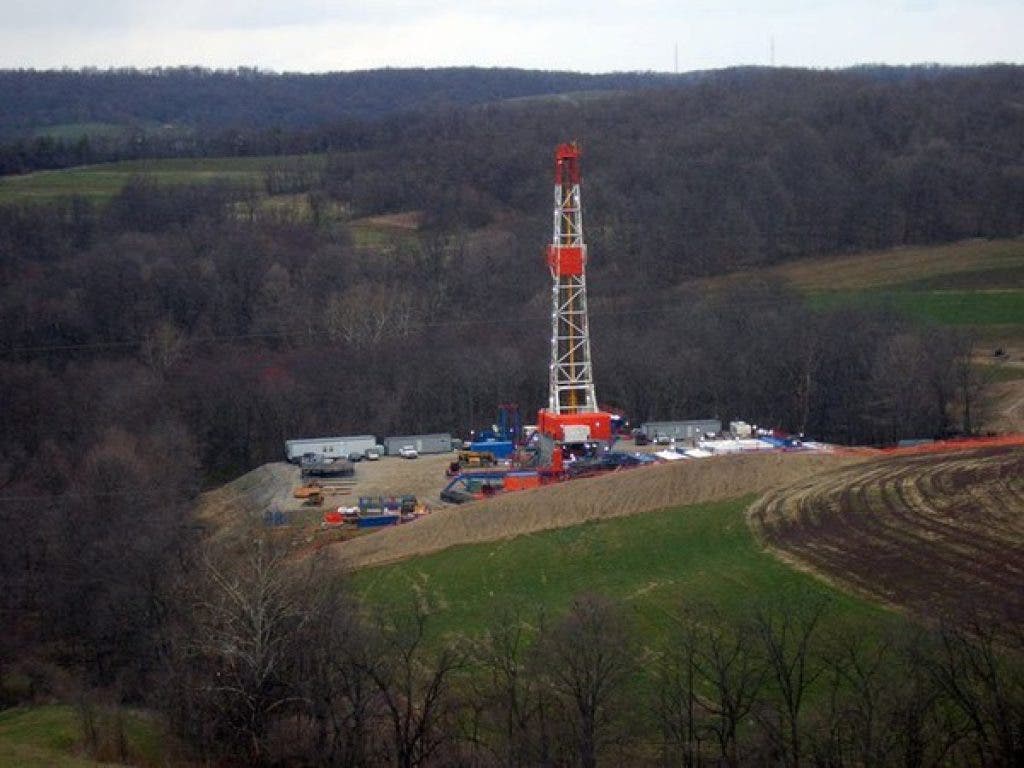
Last week, Republicans on the House Finance committee approved an impact fee on natural gas drilling in . The bill passed on a party line vote, over the objections of Democrats who took issue with two of the bill's main features.
One of the reasons Democrats gave for rejecting the bill was that it doesn't raise enough money. Under the Republican plan, Pennsylvania would have one of the lowest tax levies on in the nation, raising substantially less revenue than other proposals in Harrisburg that have bipartisan support. A well in Texas would raise 5 times more revenue over its life span than a similar well in PA.
The other objection Democrats raised was that the bill would overrule local zoning regulations on fracking. Unsurprisingly, this met with the ire of many township officials who see it as an intrusion on their political turf. Here is a typical example, from the Pittsburgh Post-Gazette :
Find out what's happening in Eastonfor free with the latest updates from Patch.
One size doesn't fit all when it comes to Marcellus Shale drilling in Pennsylvania, local government officials said a day after a state House panel moved to create statewide regulations that would supersede gas drilling ordinances already in place...
Some officials in and around Allegheny County aren't happy with Harrisburg's foray into what they see as local issues...
Find out what's happening in Eastonfor free with the latest updates from Patch.
"Whether you are pro-Marcellus or anti-Marcellus, in my mind, that's really not the issue," Mr. Morrison said. "The issue is the state getting involved in all the rights of local government, and removing our ability to zone."
I basically see this issue the same way as Mr. Morrison, but I take the opposite position.
For starters, municipalities are creations of the state. Their powers are spelled out specifically by the state, and even municipalities that adopt "home rule" charters are substantially restricted by state law. For instance, when a coalition of Lehigh Valley officials wanted a 1% sales tax at the county level, they had to go to Harrisburg to get permission, and the bill failed. Municipal sovereignty is limited to actions not specifically prohibited by state law.
The other problem with Mr. Morrison's view is that there are 2,562 municipalities in Pennsylvania. You can't ask firms to familiarize themselves with 2,562 different sets of zoning regulations for drilling. Whatever you think about fracking, this is not the way to get the comprehensive safety regulations or moratorium that activists want to see.
We can debate whether the state or counties should write the zoning regulations for fracking, but the Republicans are absolutely right that hyper-local zoning at the municipal level is a recipe for chaos.
For Democrats, it is worth reflecting on why the Republicans are correct about this, because this argument has great implications for other core progressive priorities.
Fracking is hardly the only issue where having 2,562 municipal governments creates problems.
If PA doesn't want to like Maryland and New Jersey, land use planning should be done comprehensively at the County level. With 1,528 planning commissions, PA has more zoning officials per square mile than any other state. The cumulative effect is to make comprehensive land use planning impossible, in addition to making it more expensive to build.
These arbitrary political boundaries also serve to entrench inequality in the school system, and ensure that municipal taxes and the distribution of public services stay sharply regressive.
While it might be tempting for Harrisburg Democrats to align themselves with a villain like David Sanko of PSATS on this issue, the cause he's trying to advance here is seriously malign. PSATS has led the fight against any efforts to consolidate the state's tiny political districts and duplicative public services. The effect is to preserve wasteful administrative duplication and a regressive outward distribution of wealth.
On all the other local issues important to Democrats - , housing segregation, school segregation, inequality and progressive taxation, access to public health services, crime prevention and economic development in the cities, transparency and access to information, regional land use planning - these political fiefdoms are a major obstacle to progressive reforms.
Democrats would do much less damage to progressive political goals by proposing county-level zoning authority over fracking as an alternative to the state-level zoning in Republican bill.
This would be helpful to progressive politics because it would set a precedent for County-level land use planning that could later be expanded. It would also help activists and natural gas companies by standardizing the rules over a large area. I'm sure both sides would prefer to monitor just 67 zoning fights, as opposed to 2,562.