Community Corner
Are you a Spider Killer or Keeper?
The natural instinct is to squash a spider when it crosses our path. Think twice though. They offer benefits you might not realize.


It’s that time of year when we start dealing with our nature neighbors. What’s a nature neighbor? It’s our family’s term for all of those little critters that live around our home!
In this part of the Lehigh Valley, we have all the usual Pennsylvania fauna - squirrels, chipmunks, rabbits, deer, groundhogs, and the occasional black bear. We also have quite a variety of insects and reptiles.
Most of these nature neighbors are harmless and are an essential component in maintaining a healthy balance in our local environment.
Find out what's happening in Emmausfor free with the latest updates from Patch.
Through the winter, things tend to quiet down. The birds cease their summer songs, the bigger guys settle into hibernation, and there is a stillness to our world as our nature neighbors take a break.
But now that spring has sprung and summer is just days away, the sound of birdsong fills the air, the smell of honeysuckle smothers us on steamy nights, and occasionally we find things creeping and crawling around our gardens and homes.
Find out what's happening in Emmausfor free with the latest updates from Patch.
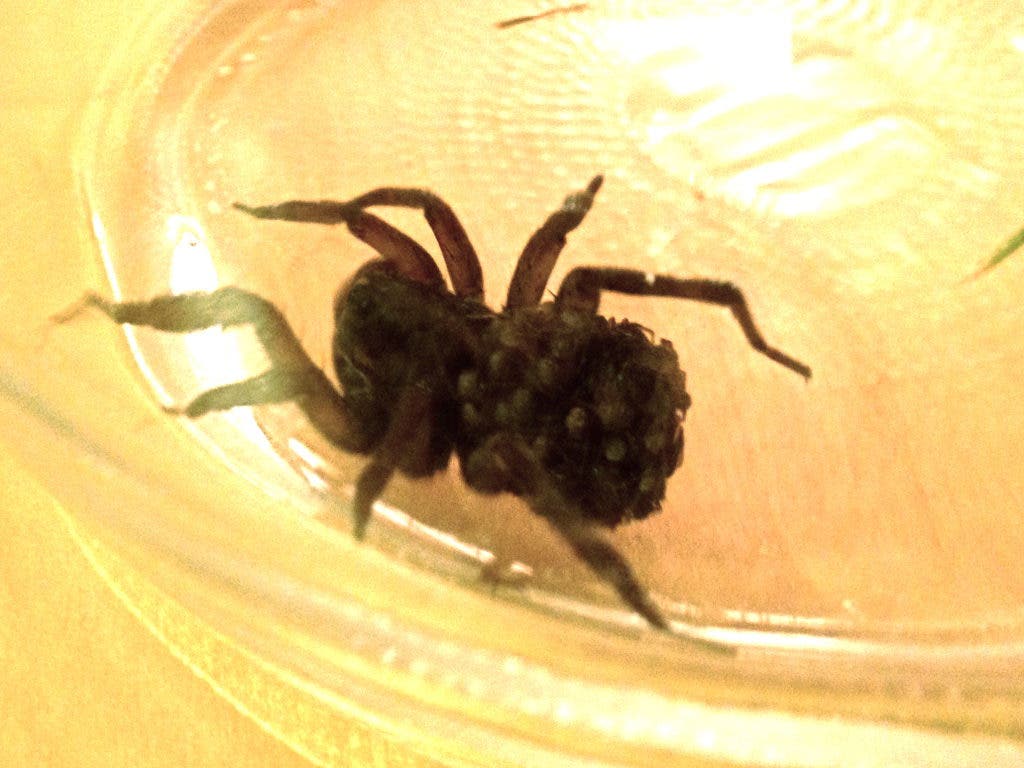
Just last night my husband came into the house holding a mason jar with a significantly sized spider. Not many people have an affinity for spiders, but they are more of a help to us than a hindrance. They capture and feed on pesty insects.
Without these spiders, we would have much bigger problems.
So tell us, are you a spider squasher or a spider keeper?
Realizing this, I thought we would use the opportunity to study the spider and learn a little more about it. Rather than killing it, this seemed like a perfect nature lesson for the kids.
This particular spider was a female wolf spider. Wolf spiders can grow up to 1.5 inches. They are hairy, scary looking spiders that are common in our area. They burrow in the ground and surface at night to hunt for their prey – flies, mosquitoes, crickets and even larger prey depending on the spider’s size.
Although considered venomous, they rarely cause severe injury to humans. Most often, a bite is more of an annoyance and quickly heals.
This particular spider had a strange looking abdomen, so I decided to do a little research. The fuzzy bumps on its backend weren’t tumors; they were the spider’s offspring! And as we found out, it’s prime time for spiderlings to hatch – June and July.
Interestingly, a wolf spider carries its young on its back in all stages of their infancy – from egg sac to spiderling stage. They even continue to do so through the summer!
Now that’s motherly love if I ever saw it.
As we examined our specimen, we realized a spiderling had detached itself and was crawling around the base of the jar. Neat! It was so tiny (and just a little bit cute).
In our research we discovered these particular spiders have eight eyes, which are known to reflect light … kind of creepy, yet cool at the same time.
Forget searching for night crawlers and fireflies – we have a new summer night task. From now on we’ll hunt for wolf spiders!
Rather than find these nature neighbors bothersome, maybe we can shift our focus and try to become familiar with who they are and what they might offer. It’s as simple as a quick Google search.
They might not be able to lend you any sugar, but you might be surprised by the value they can offer!