Community Corner
How did 9/11 Impact You?
Emmaus Fire Chief James Reiss shares his thoughts on how 9/11 changed firefighting and his department.
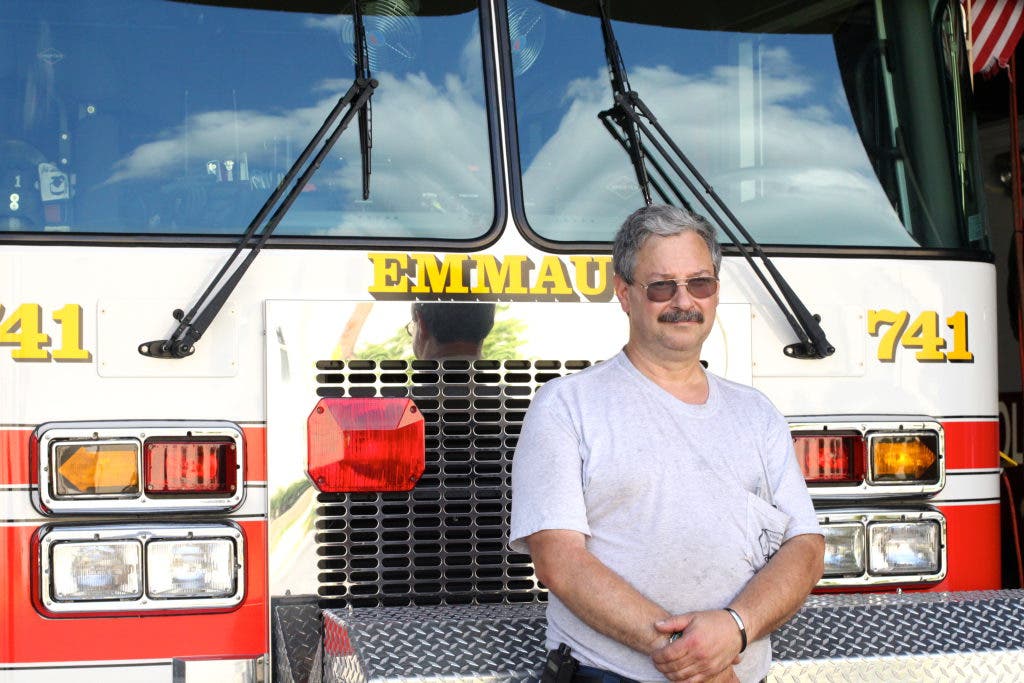

Editor's Note: With the approach of the 10th anniversary of the terrorist attacks of Sept. 11, 2001, the Emmaus Patch asked various members of the local community to talk about how the events of that tragic day impacted them. We will run the responses we received throughout the week leading up to Sunday, Sept. 11, 2011.
Chief Jim Reiss says that changes in staffing requirements, equipment and training seen in firefighting today can be traced back to the events of Sept. 11, 2001.
Staffing
Find out what's happening in Emmausfor free with the latest updates from Patch.
"We now need a R.I.T. team on any working fire." Reiss says. "This is a Rapid Intervention Team. Their job on the fire scene is a rescue team for the firefighers entering a hazardous area or building. Their job is to familiarize themselves with the building layout.
"They also watch for any unsafe operations on the fire scene. They know where every firefighter is located in the building. We now have to have an accountability officer that keeps track of all firefighters on the scene. He works with the R.I.T team and safety officer.
Find out what's happening in Emmausfor free with the latest updates from Patch.
"We also now have a safety officer for every incident the department responds to," he says.
Equipment
"The equipment the firefighters wear is improved to help protect them from anything that they might encounter," Reiss explains. "The SCBA (Self Contained Breathing Apparatus ) is now outfitted with an integrated P.A.S.S. device. This unit will automatically sound a very loud audible alarm if the firefighter becomes trapped or lost so he can be found."
Training
"Now," he says, "let's talk about the training that came about from the 9/11 and Hurricane Katrina incidents. The federal government is mandating fire company personnel to take N.I.M.S. training. This is National Incident Management System.
"This makes more training for the volunteers that are already stressed out for all the training that needs to be done each year. In 1980 there were around 200,000 volunteers manning the 2,600 fire companies in the state of Pennsylvania. Today that number dropped to around 70,000. The economy, and family have come first. People are now forced to work two jobs to make ends meet. This leaves less time a volunteer can help out."