Community Corner
New Wildlands Trail is Treat for the Senses
A newly created Sensory Trail at the Pool Wildlife Sanctuary in Lower Macungie is designed to stimulate the senses as well as meet the needs of the visually impaired. Dedication is Tuesday.

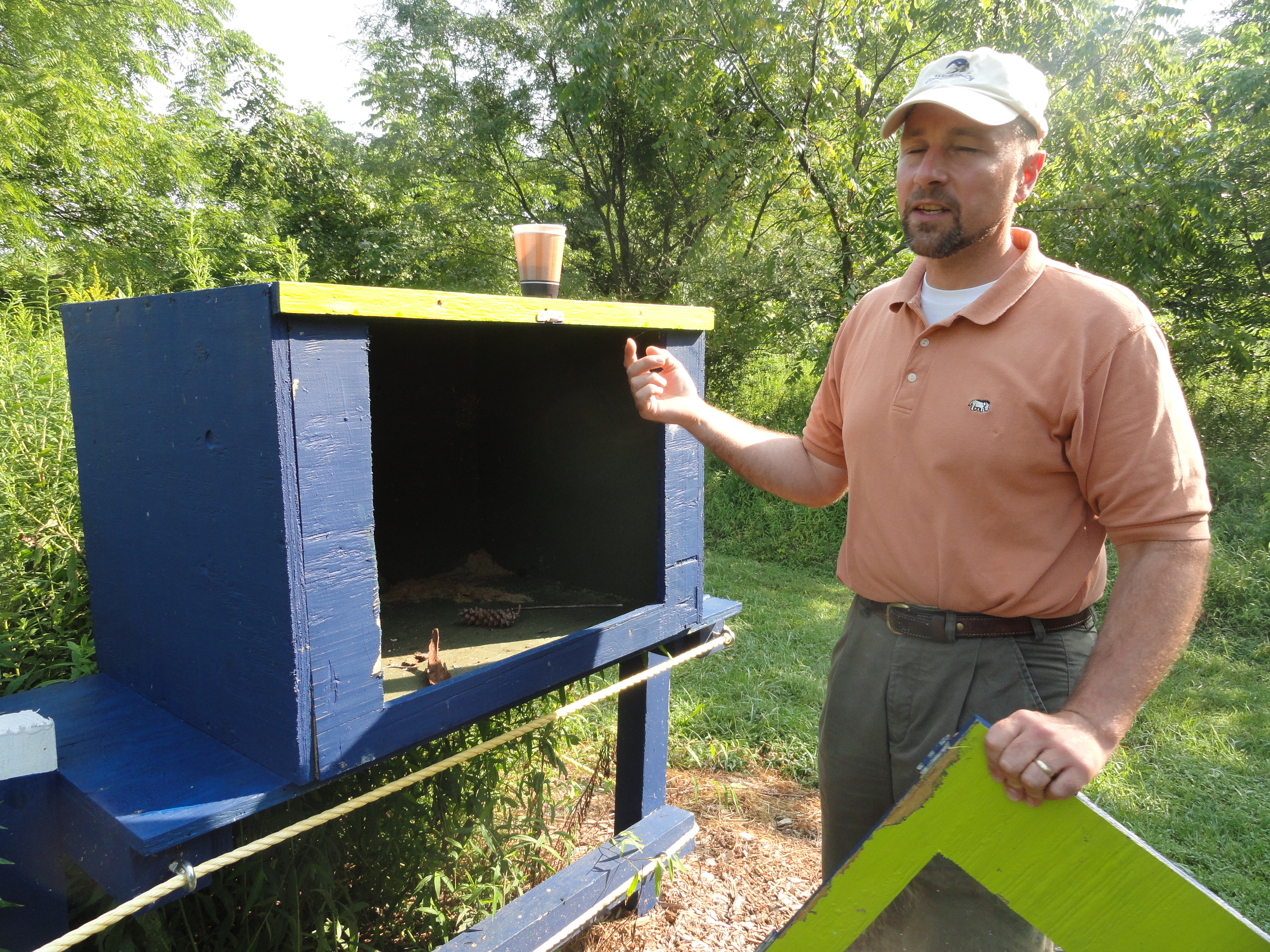


Guided by ropes along hilly terrain, visitors to a new nature trail at the Pool Wildlife Sanctuary can now learn about birds, insects, native plants and wildlife in new way—less by what they see, and more by what they hear, feel and smell.
Fittingly called the Sensory Trail, the new half-mile walking trail cuts atop the Wildlands Conservancy's Pool Wildlife Sanctuary in Lower Macungie and offers unique opportunities for learning and for stimulating the senses, while also meeting the needs of the region's visually impaired.
The trail will be dedicated at 2 p.m. Tuesday, Aug. 27, at the sanctuary, 3701 Orchid Place, Lower Macungie.
Months-long in the making, the trail was conceived by Lehigh Valley Business Group CEO and Founder Kevin Cope, who had been invigorated as a teen when he walked a sensory trail, blindfolded with a bandana, in western Pennsylvania.
"It opened up my senses," Cope recalled. "I could hear the bees. I could smell the flowers."
Inspired by that long-ago walk, Cope hoped that a similar trail could be developed in the Lehigh Valley. It became a reality this summer, thanks to the Wildlands Conservancy, scores of volunteers from businesses and Cedar Crest College and volunteer Devin Garcia from Troop 43, who earned his Boy Scouts Eagle Badge for work on the project.
In keeping with one of the Wildlands' tenants—to connect nature and communities—the trail was designed to create a safe place where nature could be made more accessible to a broader group of people.
Volunteers cleared brush, ran ropes, painted and planted. Sensory stations were added, with educational panels that are also in Braille, such as a station on predators. There, at that station, for example, visitors also can feel the tracks of a bear, coyote and wolf set in concrete.
There is also a Seasonal Box, changed for fall, winter, spring and summer, where visitors can reach in and touch different items, whether acorns, a bird's nest or deer antlers.
The Wildlands Conservancy and the area Center for Vision Loss will use the trail to educate students, teachers and parents about their senses of sight, sound, smell and touch. It also will be used to highlight how vision loss can have an impact on a person's life.
Photos on the Wildlands Conservancy's Facebook page show a group of children recently walking the trail. Some are blindfolded by bandanas, others wear vision impairment goggles to simulate the experiences of people who are blind or have low vision because of glaucoma or cataracts.
What happens, says Carl Martin, the Wildlands Conservancy's director of property stewardship, is that visitors, to experience their surroundings, "start to use those other senses that often get ignored." What do they hear and feel?
Cope said visitors also become more aware of the challenges that face those with impaired vision. "It's a wake up," he said. "If I ever lose my vision, what would it be like?"
Phase 2 of the project will include more native plantings.
Partnering in the project were the Lehigh Valley Business Group, ESSA Bank, Cedar Crest College, Plantique, Wildlands Conservancy, Rodale, Air Products, LSI Corp, Thermo Fischer, BSA Troop 413 and several other groups.
Cedar Crest College students, led by Biological Sciences Department head Dr. Amy Faivre, mapped the trail using a Geographical Information System (GIS) and GPS, providing data for the trail's design and use.
Tuesday's ceremony will include remarks by the Wildlands Conservancy, the Center for Vision Loss, the Lehigh Valley Business Group and Eagle Scout Devin Garcia.
Get more local news delivered straight to your inbox. Sign up for free Patch newsletters and alerts.