

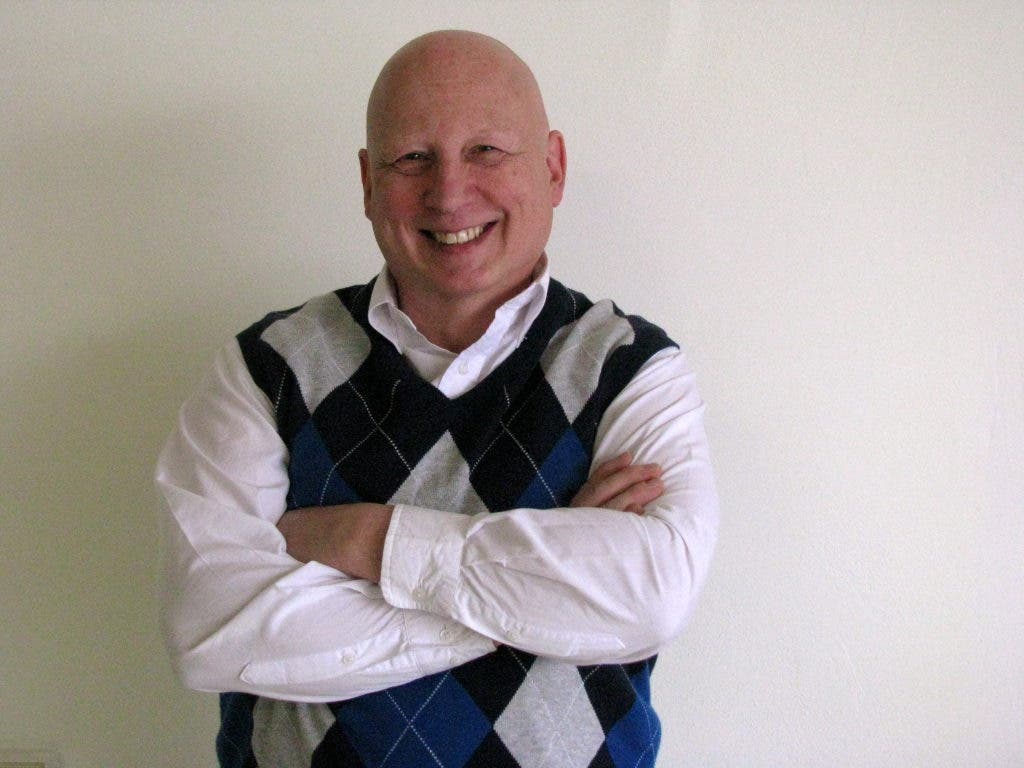
By the Rev. Dai Morgan
The 2013 Major League Baseball season is now in its second full week. The Pirates are off to a losing start. But, not to worry, as of this writing their record is better than it was last year at this time. And remember, last year at the All Star break the Pirates were in first place (we’ll just forget the last ten weeks of the season). So, who knows, maybe this will be a happy year at the ballpark?
I’ll be there—many times, this season. In fact, on the day that this blog is released, I intend to be at PNC Park, watching the game.
At PNC Park, you’ll notice that along the edge of the balcony-level, that arches around the grandstands, are displayed the names and jersey numbers of star players who have had their numbers retired. Of course, being the Pirates’ home field, all the numbers are those of former Pirates stars—except for one. Number 42. This was the jersey number of Jackie Robinson.
Robinson’s number 42 has been retired by Major League Baseball. This is not only because Robinson is a Hall of Fame ballplayer, but because, as everyone knows, he was the first black player to enter the Major Leagues.
Two days ago, on April 12, the movie “42” was released. The IMBd website describes the film as, “The life story of Jackie Robinson and his history-making signing with the Brooklyn Dodgers under the guidance of team executive Branch Rickey.” Robinson is portrayed by Chadwick Boseman. Rickey is played by Harrison Ford. I am looking forward to seeing the movie.
Inspired by the beginning of the Pirates’ season and the release of “42,” I have a quiz question for you: What do Jackie Robinson, Roberto Clemente (whose number 21 has been retired by the Pirates) and Methodism (yes, I am a United Methodist pastor) have in common?
The answer is: Branch Rickey.
Branch Rickey (1881-1965) was a legendary baseball executive. During his career, he brought World Series championships to three cities: St. Louis, Brooklyn and Pittsburgh. He is a member of the Baseball Hall of Fame. He is responsible for creating the structure that developed into the minor league farm system. He introduced the use of batting helmets and pitching machines. He pioneered statistical analysis. He was a founding member of the Fellowship of Christian Athletes.
In answer to the first part of my question: Rickey was the one who signed Jackie Robinson to a Major League contract and he drafted Roberto Clemente, the first Hispanic superstar. The answer to the last part of my question is that Rickey was a Methodist.
Branch Rickey was a Bible-reading, dedicated Christian, well aware of the Methodist tradition. He graduated from a Methodist college, Ohio Wesleyan University, in 1904. He was an “A” student, occasional faculty member, athletic director and coach. He wrote, “Ohio Wesleyan has been very largely responsible for whatever good is in me, and is to be credited for whatever good I have done.”
Rickey’s faith was the foundation on which he transformed baseball. It started in 1903 when Rickey was the 22-year-old manager of the Ohio Wesleyan University baseball team. On a trip to South Bend, Indiana, to play Notre Dame, when the team attempted to check in at the hotel the hotel’s manager would not accept the team’s catcher, Charley Thomas. Thomas was black.
Rickey negotiated and finally arranged to have their catcher stay in his room. When he got to the room, Rickey found Thomas sitting on a chair sobbing. Rickey later remembered, “Charlie was pulling frantically at his hands. He looked at me and said, ‘It’s my skin. If I could just tear it off, I’d be like everybody else. It’s my skin, Mr. Rickey!’”
In 1944, after becoming president of the Dodgers, Rickey told Red Barber, the Dodgers’ radio announcer, “For 41 years, I have heard that young man crying. Now, I am going to do something about it….I am going to bring a Negro to the Brooklyn Dodgers.”
Rickey knew that the first black player to cross the “color line” would be subjected to intense public scrutiny and personal confrontation. That individual would need to be more than a talented ballplayer, he would also need to be a strong person. After scouting many Negro League players, Branch Rickey met with Jackie Robinson in the summer of 1945.
At the meeting, Rickey acted out situations of hate and discrimination that Robinson might face. Robinson kept his composure and Rickey decided to sign him to a Triple-A minor league contract. After a successful season in the minors, Jackie Robinson joined the Dodgers in April 1947—and as the saying goes, “The rest is history.”
During their meeting, Branch Rickey quoted from the Sermon on the Mount: You have heard that it was said, ‘Eye for eye and tooth for tooth.’ But I tell you, do not resist an evil person. If someone strikes you on the right cheek, turn to him the other also.
Robinson—who was also a Methodist—responded, “I have two cheeks.”
In honor of the opening of another season I just wanted to tell a baseball story. Well, actually, I wanted to tell a story of faith. It so happened to be a baseball story. Of course, from my perspective, it didn’t hurt that the lessons of Methodism, in particular, played a significant role. Who says that religion has no significant impact on the world?
The Rev. Dai Morgan is pastor of Living Spirit Ministry-Swissvale United Methodist Church.
______________________
Find out what's happening in Forest Hills-Regent Squarefor free with the latest updates from Patch.
"Like" Patch on Facebook. | Follow us on Twitter. | Sign up for our daily email newsletter.
Get more local news delivered straight to your inbox. Sign up for free Patch newsletters and alerts.