Neighbor News
Robert Vowler, Business Advisor at Vowler Advisory, on Boards
Robert Vowler provides a brief overview of the basics of board governance.


As the former CEO and CFO of The Hershey Trust Company for 12 and 10 years respectively, and the Secretary of the Board for 22 years, I have a wealth of experience in regards to boards of directors and board governance. And because this is such a popular topic right now, I wanted to provide some background information and insight into a few different types of board governance.
What is a Board of Directors?
Before I discuss board governance, it would help to understand what a board of directors is. Put simply, a board of directors is a collection of people who, collectively, manage and oversee the managerial policies of an organization or company, and typically make and finalize major decisions. While a board of directors is a requirement for any public company, privately held companies or nonprofits sometimes also have a board of directors.
Board Governance
Because a board of directors is comprised of several people (average number of members is 9.2), it can be difficult getting every individual member’s point of view or insight into a specific issue or topic; some boards don’t even allow for equal power amongst members. This is where board governance comes into play. The way that a board is governed is usually determined by the company’s or organization’s goals.
Here are a few of the most popular governing styles for boards.
Find out what's happening in Harrisburgfor free with the latest updates from Patch.
Traditional Board
The tried-and-true method of governing a board is known as the traditional method. For this style, all members of the board are held legally responsible for all actions and the entire board functions as a single entity on all matters.
Consensus Board
This method is most ideal for companies without large shareholders. In essence, this model focuses on equality; it provides an equal vote, responsibility and liability for each member of the board.
Find out what's happening in Harrisburgfor free with the latest updates from Patch.
Management Team Board
This model is specific to nonprofit organizations and is by far the most popular. In this method, members assemble committees to handle a variety of tasks for the non-profit’s needs, including fundraising and program development; this is done in lieu of hiring employees for said tasks.
About the Author
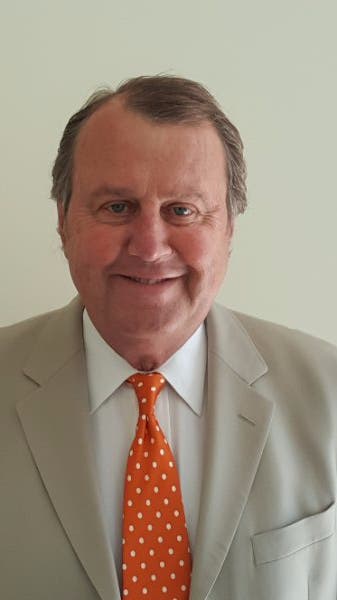
Robert Vowler is an experienced business advisor and accountant. Robert Vowler currently serves as a business advisor at Vowler Advisory, LLC. Prior to his current position, Robert Vowler served as the CEO of the Hershey Trust Company for 12 years, and before that, as its CFO for ten years. He is based out of Hershey, PA.