Schools
Haverford HS Students, Parents Debate Pros and Cons of Math Program
Some want to see the College Preparatory Math program replaced, others do not.
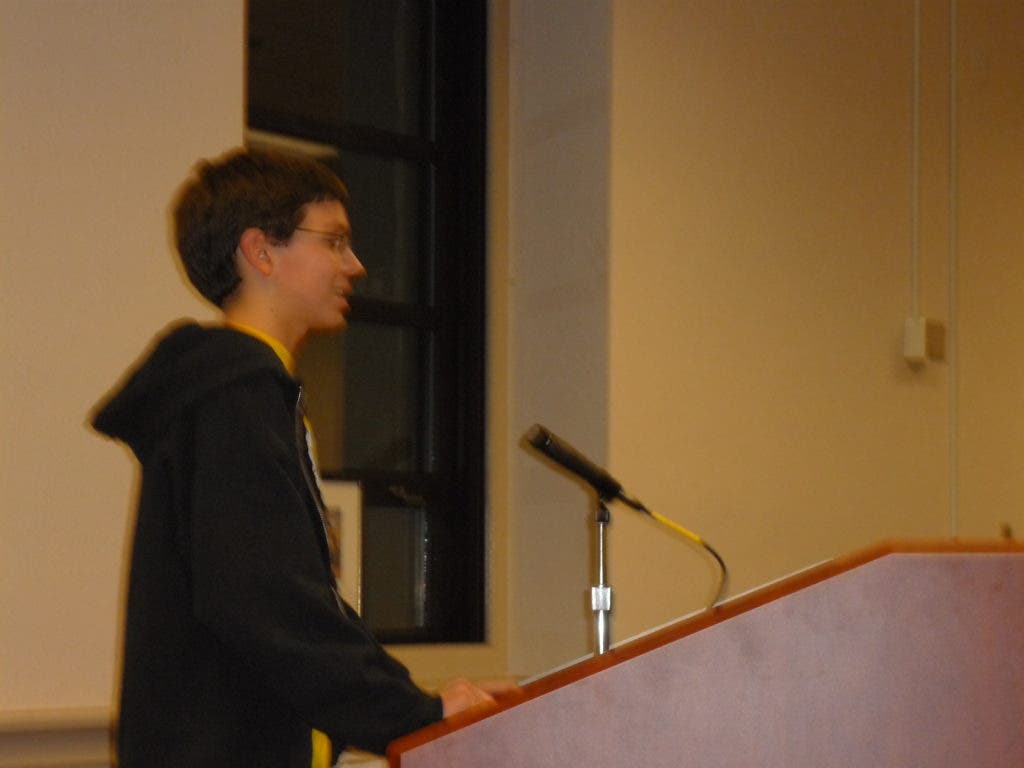
Several parents and students went before the Haverford Township Board of School Directors on Thursday night, with some of them asking the board to replace the school district’s College Preparatory Math (CPM) program with a more “traditional” math program, and others praising the CPM program.
The parents and students went before the school board during the public comment portion of the board meeting.
Parents and students who were opposed to CPM said they do not think the program is effective because CPM’s group learning approach (in which students in the classroom work in groups to solve math problems) does not meet all students’ learning styles.
Find out what's happening in Haverford-Havertownfor free with the latest updates from Patch.
Robin Naser said she had four high school students in her home during the 2007-2008 school year, when Haverford School District replaced its high school math program, Integrated Math and Geometry (IAG), with the CPM program.
Naser said two of the students attended private schools with traditional math programs and “had great test scores,” while the other two students are attending Haverford High School and “both are struggling” in math with the CPM program.
Find out what's happening in Haverford-Havertownfor free with the latest updates from Patch.
“This math curriculum did not meet my students’ learning styles … Haverford High School students deserve a traditional math choice,” Naser said.
Later in the meeting, Superintendent William Keilbaugh said that CPM has more “traditional elements,” than the district’s old program, IAG.
Two high school students that spoke said the needs of their different learning styles are not met through CPM’s group learning.
Haverford High School student Courtney Naser said she and other students find CPM “unfit and a complete struggle.”
Parents opposed to the program also said they do not think CPM has raised standardized test scores, a statement which was refuted by school district officials.
Assistant Superintendent Nicholas Rotoli said in 2010-2011, the number of district eight graders who scored advanced and proficient on the PSSA increased 5.7 percent, and the number of 11th graders who scored advanced and proficient increased 12 percent.
Rotoli said “most telling about the strengths of the CPM” is that when 59 Haverford School District eighth graders took the pilot Keystone Algebra 1 test last year, 100 percent of the students scored advanced and proficient, while the state average on the test was about 40 percent.
Other students and parents spoke in favor of CPM.
Chris Donnay, a sophomore at Haverford High School, said the group work used in the CPM program “hasn’t held me back,” and instead, it allows students to help one another when they are working on match problems in groups.
“Everyone really benefits from it and no one’s really at a loss,” said Donnay, who said he is a straight-A student who scored in the 99th percentile on the math portion of the PSSA (Pennsylvania System of School Assessment) test.
Robert Styer, the father of an 11th grader at Haverford High school and a mathematics professor at , said it is important for students “to have the ability to think creatively and outside the box” and CPM allows for that.
Michelle Francl, who is a professor of chemistry at and the mother of two Haverford High School students, said she supports CPM because it provides students with a “solid basis.”
Francl said she understands that group work used in the CPM program is an issue of contention among some parents, but research shows group learning is effective for most students.
School Board member Philip Hopkins said he was “struck by the fact” that parents who are college professors and mathematicians “are the ones that have said tonight that this is an effective program.”
“I haven’t heard anything that we made a bad choice and we should change the program,” Hopkins said.
School Board member Larry Feinberg agreed with Hopkins that the program should not be changed.
Some parents said students should be offered a choice between CPM and another math program.
In response, Feinberg said, “I understand not all programs work for all kids … We don’t have the luxury of having multiple programs right now …”
Hopkins said it is not only a question of resources but that offering a choice of math programs “is educationally unsound.”