Politics & Government
Auditor General: GOP Welfare Cuts Good, Reforms Would Be Better
House GOP, Corbett administration at odds over possible savings from fraud.
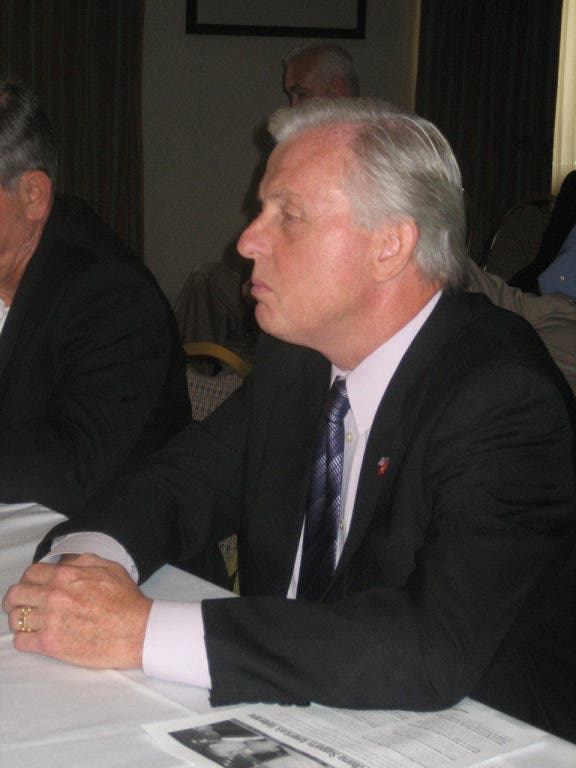
Auditor General Jack Wagner says state House Republican's push to cut $470 million from the state Department of Public Welfare is one way of forcing the department to root out waste, fraud and abuse, but this approach does not entirely solve the fundamental problem of accountability.
“It’s a two-phase issue,” Wagner said during a telephone interview May 12. “It’s not just cutting the budget; it’s also management reform within the system to create better accountability.”
Wagner, a Democrat, has been thrown into the forefront of the state House Republicans' budget proposal introduced earlier this month, which seeks to restore some of Gov. Tom Corbett’s proposed cuts to basic and higher education, but eliminate funding from the Department of Public Welfare, or DPW. The department handles various programs, including cash assistance, medical assistance, child services and aid for people with disabilities.
Find out what's happening in Hellertown-Lower Sauconfor free with the latest updates from Patch.
Overall, the welfare budget would total $10.7 billion under the House Republicans’ plan, a 1 percent increase over this past year’s total. Only the Department of Education has a larger slice of the state budget.
Wagner said the effort should be focused on reforming the DPW to find savings, but House Republicans said future savings from eliminating fraud will make up for spending reductions now. A package of bills aimed at low-term reforms is also moving through the state House.
Find out what's happening in Hellertown-Lower Sauconfor free with the latest updates from Patch.
Wagner said May 12 that he stood by the report--published last November--which said a 10 percent error rate existed in some department programs. Wagner’s office estimated $436 million could be saved during fiscal year 2011-12, and more than $1.9 billion could be saved during the course of four years.
According to the report, the majority of eligibility errors were DPW's failure to verify the age, income and disability of recipients to determine whether they qualified for assistance.
After reviewing records from county assistance offices in each of Pennsylvania’s 67 counties, Wagner’s office said the waste and inefficiency exceeded 10 percent. At the time, Gov. Ed Rendell disputed those figures, claiming the state’s fraud rate was closer to 4 percent, which the federal government also claimed in a December report using state-provided data.
House Republican spokesman Steve Miskin said the department was targeted for cuts as a result of the Auditor General's report and research conducted by House Republican Policy Committee.
"The previous administration was saying yes to applicants without verifying their information," Miskin said. "And people who truly needed the help were left out, because the money ran out."
State House Majority Leader Mike Turzai, R-Allegheny, said that the budget cuts were based upon the 4 percent figure, not Wagner’s higher number.
However, the Auditor General stressed the importance of reforms over straight budget cutting.
“If you don’t institute the changes, you will not see changes,” Wagner said. “If you correct how the program functions, the savings will come on their own.”
This past month, Republicans in the state House introduced a series of bills mandating certain changes to DPW policy, including mandatory drug testing for cash assistance recipients with a history of drug offenses; additional cross-checking of recipients’ information against 19 government databases to determine eligibility; better oversight of a welfare program that provides free transportation to medical facilities; and higher penalties for welfare fraud.
Republicans have not given an estimated level of savings from an eight-bill package. Five of the proposals have passed the state House.
Gary Alexander, state Secretary of Public Welfare, said the administration is focused on cutting waste from the DPW.
“Currently, we have found some things that are very eye opening,” Alexander told the Senate Public Health and Welfare Committee during his confirmation hearing May 11. He said they found thousands of Social Security numbers that may not match up with beneficiaries and some health providers with questionable backgrounds.
Asked about the proposed cuts to the welfare budget, Alexander cast doubt about whether the savings could be realized within a year.
“I think we certainly can find fraud, waste and abuse. Whether it totals the $400 million that is in the budget, I don’t necessarily know right now,” Alexander said.
However, Wagner also was skeptical about the government implementing policy changes quickly enough to see that level of savings within the next budget year.
“It depends on how committed the administration is. Four months into the administration, they should already be well on their way to figuring out what changes need to be made,” Wagner said.
Alexander is not the only member of the administration casting doubt on the potential savings. State Budget Secretary Charles Zogby recently told the Associated Press that he had reservations about crafting a budget around planned savings.
Corbett and state House Republicans have made it clear they are unwilling to exceed the $27.3 billion final spending figure, which means either the expected welfare savings have to materialize or the budget will have to be cut elsewhere.
The House Republicans’ budget proposal cuts $475 million from the DPW, with medical assistance programs, including Medicare, accounting for $277 million of those cuts.
Senate Democrats were highly critical of the proposal, claiming it would hurt Pennsylvanians who already are the most vulnerable members of society, including children and people with disabilities.
“Quite frankly, this is what we would call a slash and burn approach, and that is not appropriate,” said state Senate Minority Leader Jay Costa, D-Allegheny, of the DPW budget cuts.