Politics & Government
Education Secretary: School Districts Have to Deal with Cuts
Secretary of Education Ronald Tomalis said districts should have planned better with stimulus funds.
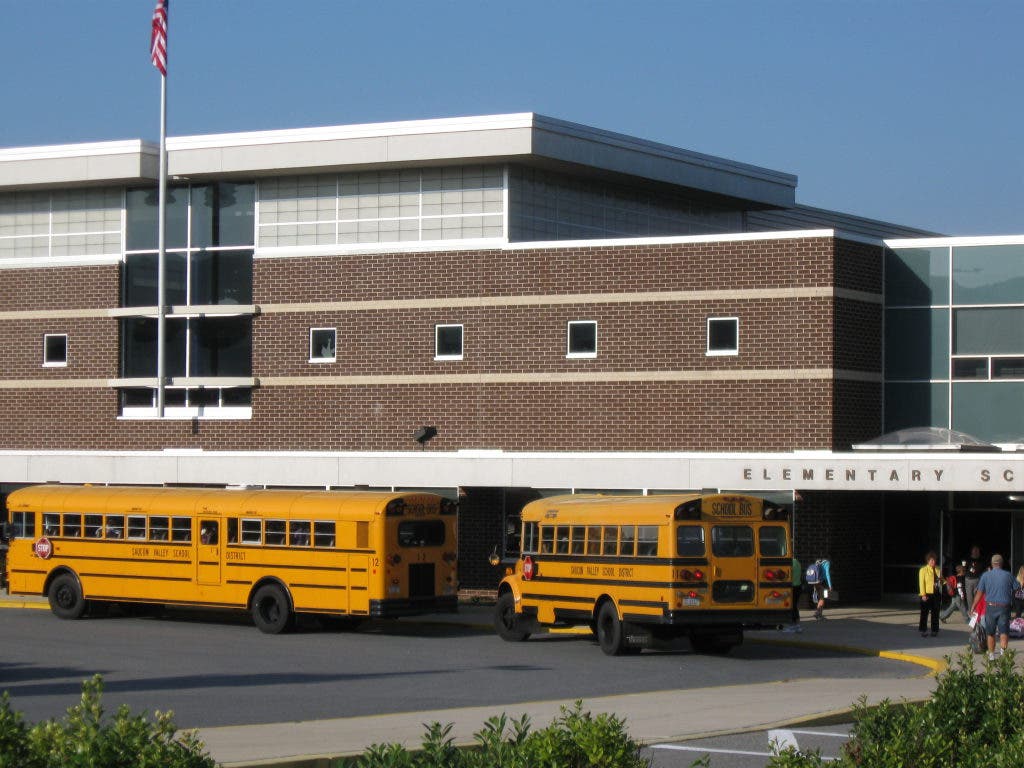
Budget cuts and a difficult economy will put more pressure on school districts to solve funding problems, and the Pennsylvania's secretary of education says that’s exactly the way it should be.
Although the state funding for school districts will increase next year in Gov. Tom Corbett’s proposed budget, changes to the funding formula and the end of federal stimulus money will leave each of Pennsylvania’s 501 public school districts with a reduction in funding next year. That means giving school districts more control over their costs and their spending options will be key, Secretary of Education Ronald Tomalis said.
“We hire these leaders at the local levels to make the tough decisions,” Tomalis said. “And we don’t just hire them to lead in good budget times, but we hire them to lead in tough times, too.”
Find out what's happening in Hellertown-Lower Sauconfor free with the latest updates from Patch.
Part of the solution could involve a one-year pay freeze for all school district employees, which the department has already suggested. State Rep. Paul Clymer, R-Bucks, chair of the House Education Committee, said the pay freeze could save school districts $400 million in one year.
Tomalis said the pay freeze could save 4,000 teachers’ jobs across the state, using a conservative estimate. Since the most likely teachers to be laid off would be the youngest teachers making the lowest salaries, the number of jobs saved would likely be higher, he said.
Find out what's happening in Hellertown-Lower Sauconfor free with the latest updates from Patch.
The Pennsylvania State Education Association, the state’s largest teachers’ union, supports the pay freeze.
In a late March letter to all local unions, James Testerman, PSEA's president, urged members to “seriously consider” the one-year pay freeze.
Tomalis said March 29 that only a few school districts have approved the pay freeze thus far, but he is hopeful more will do the same as the budget process moves along and districts have to face their own budgets.
“Overwhelmingly, the labor costs are determined at the local level,” said Tomalis.
He said there have been $1.1 billion in pay increases for teachers and school district employees since the recession began in 2008.
Tomalis said districts could find additional savings by sharing superintendents or sharing contracts for business operations. Some districts could even consider a full-scale merger, he said.
“When the economy or the budget wasn’t as difficult as today, you didn’t have to think about that,” said Tomalis. “Now, it’s up to the school districts to bring that to the table.”
State Rep. Ron Waters, D-Philadelphia, said his conversations with school officials showed some districts are moving toward combining some expenses.
Going hand-in-hand with local control over spending is mandate relief for school districts burdened with state requirements, said Tomalis. A package of school district mandate relief bills was introduced in the state Senate last month.
One of those provisions, HB 911, would require school districts to have property tax increases approved by voter referendum.
Tomalis said school districts should have done a better job planning for the end of the stimulus after being warned by both federal and state departments of education the extra funding would come to an end.
“If you were told again and again that this is a funding cliff that is coming in two years, and you were advised not to make an expenditure that is going to lock you in for five or 10 years down the road, it does matter,” said Tomalis.
State Rep. Mario Scavello, R-Monroe, said the federal stimulus money was “candy from D.C.” that school districts should have used more carefully and planned for it coming to an end.
Scavello said the state should review the so-called “hold-harmless” provision, that promises school districts at least an equal level of state taxpayer funding from year-to-year even if the districts lose students. The provision was adopted in 1990 and is a key part of the basic education funding formula.
Tomalis said the state’s funding formula had been changed from the formula used under former Gov. Ed Rendell. Tomalis said he would be open to “a very serious conversation” about further changes to the state funding mechanisms.
“I think that is something that we’re going to have a very serious conversation about going forward,” Tomalis said.
He said it “flies in conflict” with the idea that education funds should follow the student, something Corbett has advocated.
One of the major cuts included in the governor’s proposed education budget is the elimination of the educational improvement block grant, a supplementary state-level funding source for school districts to use as they saw fit. Many districts used the funding for early childhood education or full-day kindergarten programs.
“This is just a pure cut. This is Gov. Corbett’s cut to basic education,” said state Rep. Matt Bradford, D-Montgomery, of the elimination of the block grant program.
Bradford said the cuts would risk student achievement by forcing larger class sizes and would require school districts to raise property taxes.
The money from the block grant program has been folded into the basic education subsidy to level-fund other programs, including special education, Tomalis said.
State Rep. Joseph Markosek, D-Allegheny, minority chair of the House Appropriations Committee, said it is not fair for the governor’s budget to force school districts to raise property taxes.
“It sounds like on one hand you’re saying we’re not going to raise taxes at the state level, but if the local school district has to do it, that’s OK,” Markosek said.
Tomalis said he would not vote to increase taxes if he was a member of a school board, but he does not have the authority to tell them how to operate.