Politics & Government
Pileggi: Gas Issue Not Necessarily Connected to Budget Deal
Southeast Republicans key to passing severance tax or impact fee.
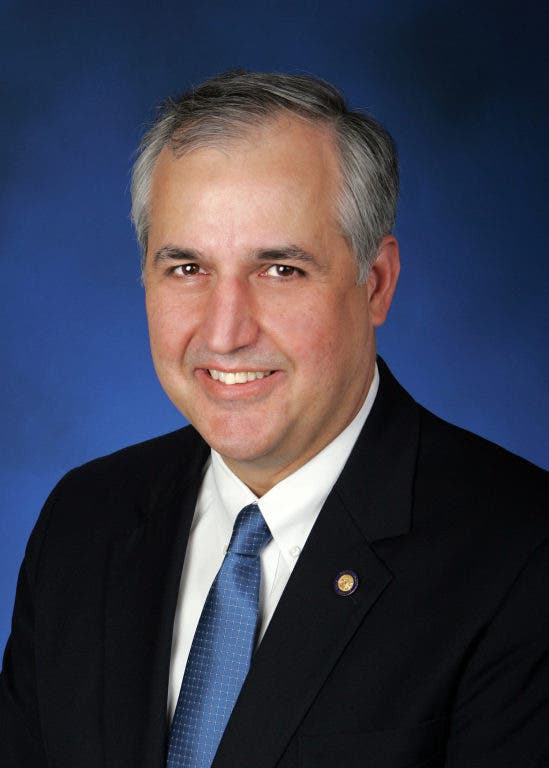
State Senate Majority Leader Dominic Pileggi, R-Chester, says Senate Republicans clearly intend to enact a new tax or fee structure on the natural gas industry in Pennsylvania, but the issue is not necessarily connected to the state budget.
Whether the final form of a gas-industry package is labeled a “fee” or a “tax” makes little difference to him, Pileggi said.
“There’s a number of ideas all with the same goal: To get some sort of a fair compensation that is competitive with other states,” Pileggi said, stressing that there should be a statewide component to the final package.
Find out what's happening in Hellertown-Lower Sauconfor free with the latest updates from Patch.
Pileggi’s comments come on the same day that his colleague, state Senate President Joseph Scarnati, R-Jefferson, introduced legislation to create a “local impact fee” that the gas industry would be required to pay to cover costs incurred at the local level. The proposal contained in SB 1100 would not send any revenue to the state's general fund.
Scarnati’s plan would require companies to pay $10,000 per gas well that they operate in the state, with the revenue divided between municipalities and counties hosting gas drilling operations and the state’s conservation districts, which are locally controlled environmental projects.
Find out what's happening in Hellertown-Lower Sauconfor free with the latest updates from Patch.
When he introduced the plan informally to reporters three weeks ago, Scarnati said the proposal would be considered along with the state budget bill. Pileggi was noncommittal about the timeline for the proposal Monday.
“I don’t know that there is a necessary connection. Our primary responsibility is to have a budget done,” Pileggi said.
Drew Crompton, Scarnati’s chief of staff, said Monday that the senator still planned to have the state Senate consider the legislation in the coming weeks.
Both a severance tax and an impact fee would require gas companies to pay additional taxes to the state, but under the impact fee plan, none of the money would be used in the state budget.
A severance tax generally is a tax on a nonrenewable resource that is charged to producers in the state.
Though various forms of severance taxes have been proposed in the past two years, most include splitting revenue among the state and local governments and environmental funds.
The Marcellus Shale Coalition, an industry group, supports the concept of a local impact fee, but has not specifically endorsed or opposed Scarnati’s plan.
"Any local impact fee on Marcellus production must be clear, straightforward and competitive," said Kathryn Klaber, president of the coalition.
Scarnati's proposal would generate an estimated $76 million this year and nearly $150 million by 2014 as the industry grows and more wells are drilled.
Lawmakers on both sides of the aisle have proposed severance tax bills this year, but none have moved out of committee.
Pileggi said the severance tax would not significantly affect the budget in the upcoming fiscal year. He said the tax would do little to close the state’s $4 billion deficit.
“Let’s put that aside for the purposes of this discussion,” said Pileggi. “It’s not a solution to the revenue shortfall.”
Republican Gov. Tom Corbett has promised not to raise taxes or add new taxes to the books. He also said he opposes a tax on the state’s growing natural gas industry. However, he has signaled a willingness to “sit down and listen” to a local impact fee proposal--provided none of the revenue goes to the state general fund.
The governor also created a Marcellus Shale Commission tasked with assessing the “measurable impacts” of the industry and making a recommendation to Corbett by the end of July.
Several moderate Republicans from the southeastern part of the state signaled their intentions Monday for taxing the natural gas industry.
State Rep. Thomas Killion, R-Delaware, said there was “overwhelming support” for a severance tax among lawmakers from both parties in the southeastern region.
“It’s a Pennsylvania resource. It should benefit all Pennsylvanians,” Killion said.
State Rep. Joseph Hackett, R-Delaware, said he favored the local impact fee approach over a severance tax, but doubted either plan would be accomplished before the fall.
“I don’t see anything happening at least until September, when we return,” Hackett said.
If Corbett vetoes the eventual proposal, Hackett said it would be a long shot to overturn it.
State Sen. Ted Erickson, R-Delaware, said those in favor of a severance also tax could try to have the issue placed on the ballot in November, if Corbett continues to block the legislative effort. Under state law, the legislature could vote to put a bill on the statewide ballot, which would become law without requiring the governor’s signature, if a majority of voters approved it.
State Rep. Greg Vitali, D-Delaware, one of the leading advocates for a severance tax within the state House, said Democrats needed help to push the plan across the goal line.
"We have the clout to get the severance tax done,” Vitali said. “I think suburban Republicans are the key to all this.”