Neighbor News
Stormwater Project Doubles as Outdoor Classroom
Stormwater Treatment Wetland at College Settlement Completes Trifecta for Environmental Education Programs
A naturalized stormwater facility is now functioning at the head of the Pennypack Creek at College Settlement, completed with help from a 2014 grant from the National Fish and Wildlife Foundation’s Delaware River Restoration Fund and the William Penn Foundation. The new stormwater treatment is not only functioning beautifully to control runoff and sustain the integrity of the creek during precipitation events, it is also the focal point for demonstrations and lessons on water quality.
The history of the College Settlement land goes back to the late 19th century when Harvard students hosted recent immigrants and helped them assimilate to the area. Now, it is fitting that the land remains true to its philanthropic and educational heritage. Currently, the Camps at College Settlement educate low-income students from the region about environmental protection and preservation.
Longtime resident and one of the project contractors Richard Nalbandian said, “It enhances the community experience and neighboring subdivisions where residents can all enjoy the beauty of the environment, and see the native wildlife returning to the area.”
Find out what's happening in Hatboro-Horshamfor free with the latest updates from Patch.
With the overflow controlled, more native plants and wildlife are returning to the area including water lilies which clear algae, and nine different species of dragonflies, which are primary mosquito predators. Mother and young snapping turtles are reappearing in nesting areas. Blue Herons and Red-winged Black birds are visiting during migratory periods, and foxes, deer, and 40 different species of native vegetation have returned to their natural habitat that was once destroyed by flooding.
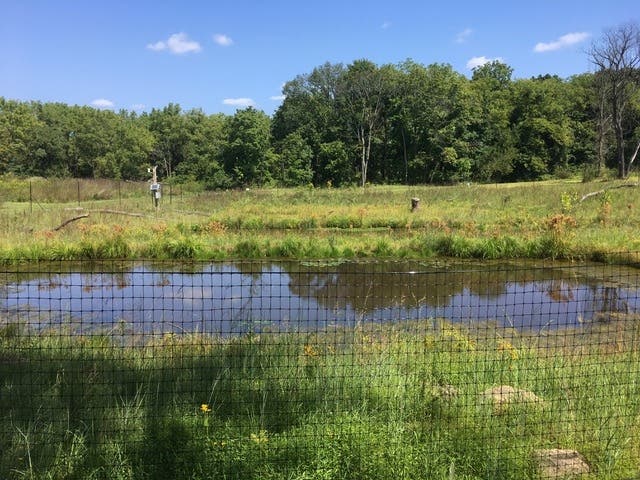
This particular stormwater treatment wetland is a naturalized facility, meaning it functions as closely to a natural wetland as possible. These facilities function by installing infiltration systems which allow runoff to be collected and flow more slowly through the ground for treatment. The outflow is controlled by an underground pipe, allowing the facility to nearly duplicate natural wetland features, and setting it up to be self-maintaining. With more compaction, or a decrease in porosity in the ground sediment, infiltration is occurring primarily in two of the three ponds.
Find out what's happening in Hatboro-Horshamfor free with the latest updates from Patch.
“We use the wetland to teach about pond aquatics and soil studies for sustainable farming and take students to the stormwater retention basin to learn about runoff and flooding effects on downstream neighbors; it completes the trifecta for our environmental education program,” said Karyn Bonner, Director of Camps at College Settlement. These lessons on water quality are the most requested lesson at the Camps.
Lessons on stormwater treatment and water quality demonstrate the importance of the stormwater retention basin and how it prevents flooding of creeks which also affects downstream neighbors. Students also learn about natural waterways and methods to manage water in sensible ways such as slowing runoff, to support the area’s primary source for clean drinking water, the Delaware River.
In a project titled “Don’t drink the water,” students work together to filter water from the creek, providing them a hands-on experience to better understand the importance of the Delaware River’s contribution to drinking water and apply classroom lessons to the environment in which they live. Approximately 4,000 students attend the College Settlement Camp lessons each year. Many of them are direct recipients of the benefits of the treatment basin, so the environmental preservation and water quality lessons really hit home.
Of the 40-acres of College Settlement land that lies close to farmland and woodlands, this facility is the first major stormwater remediation project that has been completed. To help control runoff, curbs, gutters and inlets have also been installed.
The community has seen less flooding and project support has grown as the new “wetland” has shown real progress in runoff control.