Neighbor News
Students "absorb" learning with GSK Science in the Summer
- Join in with this simple chemistry experiment on capillary action
GSK Science in the Summer™ (www.scienceinthesummer.com) enriches young minds through offering elementary school-aged children a free summer science education program. Students in second through sixth grade in the Greater Philadelphia Area are given the opportunity to study Physical Science & Electricity (Bucks County), Oceanography (Chester County), Genetics (Delaware County), Chemistry (Montgomery County), and Simple Machines (Philadelphia County). Sponsored by GSK and coordinated by The Franklin Institute, GSK Science in the Summer classes are taught by certified teachers at local libraries. Through simple, hands-on experiments, GSK Science in the Summer helps students “grow into science” and gain first-hand knowledge of complex concepts: students learn about density and buoyancy, the uniqueness of fingerprints, the strength of levers, and much more!
To spread the joy of science, GSK Science in the Summer is sharing an experiment from its Chemistry curriculum—an experiment that you can do in your very own home! Please note: for optimum safety, an adult should be present during all experiments, and children should wear safety glasses when conducting experiments at home and schools.
Experiment on Capillary Action
Find out what's happening in Hatboro-Horshamfor free with the latest updates from Patch.
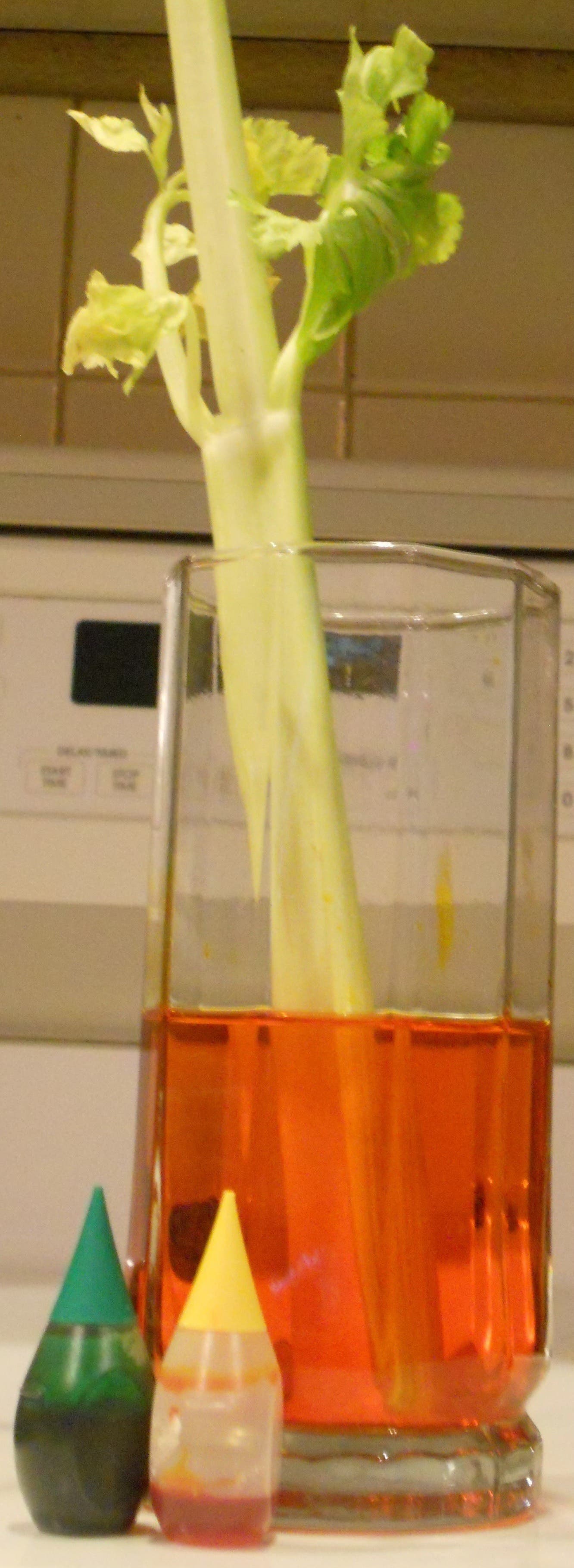
Capillary action is the movement of liquids against external forces—including gravity!—caused by the attraction of water molecules. This experiment will demonstrate how capillary action allows plants to draw water into their leaves.
Materials: clear drinking glass or cup, water, food coloring, and a celery stalk or white carnation
Find out what's happening in Hatboro-Horshamfor free with the latest updates from Patch.
Instructions:
- Pour one inch of water into the glass/cup.
- Add a few drops of food coloring to the water, dyeing the water.
- Place a celery stalk or a white carnation (stem down) in the colored solution.
- Leave the stem in the water for several days, and watch as the color travels up the stem over time. Observe how the plant absorbs the solution, eventually reaching the leaves/flower petals.
For more information on GSK Science in the Summer classes, visit www.scienceinthesummer.com.
About GSK – GSK – one of the world’s leading research-based pharmaceutical and healthcare companies – is committed to improving the quality of human life by enabling people to do more, feel better and live longer. For further information go to us.gsk.com, follow us on twitter.com/GSKUS, or visit our blog(www.morethanmedicine.us.gsk.com/blog/).
About The Franklin Institute – Founded in honor of America’s first scientist, Benjamin Franklin, The Franklin Institute is a renowned and innovative leader in the field of science and technology learning, as well as a dynamic center of activity. It is dedicated to creating a passion for science by offering new and exciting access to science and technology in ways that would dazzle and delight its namesake. For more information, please visit www.fi.edu.
Media Contacts:
Jennifer Armstrong, GSK, (215) 751-5664 or jennifer.l.armstrong@gsk.com
Camille Dager, Harris, Baio & McCullough, (215) 440-9800 or camille@hbmadv.com
Cautionary statement regarding forward-looking statements
GSK cautions investors that any forward-looking statements or projections made by GSK, including those made in this announcement, are subject to risks and uncertainties that may cause actual results to differ materially from those projected. Such factors include, but are not limited to, those described under Item 3.D ‘Risk factors’ in the company’s Annual Report on Form 20-F for 2013.