Politics & Government
Earned Income Tax Approved By Falls Township Supervisors
Officials said the 1 percent tax may generate $7.2 million in additional funds next year. The EIT goes into effect in January.


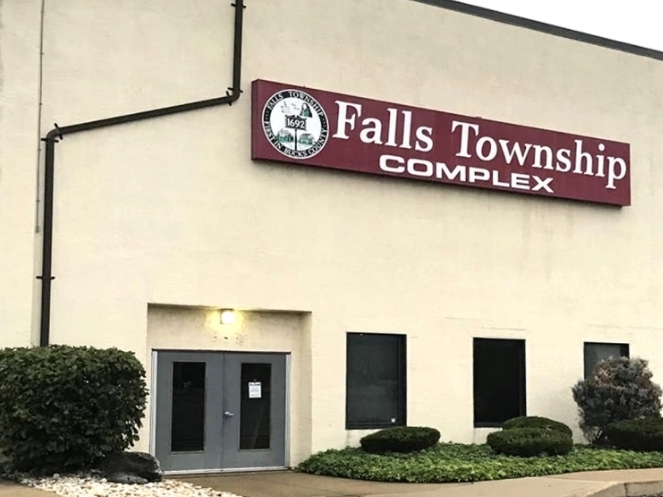
FALLS TOWNSHIP, PA —Falls Township became one of the last of 54 municipalities to enact an earned income tax in Bucks County Monday night.
Against the backdrop of dwindling host community fees from Waste Management and to prevent financially impacting senior citizens and residents living on fixed incomes, the Falls Township Supervisors approved enacting a 1 percent earned income tax.
Following a presentation from Peter Angelides of EConsult Solutions Inc., and comments and questions from supervisors and several residents, the board on Monday voted 4-1 in favor of implementing the EIT effective in January 2023. Supervisor John Palmer cast the lone no vote.
Find out what's happening in Levittownfor free with the latest updates from Patch.
The EIT begins in January.
Bristol Borough, Langhorne Manor, Yardley, Tullytown and Lower Makefield Township are the only municipalities in Bucks County without an EIT.
Find out what's happening in Levittownfor free with the latest updates from Patch.
According to Angelides, Falls may gain $7.2 million in additional funds stemming from the EIT next year.
Of the $5.7 million to $5.9 million derived from EIT on Falls residents, Angelides said only 32 percent – or $2.3 million – would be new taxes.
Once the tax is enacted, it would only change where the tax is paid, not how much. Instead of taxes
being paid to another town, residents’ EIT would be paid instead to Falls Township. The only exception is for people who work in Philadelphia.
The tax would not impact non-working senior citizens, those who are unemployed, or workers who earn less than $8,000 per year.
In general, the EIT would be paid by anyone earning more than $8,000 per year while working and/or living in Falls Township.
Supervisor Erin Mullen, who last month opposed advertising the EIT, took time to educate herself on the need for an EIT, while addressing community concerns.
On Monday, in response to a resident requesting that supervisors instead raise property taxes, Mullen said, “an EIT is the single most effective way to generate revenue.”
With Waste Management host community fees ending down the road, Mullen said supervisors had no choice but to act as “the sand is running through the hourglass.”
“Our general fund is not self-supporting,” Mullen said. “It’s not sustainable as is.”
For years, some residents, including the late Guido Mariani, have urged the board to institute the tax. Supervisors Brian Galloway and Chairman Jeff Dence mentioned Mariani in their comments.
“We got your message,” Galloway said. “We understand it’s good for seniors. I’m sure he’s proud of us.”
The township’s 2023 budget projects $5.25 million in revenue generated from the EIT, which would reduce the township’s reliance on landfill host community fees to $10.3 million, according to Finance Director Betsy Reukauf, who figured her estimate on Pennsbury School District collecting one-half percent of the EIT beginning in July.
While that may not happen, Reukauf said she did not want to finalize a budget based on projections that could be overstated.
Township attorney Mike Clarke said that for Pennsbury to collect half of the EIT, the district “would have to do it for everyone in the district.”
“They can take our half, but they have to impose that percentage on everyone in the district,” Clarke said. “It has to be uniform.”
Palmer said the EIT should have been one-half percent to start. He also said supervisors should have formed a steering committee and involved residents.
“It was coming,” Palmer said of the EIT. “But we could have done it differently.”
After a resident said the EIT should be “the last resort, not a first option,” Dence said the board needed to act now.
“It’s not a hard decision. It’s a big decision,” Dence said. “To wait until the landfill’s full and start taxing people then would be foolish.”
Falls should have implemented an EIT five years ago, Dence said.
With about $130 million to $140 million in Waste Management host community fees remaining, Dence said the time is past due to start reducing the township’s reliance on the landfill.
“It’s a long time coming,” Dence said. “I know it’s not a popular decision.”
Get more local news delivered straight to your inbox. Sign up for free Patch newsletters and alerts.