Health & Fitness
Natural Disaster Preparedness & Safety Tips
Preparing for Hurricane Sandy. What do to with your pet should your family have to evacuate.
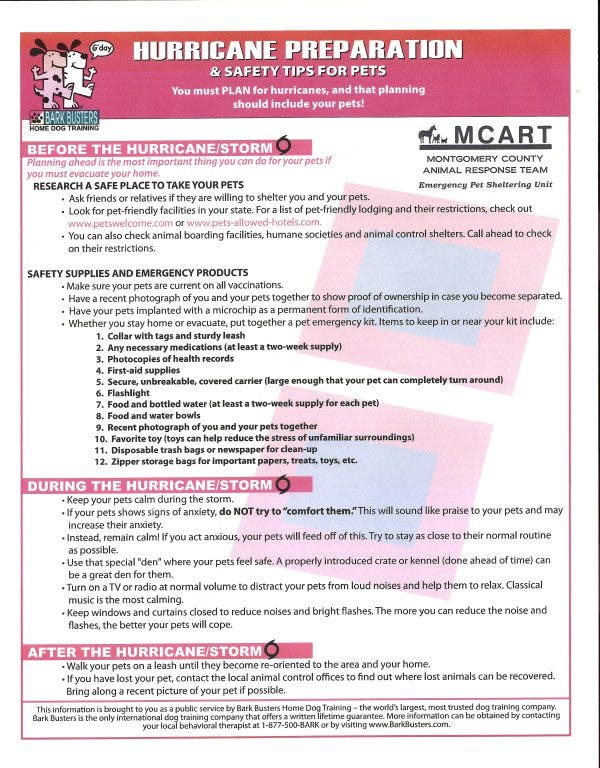

As Hurricane Sandy approaches our area it is important to remember to include your pets in your emergency safety plans. Below are general guidelines to help you prepare for a natural disaster.
RESEARCH A SAFE PLACE TO TAKE YOUR PETS
- The State of Pennsylvania has County Animal Response Teams (CARTs). The CARTs are mobilized during emergencies where people are evacuated to set-up temporary animal shelters for residents. Working with the American Red Cross the Montgomery County Animal Response Team (MCART) set up temporary animal shelters in close proximity to the human shelters. This will allow for residents to care for their pets during this emergency and to safely evacuate with their pets. For information or to purchase a pet go bag please visit
http://www.facebook.com/pages/Montgomery-County-Animal-Response-Team/128442383846790
Find out what's happening in Limerick-Royersford-Spring Cityfor free with the latest updates from Patch.
- MCART will have 3 shelters set up for Hurricane Sandy. Shelters will be located at Pottstown High School, Norristown High School and Cheltenham High School.
- Look for pet-friendly facilities and lodging in your vicinity. Find listings at www.petswelcome.com or www.pets-allowed-hotels.com.
- If you evacuate your home, do everything you can to take your pets with you. Animals left behind can be injured, lost or killed.
- If you must leave pets behind, secure them in a bathroom (with drinking water in the tub), leave out plenty of food and alert local officials that your pets are in your home.
ASSEMBLE AN EMERGENCY KIT FOR PETS
- Whether you stay home or evacuate, keep a pet emergency kit with your family’s emergency kit. Use plastic zipper bags to protect the items. Items should include:
- Collar with ID tags and sturdy leash
- Two-week supply (or more) of each pet’s medications
- Photocopies of health records and a recent photo taken of you with your pets
- Two-week supply of pet food and bottled water, and bowls for each
- First-aid supplies, including bandages, tape, tweezers and antibacterial ointment (Ask your vet for recommendations)
- Secure, covered carrier/crate (large enough for your pet to completely turn around)
- Flashlight and radio, with fresh batteries for each
- Favorite toy or bedding (to help reduce the stress of unfamiliar surroundings)
- Cleaning supplies and disposable trash bags or newspaper for cleanup
BEFORE THE EMERGENCY
Find out what's happening in Limerick-Royersford-Spring Cityfor free with the latest updates from Patch.
- Be sure pets are wearing current identification. Even better, have them microchipped. This permanent form of ID helps ensure your pets are returned to you if they are lost.
- Keep pets current on all vaccinations and de-wormer.
- Have a photograph taken of you with your pets to show proof of ownership should you become separated. Send copies of the photo to family and friends who live out of state for safekeeping.
- Get a window decal so that rescue workers know there are pets in your home.
DURING THE EMERGENCY
- If you stay at home during the emergency, take your pets with you to a safe room such as a basement.
- Put your pet on a leash or in a covered carrier. This ensures you know where he is, provides a naturally safe environment for him, and allows you to move him to safe areas as needed.
- Always remain calm. If you act anxious, your pet will sense and feed off your mood. If your pet shows signs of anxiety, do NOT “comfort” him. This will sound like praise and may increase his stress.
AFTER THE EMERGENCY
- If emergency officials advise you to remain in your home, keep your pets in your home, too. Once emergency officials say your environment is safe, walk pets on a leash until they become re-oriented to the area and your home.
- If you have lost your pet, contact local animal control officers to find out where lost animals can be recovered. Bring along that photo of you with your pets to help shelter workers identify your missing pals.
- Depending on the extent of the emergency, have your pets checked by your veterinarian to ensure their continued health.