Health & Fitness
Pennhurst Part I
Pennhurst once again is a topic of conversation and I wanted to take the opportunity to talk about its past.


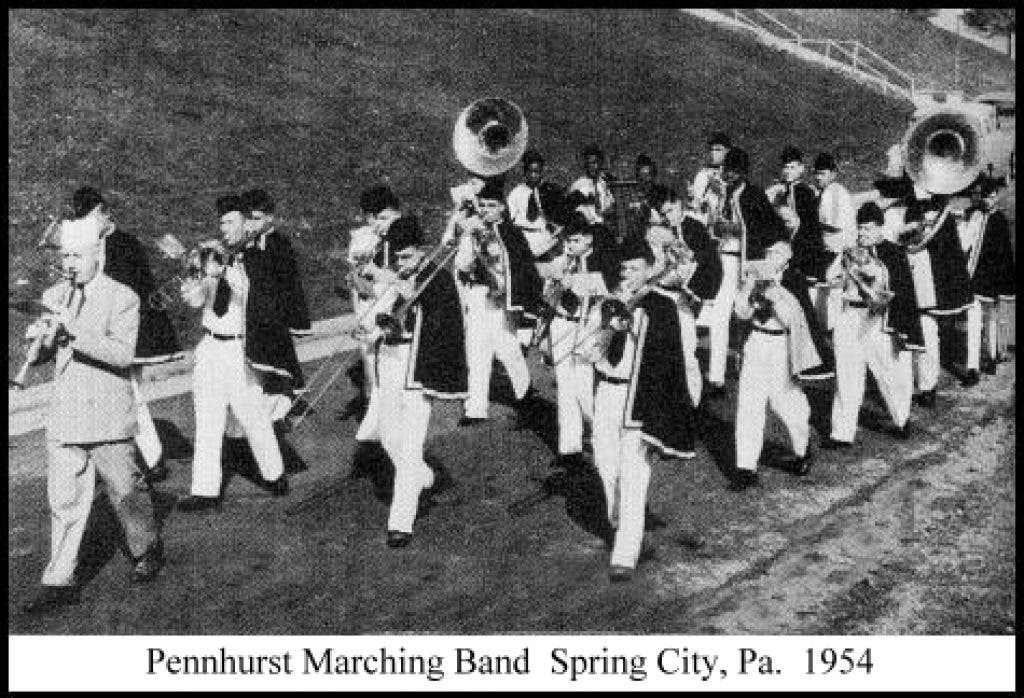


Pennhurst State Hospital has been closed now for more than 25 years. It remains a subject of interest today but the basis of that interest has dramatically changed. Back in the 1960s there were occasional stories about the neglect and abuse of patients at the facility. Stories, that at times were exaggerated, but
not without a basic and truthful theme that things were not as they should
be. Reporters flocked to the scene to write their stories like those at the scene of a fire or accident. Sensationalism after all sells news.
Today we are more likely to hear about the controversy involving the development of the former Pennhurst property into an amusement attraction called the Pennhurst Asylum. I don't believe in ghosts and really don't see any need for an amusement attraction nearby. I don't plan on going there and I assume whoever spends the most money will ultimately have their way. That being said it will make a nice "Then and Now" picture sometime in the future.
To tell the whole story of Pennhurst would be a far more complicated task then I am capable of doing. The complexity of the situation is such that there is no one right or absolute truth that can be stated. You could interview 25 people who were involved with the institution and get 25 different perspectives. Many would be different and yet all would be just the way that person saw and interpreted it.
Find out what's happening in Limerick-Royersford-Spring Cityfor free with the latest updates from Patch.
I can only make observations from my personnal experience and offer my own views which I am glad to do. When I moved to Spring City in 1958 I had not heard of Pennhurst. In fact I lived here and attended school and it wasn't until 1960, after seeing a strange band in the local Halloween Parade that I was told it was the Pennhurst Band. It was apparent to me that these people seemed different. Were they Patients ?, Clients ?, Inmates ?, Retarded ?, Handicapped ?, Special ?
The names that were used kept changing over the years. They were wearing old band uniforms that didn't fit right. They were young and old and I can close my eyes and see them coming. I can still hear the music they were
playing. The music was a bit rough but you could hear the melody. It was a local band and why had I never heard of them? Well, my first thought was if I hadn't heard of Pennhurst after being in town for two years, maybe it was because someone was doing a good job of keeping the place out of sight. Yes, it was a sprawling campus sitting up on Crab Hill just a mile out of town with a population as large as the town itself.
Find out what's happening in Limerick-Royersford-Spring Cityfor free with the latest updates from Patch.
It was as if these people were sent away to Crab Hill so the rest of society didn't have to deal with them. The campus was isolated and some of the wards were locked to keep the patients from wandering off. The mental age of the those who called Pennhurst home covered a wide spectrum.
One would not allow a 2 year old child to walk off into town on his own, neither could some of the lower mental aged patients be given that freedom. Common
sense would dictate that for their own safety certain restrictions were required.
Pennhurst was a sprawling community that encompassed over 1400 acres of prime Chester County farmland and had a magnificent view of the winding Schuylkill River. That community in its final years was known as “Pennhurst Center”. The Pennhurst State School and Hospital was opened in 1908.
At the time of its opening it officially named the Eastern Pennsylvania
Institution for the Feeble Minded and Epileptic.
Pennhurst came into existence with an act of the state legislature in 1903 and opened its doors in 1908. It was during this time that many postcard views showing the new facility were published. All of the buildings were lettered and years later names were used to match these letters. The huge complex of red brick buildings included building P the Administration building, hospital buildings, patient wards, a laundry, a cafeteria, a movie theater, and a powerhouse. There were separate resident houses found on the grounds for the administrator, doctors and other higher ranking staff. There were numerous farms including a dairy farm, a pig farm and a hennery. There were greenhouses and a large garage with a fleet of state vehicles. Pennhurst had its own disposal plant, reservoir and giant water tower.
Many of us still remember seeing the bright shining star on top of the old tower
that was always lit during the holiday season. I remember in 1961 our scout troop visited the Pennhurst scouts. I remember walking along underground tunnels. It was damp and smelled. All of the main buildings on the lower campus were connected by these tunnels and you could travel all about and never see the light of day.
Pennhurst was in relative terms a very large facility, and in 1954 had over 3550 patients and 575 employees. In 1954 the report published by the State actually showed that the facility had operated with a profit. This means there was no taxpayer money used to support the institution. The farms, tailor shop, sewing rooms and other venues all managed to produce surplus products that were used at prisons and other state Institutions. The profit more than compensated for cost of running Pennhurst. It is hard to imagine any government institution that
didn't require the taxpayers support in order to operate effectively.
Of course there were work boys and girls who were assigned almost all of the work and the higher functioning patients were utilized keeping care of the lower functioning ones. In some cases they would refer to them as their babies. They had a job to do and many were hard working and dedicated caregivers. The
grounds were well manicured and once again most of this work was done by
patients. They had a greenhouse used for flowers in the buildings and plants
used in their vegetable gardens. To an outsider driving past the buildings it might look like a college campus from the 1950s.
During the years of operation numerous policies on the treatment of patients were introduced and each decade brought about change. The pendulum would swing from different points of views on how the clients should be treated. It is always easy to look back at the things that were done and speculate on how they should have been. It is an evolution of thought on the treatment of retardation and what amazes me is that some people do not realize we are still in this process. One day in the future people will look back on the medical practices employed in 2012 and be totally amazed, just as we are at practices used in the 1800s.
To be continued
William C. Brunner