Politics & Government
Only two area bridges called "structurally deficient"
The S.R. 1043 bridge between Royersford and Spring City is one. The other is in Limerick Township.


As the Inquirer and many other news outlets reported earlier this week, Pennsylvania enjoys the distinction of having the highest percentage of "structurally deficient" bridges in the United States, with 5,906 or 26.5 percent of the state's spans qualifying for the label.
Given those numbers, Patch readers may be pleased to learn that only two of those bridges are in our immediate area.
One of them, perhaps unsurprisingly, is the 89-year-old bridge on state road 1043, which connects Royersford and Spring City. PennDOT is administering major repairs to the bridge, which carries about 17,000 vehicles each day, for the second time since 2005.
Find out what's happening in Limerick-Royersford-Spring Cityfor free with the latest updates from Patch.
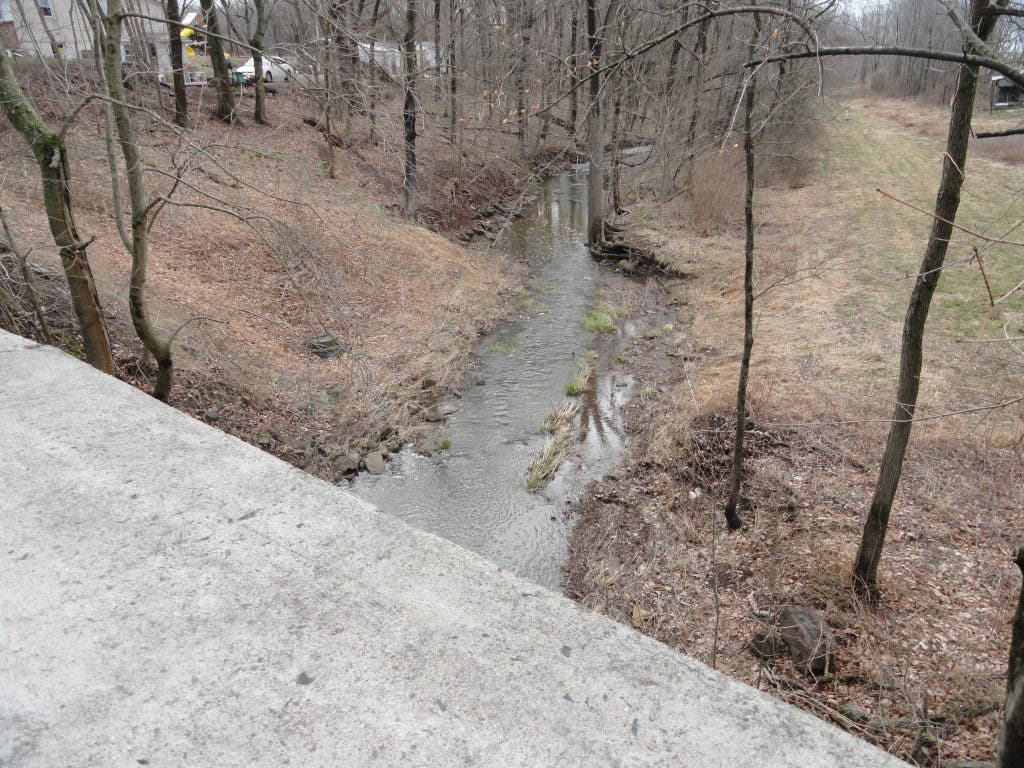
The other bridge [pictured] is on Fruitville Road in Limerick Township, about 1/4 mile north of Ridge Pike. Built in 1858, that bridge is estimated to carry just 250 vehicles a day.
To be designated as structurally deficient, a bridge must receive a rating of four or lower on a one-to-ten scale in one of three areas: deck, superstructure, or substructure.
Find out what's happening in Limerick-Royersford-Spring Cityfor free with the latest updates from Patch.
The S.R. 1043 bridge received a deck rating of six, a superstructure rating of three, and a substructure rating of five.
The Fruitville Road bridge, which is not on a state-maintained road, received a superstructure rating of four and a substructure rating of five. Its deck was not rated.
The attention given to the nation's bridges this week was a result of a report released by Transportation for America, a Washington-based group that calls itself "the largest, most diverse coalition working on transportation reform today." The group's report was based on bridge data collected from the states by the federal Department of Transportation.
A map tool the group has made available to the public allows visitors to see the structural ratings of all bridges located within a ten-mile radius of a given address.