Schools
SF Alumnus Spends Time Teaching in Africa
A Spring-Ford High School graduate and Penn State alumnus, along with his wife, is spending time in Africa with the peace corps, teaching natives mathematics, English and computers.

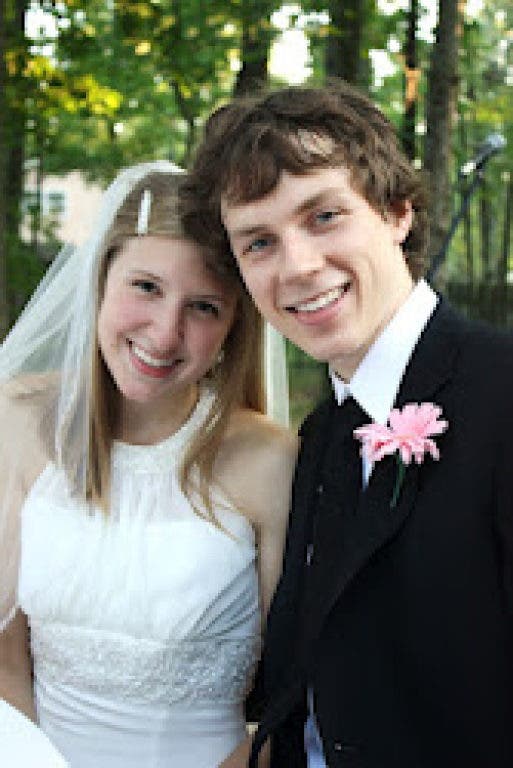
alumnus (Class of 2006) Dan Spencer certainly has a uniquely interesting story. After studying at Penn State University and meeting his eventual wife, Lisa, there, Spencer and his wife decided to join the Peace Corps and are now living in Mozambique, Africa, teaching math, English and computers.
Spencer took some time to chat with LRSC Patch Editor Kevin Haslam about his experiences.
LRSC Patch: So, what brings you over there? How did you get involved with the Peace Corps?
Find out what's happening in Limerick-Royersford-Spring Cityfor free with the latest updates from Patch.
Dan Spencer: Well we actually had a friend. My wife Lisa had a job and one of her coworkers was a returning Peace Corp volunteer that just returned from the Pacific. She came back and just three months or so after she had come back, she started working with Lisa.
She started telling all of her stories, because she told us all of her stories. Even the stories that were just terrible, like when she got parasites and everything. Despite the fact that she had some really hard experiences, she still said she'd totally do it again.
Find out what's happening in Limerick-Royersford-Spring Cityfor free with the latest updates from Patch.
It seemed like a good idea. I always wanted to try to help people, I guess. It seemed like it would be a really good way to do it. It was cool, because I would gain some world experience and learn a new language. So, I think all of those things combined are what inspired me to apply.
Patch: How long have you been over there?
Spencer: We arrived in the country the last day of September, so really the beginning of October. With all of the training, it was about two months or so. Then we came up to our permanent site. We moved into our current house in December of 2011.
Patch: Have you been getting adjusted well and being treated well by the natives?
Spencer: Yes, actually, very well. It's getting easier as more people start to recognize us. We stand out a lot because we're in Africa and we're the only two people who are of lighter skin. Everybody's starting to know us and we're teaching a lot of their kids in school. So, the kids come home and talk about us. Everybody in town is very kind, very friendly. We feel absolutely safe. All this support from all the people around us - we live right in the middle of a very dense neighborhood - and everybody around us knows us and talks to us all the time.
Initially it was kind of hard, because we were surrounded by people all the time; people who were very curious about what we were doing. Sometimes, we'd have kids sit on our porch and watch us as we chopped vegetables on our kitchen table. It was kind of unnerving. They got used to us. They don't really watch us anymore because we're not as interesting as we were before.
Now they play with us, which is a lot of fun. Initially it was kind of overwhelming and we didn't know how it would pan out. They got to know us and we got to know them, so we're adapting rather well.
Patch: And you did mention trying to learn a new language. Have you developed any skills in that department as far as this language goes?
Spencer: Definitely, yeah. So, I teach math. As a math teacher, I'm required to teach in Portuguese. During our 10 weeks of training, I learned how to speak Portuguese and achieved the proficiency level of intermediate-advanced. So, that was enough for me to be passed on through training. Then, they sent me up to my site. Since the 16th of January, I've been teaching in Portuguese. So, I would say my handle on the language is pretty good.
My wife Lisa teaches English, but because the kids don't know any English at all, she has to teach almost everything in Portuguese as well. So, both of us have picked up significant language skills there, and there are also two local languages that we have picked up basic phrases in, but we can't really converse in.
Patch: How long will you be there total?
Spencer: We will be in the country for 27 months total, but we had two-and-a-half months of training. So, we'll be at our actual site for about two years even.
Patch: Tell me about what you anticipate on doing over the next two years.
Spencer: We have several secondary projects we're working on. We have a boys and girls group in which we put on presentations of theater over the holidays. So, on holidays people gather at the town center and we put on theater pieces.
We're also working on photojournalism with the kids to basically put together sort of a newspaper for the school and the town.
We also have a women's group for the students. They get together and have an empowerment group. Women here don't have the same respect as women in America would. They get together and talk about what's happening in their lives and play soccer and games.
We've also got an English theater project in which the students put together a 10-minute skit and perform it at the Provincial Capitol against other schools. It's a competition and everybody gets excited about it. Last year, our school came in second place, but this year they want to get first place.
We also have a science fair which is also done provincially and then nationally. That starts in about two months. We'll start getting involved in that and students will put together experiments. Then we'll grade them on how meritable they are scientifically and whether they're interesting and teach anything.
I'm very interested in making a basketball court in my town. We don't have one, but I'd like to apply for a grant to get the support and money to put together a simple concrete court outside and get a school team going. Other schools in the area have basketball courts and school teams. I like playing sports, so I thought I'd try to get that started for my town. A lot of teachers are very into it. So that's what I'm trying to work on.
Patch: What's it like over there. You talked about the acclimation and being looked at differently, but what is it actually like? How does it feel? You grew up in the United States, where a lot of things can be handed to us. Could you tell us the different and how surreal it is to be over there?
Spencer: The differences are huge. Where do I begin? The poverty level here is completely different than the United States. You're poor here. You really don't have anything. You're very hungry all the time. Because of that, there are a lot more people who will beg. Because we are Americans and it is very obvious we are Americans, they know we probably have a lot of money. It's sort of true. We do have jobs in the community and having a salaried job in the community puts you on a higher level. But, when you compare what we make here in terms of American dollars, it's very very little.
Food is the only cost we have though. So, despite the fact that we make so much less, food here is a little bit cheaper, because so many people here are subsistence farmers. But, getting back to your question about the difference socioeconomically...
How do I even explain? We have a water boy... This is an example. He brings us our water, because we don't have running water at our house. So, he brings the water in these really big, heavy buckets. For an entire week's worth of work - he'll bring 10-12 of these buckets, maybe 10-15 liter capacity - we pay him the equivalent of $2 American, which would be outrageous in America. Here, it's really good. He's making a lot of money for what he's doing. He's making more money than most people. The value of work is different here. Even as teachers... Teachers in America aren't paid an extreme amount. Here they're paid even less. They're probably paid the equivalent of $250 a month. In America that would definitely not last, but here, that's one of the highest paying jobs you can have. There are no tech jobs or financial jobs. You can be a teacher or a political figure and those are the only salaried jobs you can have. Other people drive taxis or farm and sell goods at the market.
I just said a lot, but it's a completely different world in terms of wealth and what people have.
Patch: Let's talk about the past a little bit. Spring-Ford grad, Class of 2006. Went on to Penn State, Class of 2009. And you went on an accelerated master's program?
Spencer: Yes, I got my masters in 2010.
Patch: Tell me about how Spring-Ford shaped you into your successes and who you are today.
Spencer: There were several key teachers at Spring-Ford who affected who I wanted to be when I grew up. Now as a teacher here, I'm using some of the styles I learned from them. I was really into math, obviously, because that was what my bachelors was in. Mary Palladino in particular and Nancy Michewicz were my two math teachers through high school. They had a huge impact on me. I really enjoyed their classes and them talking about the work they did. Mary Palladino was a statistician in the pharmaceutical industry, I believe, before she became a teacher at Spring-Ford. I really enjoyed her classes. When I went to college, I knew I wanted to do math, but they affected me wanting to become a teacher. I became a tutor at Penn State, then a grader, then a teaching assistant and then a lecturer. My past as an educator was shaped very heavily by those two women.
I also didn't realize until I got to college and more so when I got here in Mozambique, how good the Spring-Ford school system really is. It was a good experience for me. I was able to do extracurricular activities, take accelerated programs and things like that. It was really helpful and got me on the fast track which is really nice.
Patch: So what's the future hold for you?
Spencer: Right now I'm planning on applying to programs for statistics when I get back. I had done that a little bit before I left. I'm probably going to apply and I hope to move toward the West Coast. Maybe Washington State or California. I'd really like to be a college professor if I could.
Patch: Anything else you'd like to add or say to the community before we end?
Spencer: I guess just I can't wait to get back to see everybody again!
Get more local news delivered straight to your inbox. Sign up for free Patch newsletters and alerts.