Schools
Spring-Ford Teachers Go To "Nuclear 101"
The Limerick Generating Station held a special tour for Spring-Ford Area School District teachers this week.

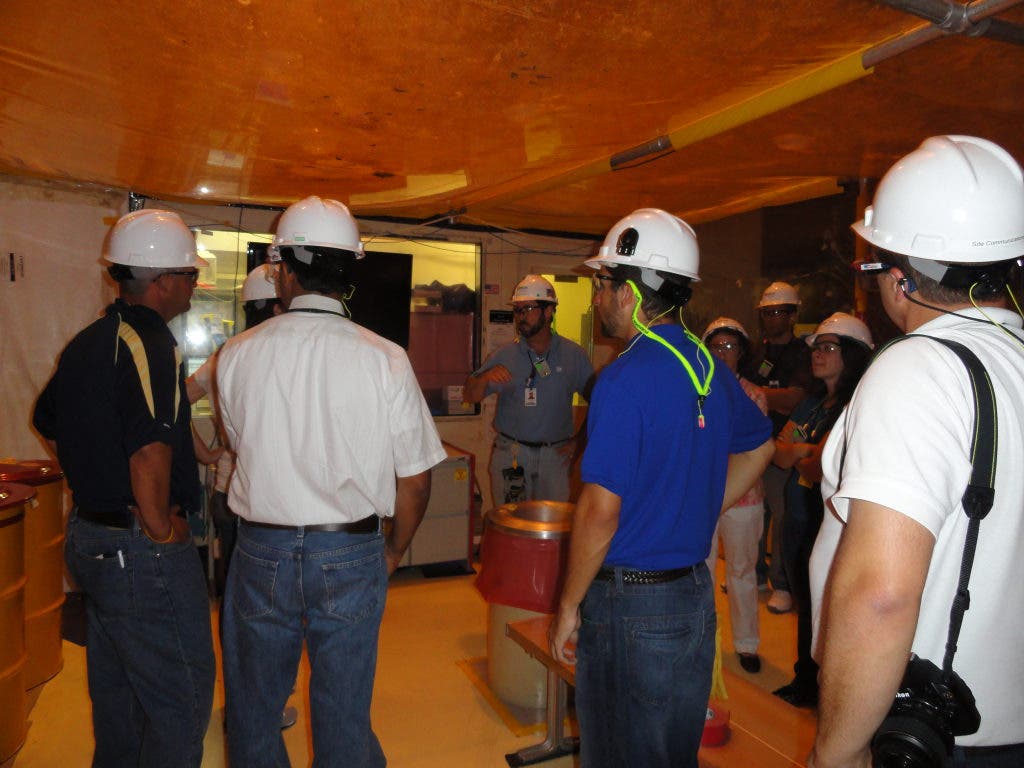


Spring-Ford Area School District teachers were invited to join the second-ever "Nuclear 101" tour, presented by the on Tuesday. The program lasted roughly four hours, beginning at 9 a.m. and ending at 1 p.m. About 14 teachers were in attendance for the tour. One of the teachers was from North Penn.
The station previously hosted teachers from Pottstown School District back in November for its first ever Nuclear 101 tour. Nuclear 101 is a corporate initiative by Exelon.
Among tour guides and hosts were Site Communications Manager Joe Szafran, Advanced Radiation Worker and Decontamination Supervisor David Rietscha, Maintanence Supervisor Matt Bonanno and engineer Dan Nugent. The four kicked off the tour with an hour-long presentation about the plant's history, information on Exelon and refuting the myth that the 507-foot high cooling towers do all the work.
Find out what's happening in Limerick-Royersford-Spring Cityfor free with the latest updates from Patch.
"I would say it was definitely something that I didn’t know," said ninth grade English teacher Rachel Lawrence. "I thought everything happened in the towers itself. So, when we had the little opening, I learned it was a whole reaction system it had to go through and not just the towers themselves."
Exelon has about 18,000 employees across the country, but for ninth grade English teacher Ellen Reilly, it was hard to find them in the generating station.
Find out what's happening in Limerick-Royersford-Spring Cityfor free with the latest updates from Patch.
"I just thought it was very interesting that you didn’t see that many people working," Reilly said. "For as big as this facility is, it seems to be self-working. There are people there in case something malfunctions, but there’s not that many people on the floors as we went around. The size of it, the security of it was pretty incredible."
The presentation also yielded information on fueling and refueling, as well as what happens during an outage and where the spent (used) nuclear fuel goes. Szafran indicated there's enough room in the storage unit to store spent fuel until 2024. Presenters also said that 40 years worth of fuel can fit in a four-car garage.
Teachers were also fascinated by security, which is vital to keeping the plant and the community safe from natural disasters and terroristic threats.
"Also, with the security, it was a lot more secure than say the airport, so I think that was shocking, as well," Lawrence said.
Along with security, the handling and evaluation of personnel was discussed, including the well-armed guards that teachers saw walking throughout the facility.
"They're nice people," said Rietscha. "They just have big guns."
Finally, Szafran pointed out the plant has backup plans for backup plans for backup plans and the plant has anticipated even the worst disasters, including a 6.0 earthquake. Pennsylvania has only ever seen a 5.2. Community outreach and economic benefits were the final topics in the presentation, which was followed by a 15-minute question and answer session.
"This provides us an opportunity to give back to our community," Szafran said. "We’re not able to bring students in for tours, but if we’re able to reach out to the teachers, the teachers can then see what’s in their own backyard. All these teachers teach in the Spring-Ford school district and they can look out of their classrooms and see the cooling towers."
Next, the tour began. After going through what seemed like flaming hoops in order to get into the facility, teachers began to see the inner workings of the mysterious nuke plant. First, they were guided through the feed pumps through Unit 2 to Unit 1. Then, they were taken to the suppression pool area and up an elevator to 353 feet in the air, where the refuel floor is.
After seeing how high up they actually were, teachers were then taken down to the control room, where 24-hour monitoring occurs. They got to see the engineers in action and learned about the 18-month training process each has to go through to be able to sit in one of the few air-conditioned rooms in the facility. Finally, the tour was guided through the generator and turbine deck before teachers were fed lunch and given Exelon flash drives with classroom materials and videos.
"All the kids grew up here and they see the cooling towers," Szafran said. "[These tours are] a way to provide the teachers the information and knowledge so they can then impart to their students so the students know more about what goes on in their community and the uniqueness it has."
As for the future, Szafran and his team has a few more schools in mind.
"We’re very excited," said Szafran. "Hopefully next year we can do Owen J. Roberts or Pottsgrove. So, it’s exciting for us to reach as many school districts and teachers as possible. We love providing tours and it’s great for the teachers, too, to learn something they maybe didn’t know about."
Teachers will bring back this information in their own unique ways, some will be able to use this for their own personal reasons, like Reilly, who lives in Collegeville. Others will find it useful when kids go off on a tangent.
"Even though we teach English, they’re going to be off task here and there and they might say 'Why is this alarm going off,' and it can be something we can clarify for them," said Lawrence.
Get more local news delivered straight to your inbox. Sign up for free Patch newsletters and alerts.