Arts & Entertainment
Where Art Plays Its Part: Volume I: Watercolorist Dorothy Weikel
Meet the first artist in our latest series, where paintbrush efforts stem from the heart.
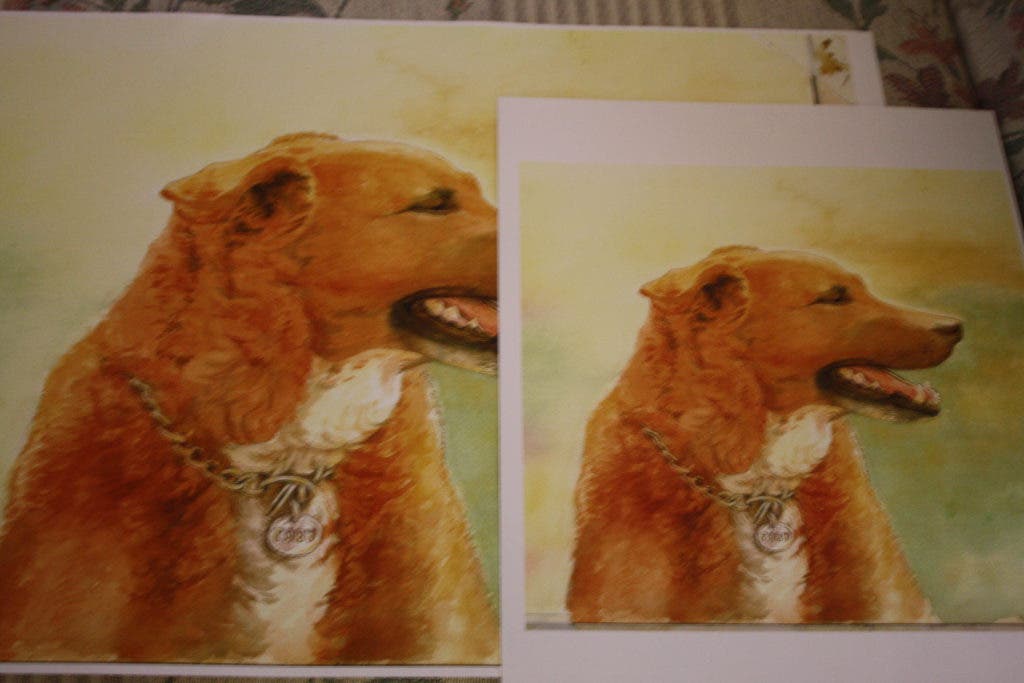


With a well-etched name in the Royersford area after eight years, Dorothy Weikel is known as a seasoned watercolorist through the captivating way of many a brushstroke.
Painting spilled easily into her life through her mother, Helen England, who covered her own canvases with subjects like still lifes, mind-made concepts, chickens and Weikel’s daughters when they were young. England also worked as a designer at an embroidery house in Philadelphia in the 1920s.
During her high school years in West Chester, Weikel began to cater to her penchant for practicing art.
Find out what's happening in Limerick-Royersford-Spring Cityfor free with the latest updates from Patch.
Weikel is a graduate of the Philadelphia College of Art from the class of 1953, with the school now known as the University of the Arts.
“It’s more spontaneous than oils,” Weikel said. “For one thing, when I was in art school, I studied oil painting—everything was oils. The turpentine drove me crazy and gave me terrible headaches, so I thought, ‘I have to go to something else. Watercolors are quicker [to use], and they aren’t as smelly.”
Find out what's happening in Limerick-Royersford-Spring Cityfor free with the latest updates from Patch.
After college, Weikel did commercial art on greeting cards and product packaging, although she wanted to be an illustrator of children’s books, at heart.
But watercolor painting always drew Weikel in all on its own, and today, she’s had her pieces featured by the Chester County Art Association, Greater Norristown Art League, Perkiomen Valley Art Center and Pottstown Area Artists' Guild.
She estimated that she’s probably done around 200 paintings in her lifetime.
When she finishes a painting, she takes it to in Spring City to have it prepared for its future home on a wall.
Given the weight of glass, since any splashes of water hitting the paintings will make the colors run, the framed final pieces often tend to be very heavy and hard to maneuver, Weikel pointed out.
“Framing is very important,” she said. “It can make or break a painting.”
While Weikel loves focusing on outdoor scenes, skies, flowers and her grandchildren, people often reach out to her and ask her to paint their own loved ones, including fur kids and the human kind.
“Your children are changing,” she said about why people often ask her to capture their children or grandchildren in watercolor. “It’s sort of like keeping a record of what’s going on, other than photographs, but it’s more fun if you draw them.”
“Lots of people ask me, ‘Would you do my house or an animal for me?’” Weikel admitted.
While living in Kimberton, a neighbor who planned to move south asked her to paint his cherished cherry blossom tree as it still held its blooms, and she did.
“I love detail. That’s the trouble—I’m anything but simple,” Weikel explained in how she like many artists can’t tell when she’s finished with a piece because she always finds herself wanting to go back and change more, which is why she said peer-critiquing is such a necessity for her.
“When my first husband got very sick, that’s really when I came back to painting again,” she said.
Weikel noted that her husband had bladder cancer, with constant trips to and from the hospital.
“At the time, I was so glad to join a Phoenixville Area Senior Center art class because it almost took me back to being young again in art school, free,” Weikel said. “It was wonderful therapy.”
She also explained that not just painting but art in general is an important outlet for older people, especially those who might be forgotten, handicapped or for some reason or another unable to express themselves easily in words. But the educational aspects of art are something Weikel is glad for, too, along with how spending time creating art develops the imagination.
Recognizing long ago that she wouldn’t fit well into just any old occupation, Weikel carries a lot of gratitude for having allowed herself the opportunity to pursue art through her honed talents.
“I was a lousy speller, and I could never do clerical work,” Weikel said, thankful to be a painter. “It’s great to use your imagination. It’s like a breath of fresh air. If I couldn’t do art, I would really be lost because it’s the one thing I can do well.”