Arts & Entertainment
Where Art Plays Its Part: Volume XI: Baseball and Landscape Painter Tim Swartz
Painter Tim Swartz has been capturing not only Spring City sky and farm scenery in his painting for years but also the lights and shadows of the cherished game of baseball.


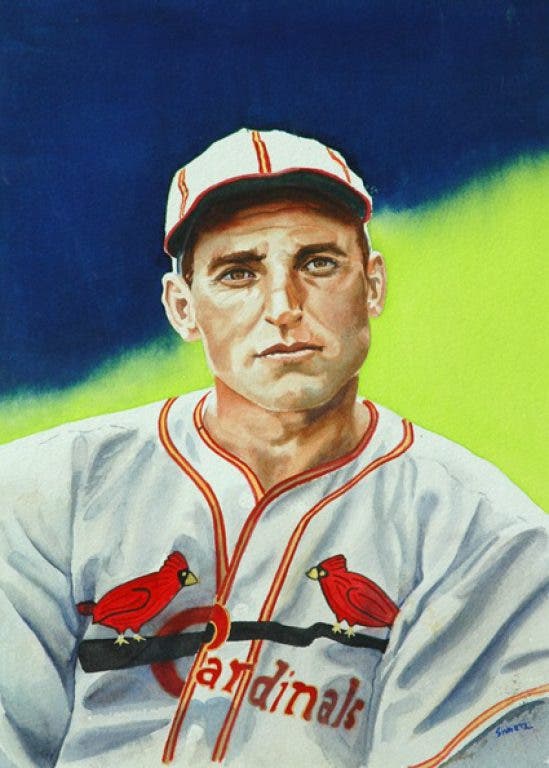

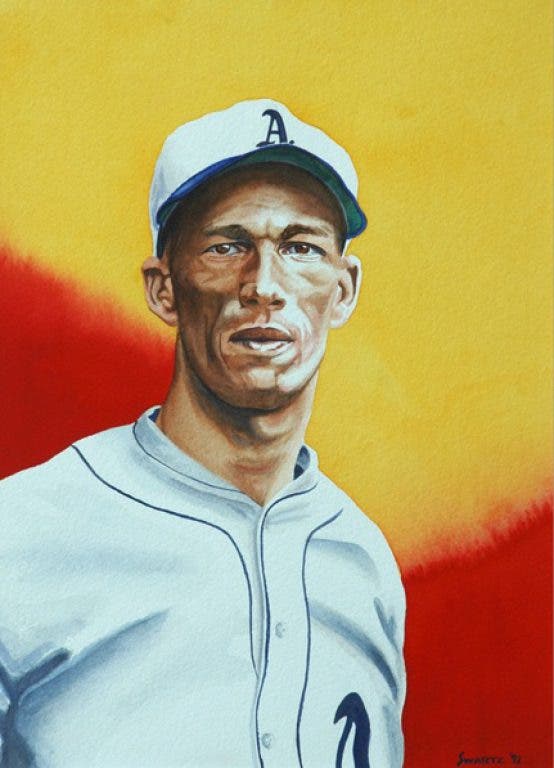
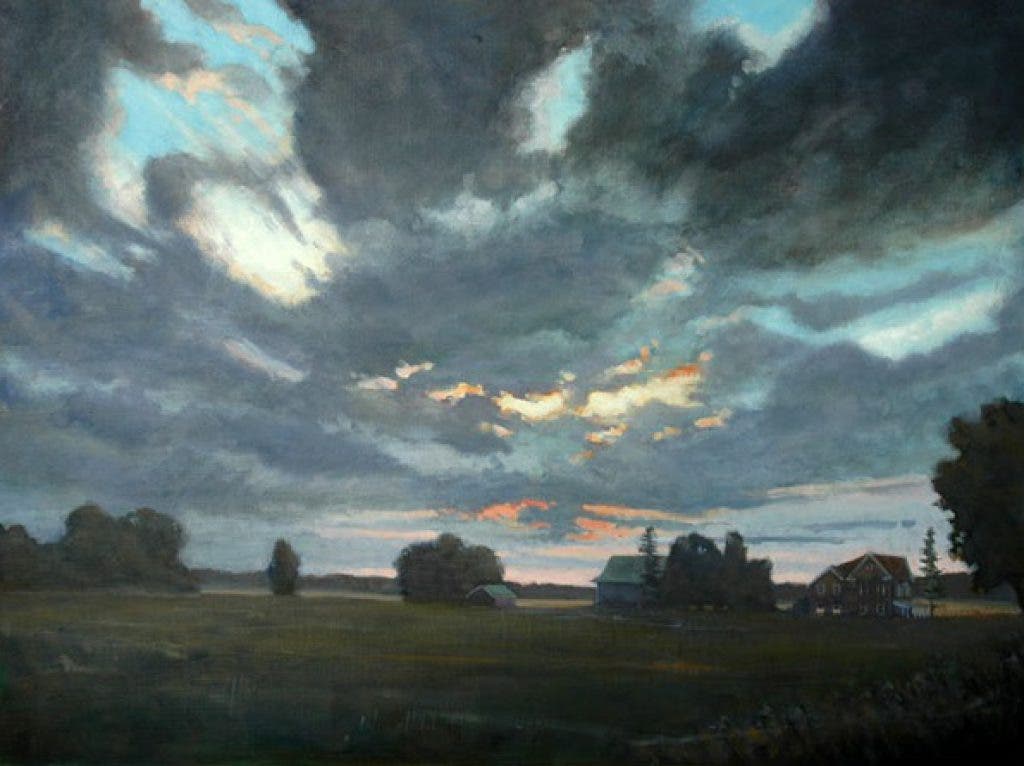


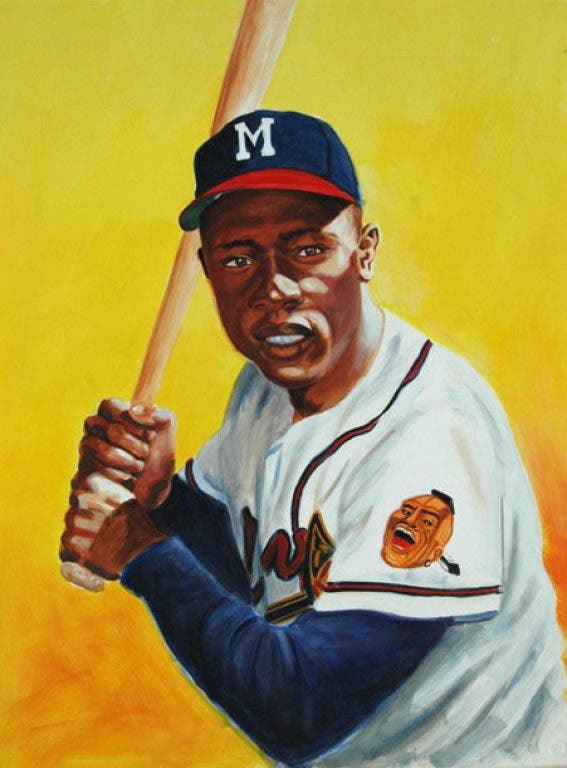


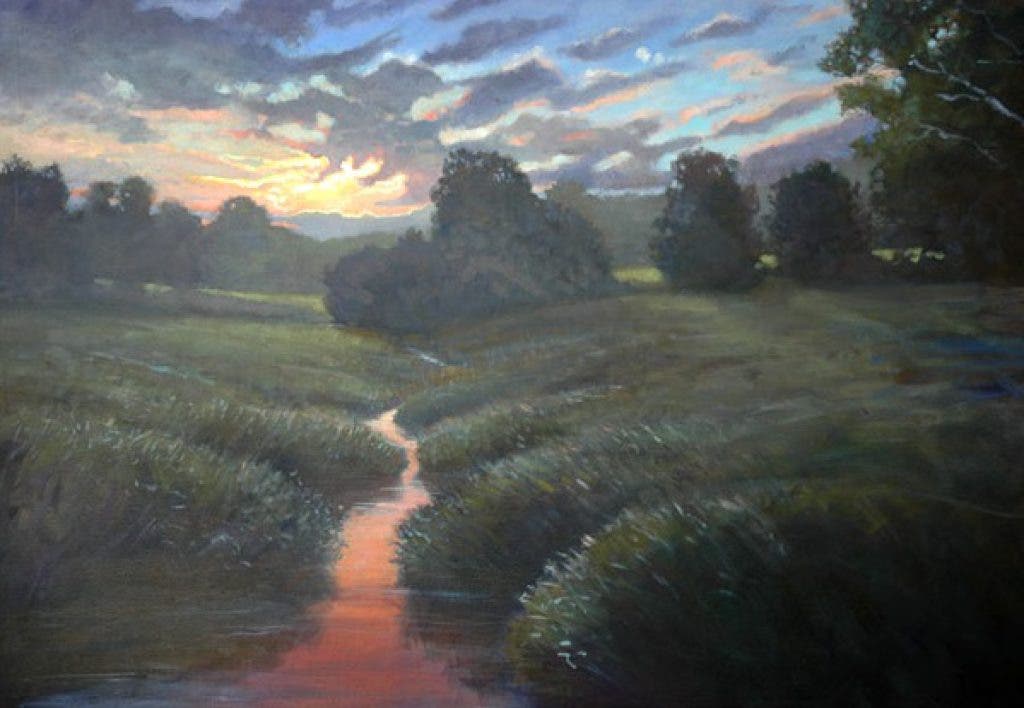
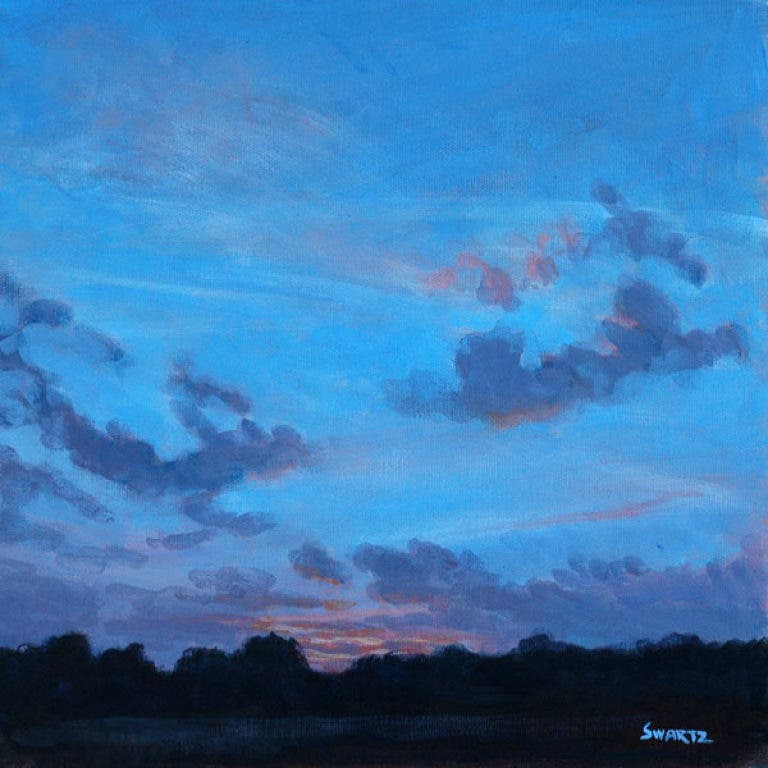
Gracefully-trotting horses and swaying trees around the agricultural sweeps of Spring City stirred to life through the paintbrush in Tim Swartz’ hand in his youngest years. Today, he practices his love of painting at a studio in his home but also through teaching art to teenagers at Christopher Dock Mennonite High School in Lansdale.
Swartz received an English degree from the former Eastern Mennonite College in Harrisonburg, Virginia, now known as Eastern Mennonite University.
After toying around with a few different careers of working in a grocery store, video store and serving as a caretaker at a historic home known as the Sweetbriar Mansion in Fairmount Park, he took a job offer to become a high school art teacher despite not having a degree in the field or in teaching.
Find out what's happening in Limerick-Royersford-Spring Cityfor free with the latest updates from Patch.
He’s held the position for 13 years now, grateful that the principal who hired him was known to take chances on those who had worked in jobs away from classroom experience—bringing something a bit different to the table.
“For many kids, it’s the first time they really get to explore a medium,” Swartz reflected in noting that lessons about different approaches to art are shorter in earlier years of school, for students.
Find out what's happening in Limerick-Royersford-Spring Cityfor free with the latest updates from Patch.
“It’s the first time they might have a chance to sit down and use the wheel for a month-and-a-half or learn to use Photoshop, if they’re into photography,” he said. “I like introducing them to art and letting them fly.”
Swartz teaches about 400 students in grades nine through 12 at the private school.
Having spent plenty of time in his youth with a pencil in hand, polishing art on the page, Swartz reminisced that painting pulled at his heartstrings more noticeably when he pursued his passion as a child and teenager.
“It was more impactful than just a drawing because of the addition of color,” Swartz said. “You can do some really wonderful things with the dispersion of watercolor in a variety of ways, whether you do a wet on wet or a graded wash. The color transitions and ways of applying paint were interesting.”
He noted that he’s more into acrylics lately, as they allow certain freedoms that don’t exist with quickly-drying watercolor paints.
His paintings revolve mostly around a few poignant themes: farms, land, sky and baseball.
“As a Mennonite kid, we couldn’t go to the movies or to the bowling alley—kinds of things many kids would have been able to do,” Swartz said. “That was how the Mennonite culture lived at that time, but it’s changed, now.”
Swartz’ family didn’t have a television, but they did travel to baseball games.
“Baseball was wildly popular through my extended family,” he said. “Seeing how much joy they had playing and the whole physical aspect of hitting, throwing and running in a pastoral setting of fields, green grass, dirt and blue skies appealed to the visual side of me.”
In fact, he’s sold several baseball paintings to players of the Reading Phillies and the Philadelphia Phillies.
“When I started paying attention to professional baseball, the colors, pageantry, dust and action were an overload, visually,” he revealed. “So when I paint, that’s what I try to capture.”
Away from baseball, Swartz often finds himself exploring the sky above and the land at eye-level, especially farms up for sale throughout East Vincent Township and Chester County, when the land is in jeopardy of being developed.
One of his tractor paintings is in the office of , not far from where he lives.
Something else most integral to Swartz in his paintings is the opportunity to portray light.
“Light is transient. It’s there for a moment and can move, or something can move between it and the subject, like a cloud,” he said. “Beyond the specific appeal of the way it brings out color or tone, there’s also that sense of transition, that it’s moving and changing. In a painting, I try to capture that moment at that particular time—that particular light.”
“When I’m painting barns and stone walls that have a sense of age and permanence about them, the light against that is very transient,” he continued, “so it’s a nice interplay between the two.”
“That’s how we see,” Swartz concluded in describing another aspect of his appreciation for light’s part, in the world. “It reveals texture, form and color. It’s never the same, bringing out that sense of transience, again.”