Home & Garden
'Dangerously Invasive' Fly Officially Spotted In Montgomery County
This local critter is quite unfriendly, and residents are being told to "destroy" it.


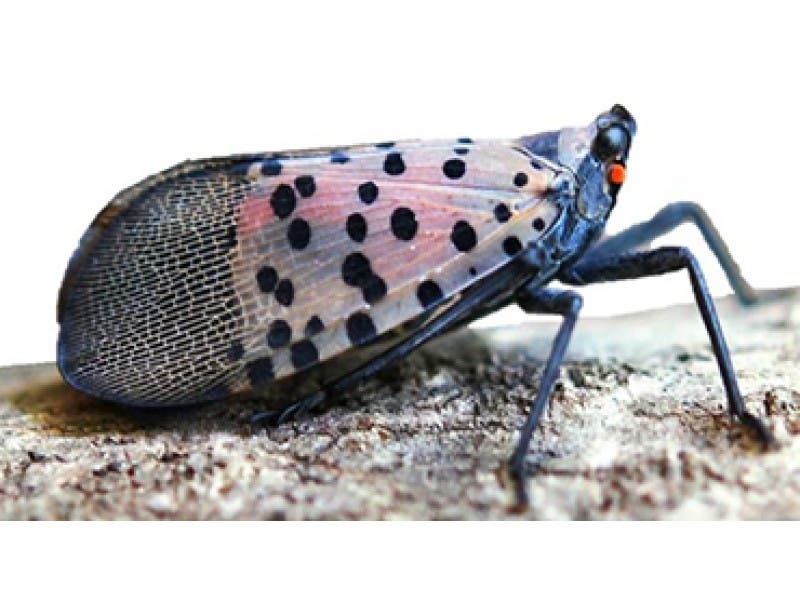
A dangerously invasive fly that has been sweeping across Pennsylvania has been officially spotted in Montgomery County, according to the Pennsylvania Department of Agriculture.
The spotted lanternfly disproportionately consumes grapevines, apple trees, stone fruit trees, and pine trees and has the potential to destroy ecosystems, according to officials.
It’s serious enough that a “quarantine” has been implemented in several townships in Montgomery County, and a few in Bucks County as well, officials said.
Find out what's happening in Norristownfor free with the latest updates from Patch.
Any business that stores products outside must first be approved by an inspector from the state department of agriculture.
That includes not just firewood and organic material, but companies that showcase items on patios or sidewalks or parking lots, like hardware stores, supermarkets, and car dealers.
Find out what's happening in Norristownfor free with the latest updates from Patch.
The ”quarantined” locations are in Upper Hanover, Red Hill, Pennsburg, and East Greenville in Montgomery County.
In Bucks County, the edict affects Milford Township and Trumbauersville, according to officials.
Over the summer, the lanternfly was spotted throughout the state, including Berks county, just a mile from the border with Montgomery County.
The first discovery of the bug also known as Lycorma delicatula was made in the fall of 2014 in Berks County. That was the first sighting in the history of the United States.
Since then, more than 100,00 spotted lanternflies have been killed.
“Pennsylvania is a leader in the country for timber production and we have quite a large grape industry and we have orchards, so it definitely has been introduced to a sensitive area,” Emelie Swackhamer, Penn State Extension Educator, told 6 ABC.
Nymph and adult spotted lanternflies cause extensive damage when they feed, sucking sap from stems and leaves and causing the plant to ooze and weep.
Not only does the plant die but the “fermented odor” caused by the feeding, along with the fluid excreted by the insects themselves, promotes mold growth and draws even more insects, according to the U.S. Department of Agriculture.
“Residents in Montgomery County should be aware that they will see department surveyors in their areas looking for any signs of the Spotted Lanternfly,” Agriculture Secretary Russell Redding said in a statement. “Our crews are working to look outside the current quarantine area in an effort to contain this invasive insect. We do not want residents in Montgomery County to be alarmed as there aren’t any impacts to human health, and we want everyone to rest assured that we are taking the needed steps to prevent further spread.”
The lanternfly is a native to the Asian countries of China, Indian, Japan, and Vietnam.
It has done invasive damage to Korea, where officials say it has attacked 25 plant species that also grow in Pennsylvania.
The state released the following tips to residents:
- If you see eggs: Scrape them off the tree or smooth surface, double bag them, and throw them in the garbage or place the eggs in alcohol or hand sanitizer to kill them.
- If you collect a specimen: Turn the adult specimen or egg mass in to the department’s Entomology Lab for verification. First, place the sample in alcohol or hand sanitizer in a leak proof container.
- If you take a photo: Submit photo of adults or egg masses to badbug@pa.gov.
- If you report a site: Call the Bad Bug hotline at 1-866-253-7189 with details of the siting and your contact information.
Photo credit: US Department of Agriculture.
Get more local news delivered straight to your inbox. Sign up for free Patch newsletters and alerts.