Community Corner
North Hills Flashback: Ten Years of Nordstrom at Ross Park Mall
Ten years ago, the opening of Nordstrom transformed Ross Park Mall into an upscale "destination mall".


On October 22, 2008, Nordstrom opened at Ross Park Mall, forever changing the retail landscape in the North Hills of Pittsburgh. When the doors officially opened at 10:00 AM that Friday morning, Ross Park’s transformation from a middle class mall to an upper class destination mall had been completed, a change two years in the making.
In its early days, Ross Park wasn’t known for luxury retailers. It was a typical large, suburban, middle class mall, anchored by four department stores (Kaufmann’s, Horne’s, JC Penney, and Sears) and a strong cast of supporting retailers. American mall staples, including Waldenbooks, Merry Go Round, Foot Locker, The Limited, and Lechter’s joined local and retailers such as Deck The Walls, Ross Park News, and Columbus-based Cheryl & Co in the days when the mall’s décor consisted of geometric shapes, chrome trim, neon food platters, and statues of acrobats. The mall’s biggest calling card was arguably its McDonald’s, located inside Sears! For those who wanted a dash of luxury, there was Juno Trattoria, still considered one of the finest restaurants to operate in the area by those who remember eating there.
The mall started to trend upscale in 1997. Realizing its true potential, Simon filled spaces vacated by expiring original lessees with stores selling more expensive merchandise and retailers viewed as trendy, such as Abercrombie & Fitch, rather than an “old reliables” like National Record Mart. Despite adding a Williams-Sonoma here and a Banana Republic there, the mall had yet to truly take off to the next level.
Find out what's happening in North Hillsfor free with the latest updates from Patch.
The catalyst for the move was the 2005 merger of two department store conglomerates: Federated and May. Federated owned Lazarus, which had purchased Horne’s in 1994 and had just rolled into the Macy’s brand at the time of the merger. The May Company was the parent of Kaufmann’s. The new company would combine all operations under the Macy’s label. To avoid having duplicate stores, most malls would lose one of their existing stores (although a few, notably Tuttle Crossing in Dublin, Ohio, actually had two Macy’s stores for some time after the merger). Ross Park stood to lose the old Horne’s space, as the Kaufmann’s store was larger.
In May 2006, the old Horne’s closed for good, taking its parking deck with it. By this point, a plan was already in place: demolish the Horne’s, rebuild it as a Nordstrom, and use it to attract more upscale retailers.
Find out what's happening in North Hillsfor free with the latest updates from Patch.
This strategy had already worked in Cleveland at Beachwood Place, where an expansion built around a Nordstrom store had taken the mall to new heights in terms of upscale retailers. It also gave Nordstrom a chance to open a store in a completely new market. Between Cleveland (Beachwood Place) and Columbus (Easton Town Center) to the west and Philadelphia (King of Prussia) to the east, there was no Nordstrom within a 90 minute drive of Downtown Pittsburgh. It also would become the closest Nordstrom for many other cities, ranging from hour-plus drives such as Morgantown and Erie to locales as far as Buffalo, New York.
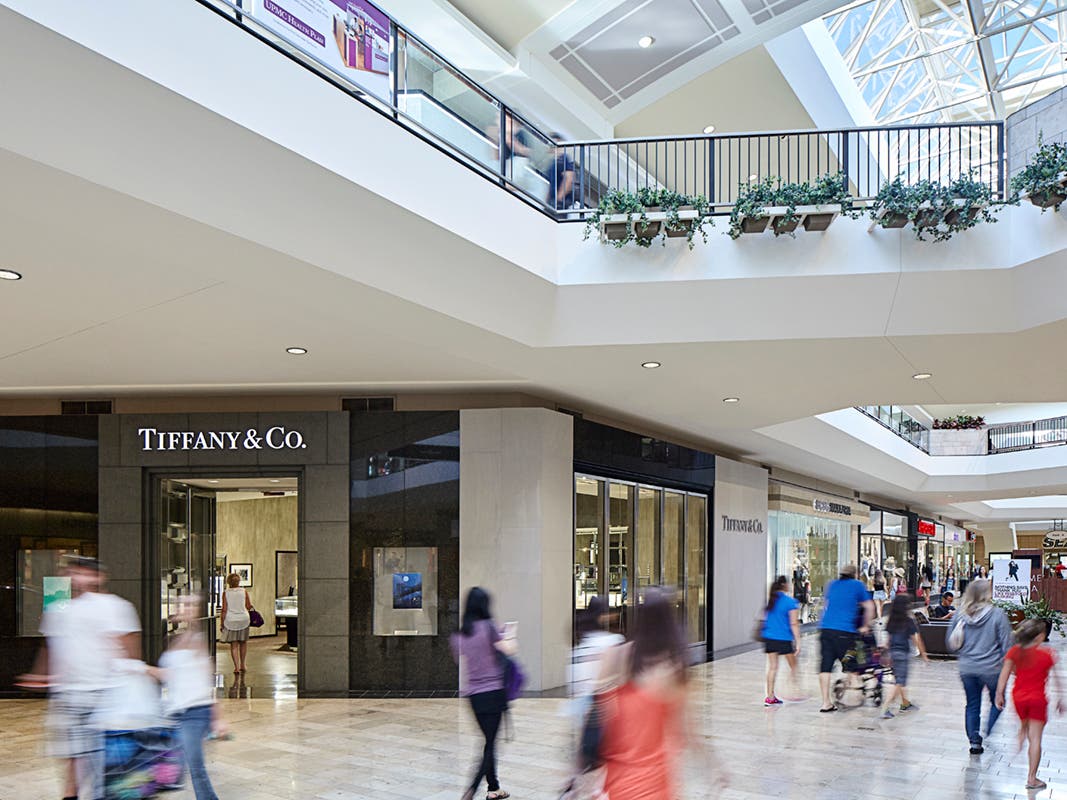
Shortly after Nordstrom was announced, two things happened. First, other upscale retailers did indeed sign on. Tiffany & Co, for example, announced plans to open a few weeks after Nordstrom. The average price of a pair of jeans began to rise in the stores surrounding the new construction with the arrival of Lucky Brand Jeans and True Religion. Second, and perhaps more notably, the United States entered the Great Recession during the construction phase of Nordstrom. Many wondered if the plans were going to lead to the demise of the mall, especially as other stores began to fade as a result of poor economic conditions, changing consumer preferences, and the increased prevalence of technology.
As the grand opening drew nearer, the economy continued to tank. Nonetheless, a large crowd gathered in the court surrounding the entrance to the new department store on the morning of October 22, 2008, showing up nearly an hour before the scheduled opening. As the doors opened for the first time, the employees clapped and welcomed their new customers. Everyone explored the new store. Some had great expectations based on what they had heard. Some had been to Nordstrom stores in other cities and were glad to see the chain finally open a location in Ross Township. Still others had never been inside a Nordstrom before and took the most time of anyone, figuring out on their own what made it unique from Macy’s and the other department stores. They observed the fine selection of men’s suits, the extensive shoe department, and the largest selection of high-end women’s clothing in the local area. Opening day shoppers may have walked through the old customer service area on the upper level and picked up a Frank Sinatra CD. Some may have even opened a Nordstrom charge on that day while making their first purchase at the new store.
Of course, the restaurants also gathered quite a bit of attention. On the lower level, those early shoppers quickly discovered they could get a good cup of coffee or a quick snack at the Nordstrom eBar. The upper level brought a first to Ross Park: a restaurant inside a department store. Memories of Tic Toc (still operating at the Pittsburgh Macy’s at the time but not carried over from the original McKnight Road Kaufmann’s when it moved to Ross Park) were conjured in the minds of those shoppers. Some even recalled Horne’s Tea Room when looking over the menu of the Nordstrom Marketplace Café. The restaurant quickly caught on as a favorite lunch spot for those looking for a great meal in a cozy yet upscale setting.
What about that recession though? Some predicted Nordstrom would fail within a year. A few felt the entire mall would decline significantly because of the upscale stores. As we know, this didn’t happen—and, in fact, Nordstrom may have very well future-proofed Ross Park Mall in an era where brick and mortar retailers are struggling.
There is always a market for upscale goods. Even if a recession is preventing some customers from making splurge purchases, there will always be enough customers who demand luxury goods to keep these stores afloat. Furthermore, with fewer of these stores, those looking for a luxury item at Nordstrom (or any of the smaller upscale retailers which opened in its wake), the store will be supported by those who live farther away. In a time of favorable economic conditions, of course, those looking for a treat are more apt to buy that new pair of shoes or invest in the dress they had been coveting for a while.
Luxury goods are also something that have not fallen victim to online sales. Buying a book or a bag of Hanes undershirts online isn’t the same as buying a designer three-piece suit. Every copy of the latest David Baldacci novel is the same. Mass produced undershirts are a predictable item in terms of what is inside the package. A good suit or dress, however, requires attention to detail. Given the higher price point, customers often prefer to see these items in person before buying them. If fit is an issue, as it often is with shoes, having someone take the time to measure feet and find something that will both look good and not prompt future podiatrist visits is a must. In short, having a knowledgeable salesperson who can help someone make the best decision possible when making a purchase is not a lost art to those looking to plunk down a significant amount of money on any one item. This explains why Nordstrom, Tiffany & Co, and other upscale retailers thrive when Sears and JC Penney struggle. It explains why a Tumi can open when a Suncoast closes or why a Vineyard Vines can thrive while an Aeropostale struggles. Even if customers use the online version of an upscale retailer, they will often check out the goods in-store first.
Nordstrom also has other amenities to keep people coming. The eBar has an extensive menu of coffee, tea, smoothies, salads, and snacks. The Marketplace Café is regarded for its three course meals, chef specials, wine list, and clam chowder. Having a restaurant conveniently located next to merchandise also brings people through the store, especially if they are using the store entrances. This means a greater chance for someone to make an impulse buy, especially if they happen to pass by one of the sale racks.
In short, Nordstrom is Ross Park Mall’s shield against the retail apocolypse, especially since it brought and continues to attract other upscale retailers. This, of course, brings business and jobs to Ross Township.
I was there on opening day. In fact, I was the second male customer to enter the store. As it represented the “second birth” of the mall, I proudly wore my “A Style is Born” button from the mall’s grand opening on my jacket that day. There was great optimism for the future in the air that day, even in the midst of the Great Recession. My first purchase? Chocolate covered graham crackers at the eBar. Hey, a historian has to eat, right? (I returned not long afterward to purchase what is still my favorite necktie). I have become a frequent flyer at the Marketplace Café, one of the best little escape spots anywhere in the area. Ten years later, our Nordstrom thrives and is one of the top-performing stores in the entire chain. Here’s to a great second decade!