Health & Fitness
Canning Tomatoes
As local tomatoes come into their glory, small batch canning is one way to enjoy that incomparable taste into the colder months.

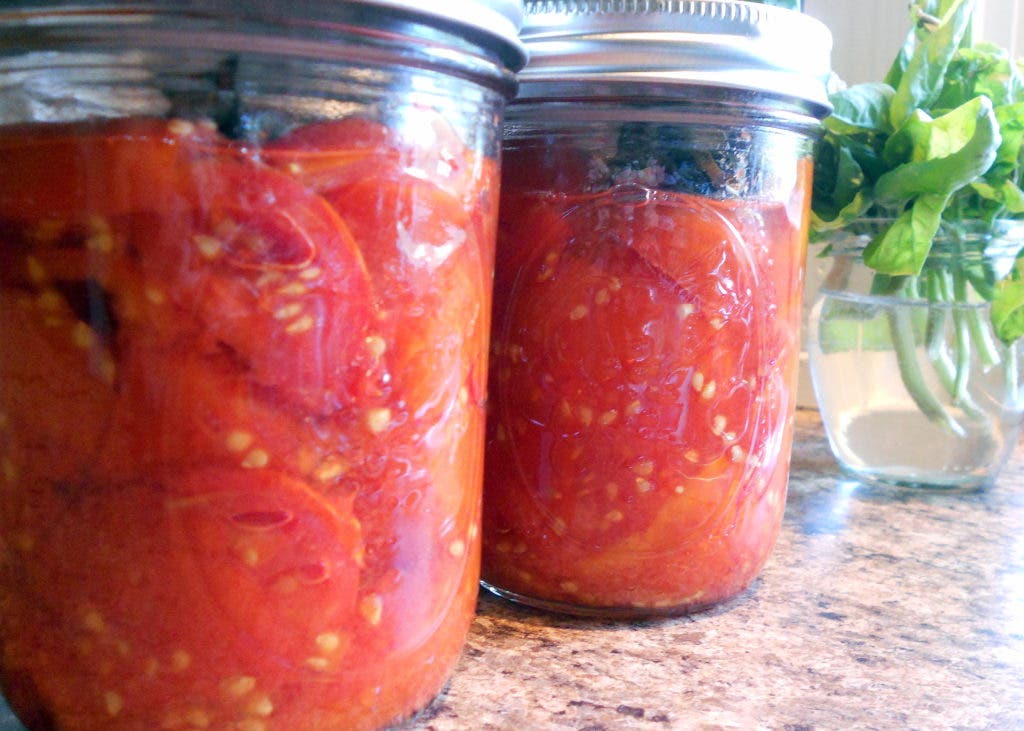


Every August, as far back as I can remember, we canned tomatoes. It was a multi-family endeavor, and everyone had a job, regardless of age. My earliest memory of this canning-marathon; seeing wall-to-wall tomatoes in our basement; invoked awe, because I realized that we would be powering through every single one of those tomatoes.
The smell of tomatoes blanching in hot water and the fresh basil leaves we would pack into each jar…the taste of hot tomato guts that somehow always managed to find their way into your mouth…tomato skin and seeds drying on your t-shirt, under your nails, in your hair…feeling your fingertips turn water-logged and pruney…ahhh, such fond, fond memories.
Then of course, there was the heat; did I mention it was August? We would have about 6 huge canning pots going on blazing butane rings and we would be packed shoulder to shoulder around the butcher-block table in a sort of assembly line. Invariably you would burn yourself on something – but you earned that blister
and wore it with pride. We shared laughs and gossip and this seemed to make the time fly. In two days, we canned enough tomato puree and pieces to keep multiple families in tomatoes for the whole year.
Find out what's happening in Perkiomen Valleyfor free with the latest updates from Patch.
The idea of canning in a much scaled-back quantity - small batch canning - is novel to me, but really wonderful as well. The only thing I miss is the chit-chat/gossip involved.
If you are growing a garden, you know that sometimes, you are blessed with every single tomato ripening at the exact same time. One solution is of course to eat your way through it. Or you could endear yourself to your neighbors by sharing the bounty. Or you could can some to enjoy in the colder months.
Find out what's happening in Perkiomen Valleyfor free with the latest updates from Patch.
The tomatoes I used for this are on the small side and are rather thin-fleshed, but they taste fantastic and will make great additions to winter soups and stews. For this reason I canned them with the skin and seeds attached, otherwise I would have been left with nothing. A quick pass through the food mill when I am ready to use them will remove the skin and seeds, but none of the flavor will be lost.
Don’t be afraid of canning. True, you will need to gather some supplies and set aside some time to do this, but you will really enjoy your hard-work, come winter. You will need a canning pot, a canning rack, a canning funnel, sterilized jars and lids, rings and a reliable (non-slip) jar grabber.
Sterilize your jars and rings in the dishwasher and get your lids into a pot of boiling water. Fill your canning pot with water and get it started on high heat well ahead of time – believe me when I say that getting that pot to boil will be the most time-consuming part of this.
Gather your tomatoes. Wash them well, cut away the core and any bad spots and cut in half or quarters, retaining any juices, in a large bowl. When the water in the canning pot starts to bubble, begin packing your jars with tomato pieces. Leave about ½” of head space. Divide the remaining juice evenly among the jars. Pack down with a spoon to eliminate air pockets. Place a few washed basil leaves and about a teaspoon of kosher salt atop the tomatoes in each jar. Wipe the neck of each jar, remove a lid from the boiling water and place on top. Tighten those rings and load your rack with the sealed jars. Lower the jars into the boiling water and process for 10 minutes. Carefully remove the very hot (!) jars and set on a few kitchen towels in a draft-free space. Cover with a few more kitchen towels so that they cool slowly. Check to make sure that the lids have sealed properly (they will not pop back when you press on them.)I had a jar that did not seal properly, so into the refrigerator it went and it will be used ASAP.
That’s it folks!
There are plenty of reliable resources on-line to guide you through the canning process. Here are a few that I like:
http://www.foodinjars.com/ (a great blog)