Community Corner
Peters Family Supports Wild Things from Home Plate to Home Front
Read how one Peters family supported the Washington Wild Things baseball team, and learn how you can follow their lead.
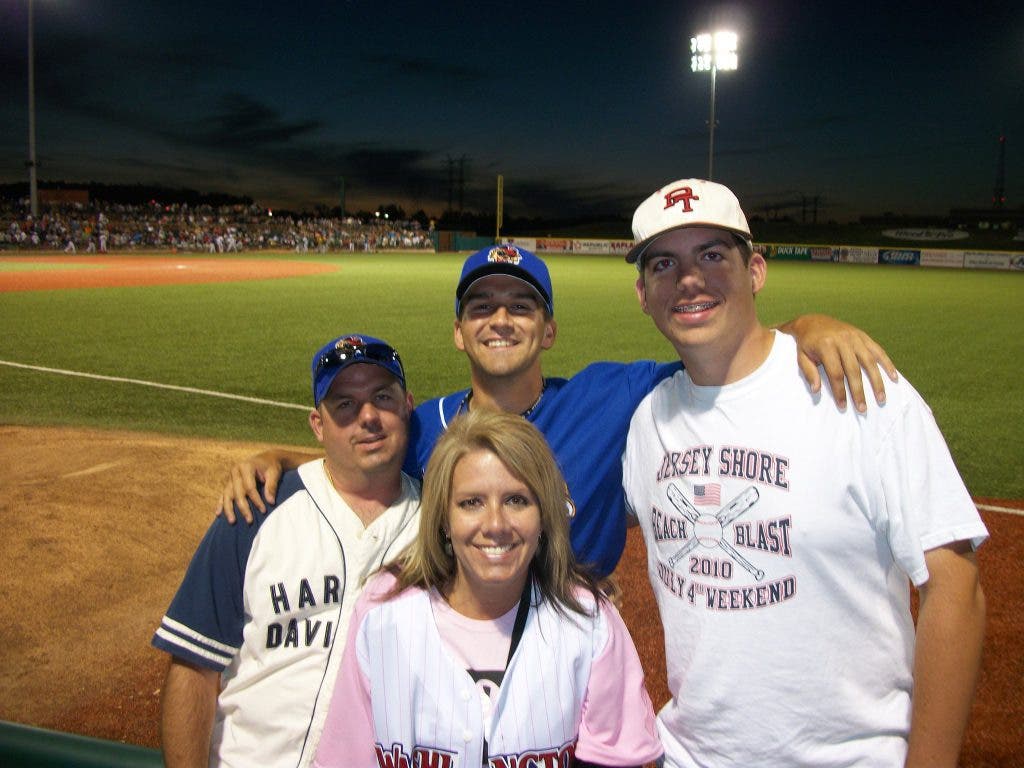


Whether they’re catching each game in the stands or are glued to the radio or TV, die-hard baseball fans never miss a game. Many live out their love of baseball and show support for their favorite professional team by doing things like affixing bumper stickers to their cars or dressing up in team logo apparel. Some pledge their support via donations, sponsorship or advertising.
One Peters Township family does a lot more than any and all of these things. They allow baseball players to live with them in their home.
Bill and Paula McLuckie are involved in the Washington Wild Things host program. Like other families in the program, they opened their homes and hearts to minor league players who didn’t have a place to call home this season.
Find out what's happening in Petersfor free with the latest updates from Patch.
But before it played out, the McLuckies’ story all began with a click of the mouse.
A long-time Wild Things fan, Bill decided to “like” the team on Facebook one day. Exploring the team’s page, he saw a post in search of host families to house players during the season.
Find out what's happening in Petersfor free with the latest updates from Patch.
Bill approached his wife Paula and son Billy, 16, to discuss the idea. After getting everyone on team McLuckie on board, Bill called Wild Things headquarters to get the ball rolling.
The man Bill ended up talking with was Wayne Harrod, manager of Community Relations for the Wild Things, who coordinates and implements the host program.
Since as many as 34 players on the team’s roster may need housing for any given season, Herrod was elated to receive Bill’s call.
“Our players only make between $600 and $1,600 a month,” Herrod said. “More make under $1,000 than over.”
According to Herrod, this means that the players’ salaries aren’t enough to fund the cost of living in Washington County, where short-term leases typically aren’t available in any event. Thus, hosting is crucial and is a necessary part of the game for many of the minor league players.
Because Herrod considers host families the lifeblood of the team, he approaches host-player coordination with passion and careful deliberation. He requires interested players to submit to a very detailed questionnaire.
Among other things, information is collected on a player’s allergies, tobacco use, vehicle availability and aversions to pets or children.
What’s more, Herrod emphasized, a criminal background check is performed on each player who is to be placed in a host home.
Herrod also collects pertinent household information from potential host families and, when possible, gives them a say in picking their houseguest.
For example, the McLuckies said they’d love to house a pitcher, since Billy pitches for the baseball team.
Herrod gave the McLuckies what they asked for. The first player he sent them was pitcher Steve Grife. Over the course of the season, two other players temporarily housed with the McLuckies, subject to roster changes and injuries, and another pitcher, named Casey Barnes, slid in to the McLuckies’ home.
During that time, Bill said that he and his family got a rare glimpse of how a player’s life plays out off of the field. They saw the men work around tight schedules and rough workouts and witnessed some of the more trying aspects of a baseballer’s life, such as trades, releases and injuries.
But the peaks outnumbered the pits. In addition to free tickets to home games and a host recognition picnic and game night, the McLuckies enjoyed other program perks.
In particular, they got to see Barnes live out his American dream.
Barnes, a native of Chandler, Az. who was a four-year starting pitcher at Kansas Wesleyan University, was continually ignored when he tried out for minor league teams. Just like Rodney Dangerfield, he couldn’t get no respect.
Barnes told us that he always he knew he could play in the league but that it was hard to show that to recruiters in just 10 try-out pitches. He thought he’d found his in when he was picked up by the Travers City Beach Bums, but was released out of spring training before he even took the field for a pro game.
It wasn’t until the Wild Things gave him a shot that Barnes got to show all those other teams the error of their ways. Barnes lead the league in ERA and his contract was bought by the Philadelphia Phillies in August. That’s right folks, we’re talking major league baseball here!
Barnes stayed with the McLuckies from the time he got picked up by the Wild Things to the time he got signed by the Phillies, and beyond.
The McLuckies had faith in Barnes from the start. Bill bought tickets to the All Star game before Barnes was even slated to play, because he was confident that Barnes would make the lineup.
And Barnes did. Just four days before the All-Star game, Barnes was selected to start. He closed as well—his pitching helped bring in his team’s win.
Though Barnes recognized that his success is the result of his unyielding commitment to the sport, he also acknowledged that his success wouldn’t have been possible without the help of the McLuckies, who he considers his second family.
The McLuckies look at Barnes the same way. Paula said Barnes is like a member of the family and that she treats him like she treats her own kids, by including him in family meals, trips to the ice cream shop and making him the target of surprises and practical jokes.
Noting that a host family is only required to provide a player with his own bedroom and access to both a full bathroom and laundry machines, Herrod said, “The McLuckies are an example of a family who goes above and beyond the call of duty.”
So too Barnes did more than was required, or expected, of him. While neither the team nor the McLuckies asked anything of Barnes in return for his housing, Barnes decided to give back to the McLuckies by sharing with Billy his pitching knowledge.
Barnes coached and critiqued Billy throughout his own baseball season. He went to as many of Billy’s games as he could, occasionally charting Billy’s plays for a breakdown of every batter he pitched against.
In asking Herrod to send a pitcher to their house, perhaps Bill and Paula were looking for a role model for their son. But, Herrod said, Billy already had two great role models in his parents, whose very involvement in the program exemplifies the qualities of compassion, trust, faith and love.
If you’d like to follow the McLuckies’ lead, contact Wayne Herrod for more information about becoming a Wild Things host family. Herrod can be reached by phone at 724-531-1059, or by email at wherrod@washingtonwildthings.com.