Business & Tech
Maximizing Reach: A Small Business Guide to Influencer Marketing
This article explores the evolving landscape of influencer marketing, emphasizing its potential for small businesses.


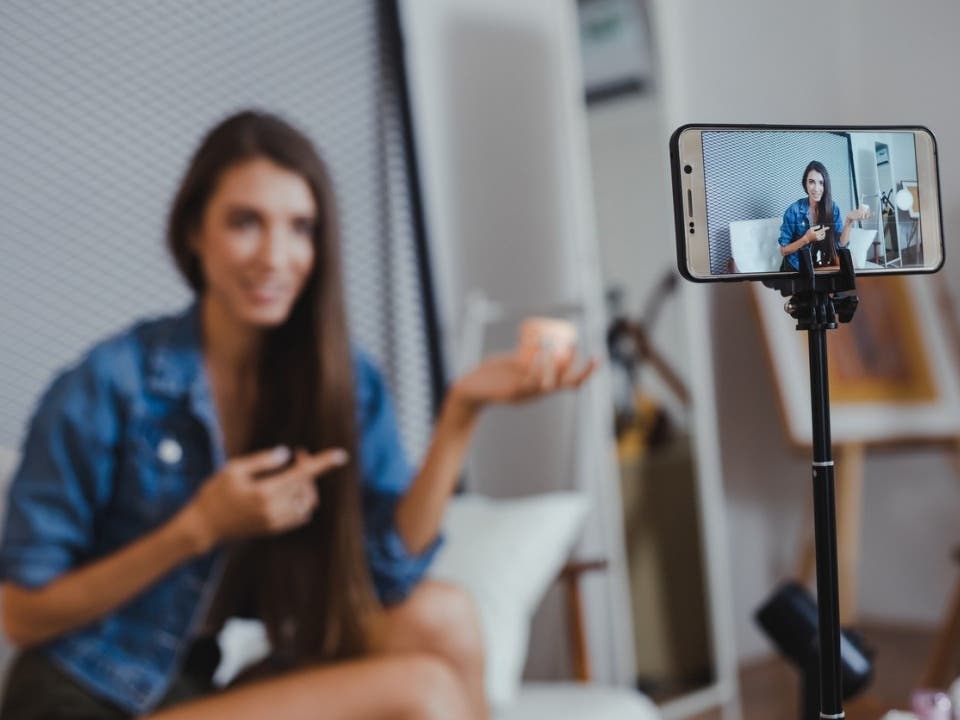
In the past few years, influencer marketing has changed a lot. It takes advantage of the trust and authenticity that influencers have established with their followers to advertise products or services. Small businesses could work together with these bigwigs to tap into their already existing following and benefit from the credibility among clients they know too well.
As a small business owner, you can use influencer marketing as an opportunity to get to your target audience, create brand awareness even with a limited budget for growth. This article will take you through necessary steps of working with influencers starting from finding micro-influencers right up to measuring and scaling campaigns along with best platforms and tactics for effective promotion of your business through influencer marketing.
Finding the Right Micro-Influencers
Find out what's happening in Philadelphiafor free with the latest updates from Patch.
Micro-influencers are social media users who have between 1,000 and 10,000 followers; they specialize in specific areas with high engagement rates compared to those having larger followings. Their genuineness is what makes them more appealing to audiences. When choosing micro-influencers for your small enterprise consider these factors:
Alignment with brand values and target audience:
Find out what's happening in Philadelphiafor free with the latest updates from Patch.
Go for influencers whose values align with those of your organization.
Consider the age bracket or any other demographic characteristic that describes most followers belonging to an influential person then make sure such attributes match what type of customer you want reach out to.
Authenticity should be key when selecting micro-influences who resonate well with some core beliefs at heart behinds own brands while being able effectively communicate such messages across various channels adopted by these individuals following them closely enough.
Engagement rate versus content quality:
Typically speaking micro influence often higher engagement rates than macro ones do because their following is much more focused around particular topics rather than being broad-based like larger counterparts may do so too frequently though not always case especially if we take into account factors related niche segments served by different types creators involved within this space where overall level involvement varies significantly between one another but also among wider range brands themselves who might approach various influencers based upon what consumer groups.
Brands should consider such elements as audience size, engagement rates, niche areas served by creators or publishers involved in branded content projects and how well these align with overall quality expectations from customers when selecting them for specific roles within company’s marketing mix.
Cost effectiveness plus collaboration options:
Most marketers prefer working with micro-influencers having between ten thousand to hundred thousand followers due to their cost-efficiency, dedicated fan bases around narrow topics as well deep knowledge on areas relevant for that business which they operate in.
For nano influencers, those below 10k followers often achieve highest engagement rate per post along attractive pricing points per each piece of sponsored content or collaboration agreement made between brands partnering together alongside a particular creator involved during any given campaign execution phase under consideration at this time too indeed if applicable here may also want take note payment terms associated with using these individuals would need be negotiated separately considering factors like following count used reach target group(s), number likes received etc., sharing same principles outlined earlier while considering other additional aspects unique characteristics attached specific situation being dealt at hand right now.
Crafting a Win-Win Collaboration Proposal
When creating a proposal for collaborator it is important first research about the influencer's niche, audience interests as well their content theme and style then use this information while crafting personalized pitch which speaks directly towards his/her goals values pain points challenges success metrics etcetera so that they can relate more easily with what you are trying do because you understand them better than anyone else could ever hope to achieve through generic approach alone without taking into account such vital details concerning each individual involved specifically speaking about who we would like work together here today .
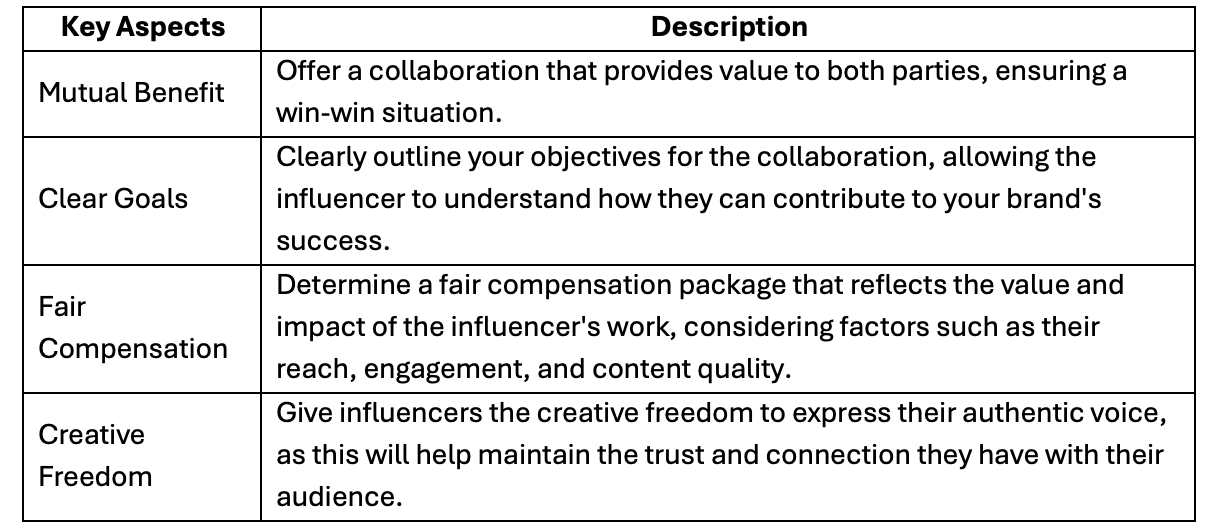
Personalizing messages sent out when contacting influencers demonstrates higher level care shown towards recipient thus increasing chances getting positive feedback desired outcome achieved faster since he/she feels valued appreciated also understood correctly thus being more likely respond favorably towards idea being presented does not matter whether or not it aligns exactly along personal goals but rather shows genuine interest by asking relevant questions around specific areas related proposed collaboration indicating shared benefits derived from working together on joint project henceforth leading greater acceptance into such plans since there is sense fairness throughout process involved while approaching potential partner who may have more experience influence others within same field where further details can mentioned if necessary according to requirements set forth during initial stages prior finalizing any agreement made so far.
Successful influencer collaborations are built on trust, respect, and effective communication. Treat creators fairly, value their work and consider establishing long term partnerships as these are highly valued by both influencers and marketers. To streamline communication and management consider using Promoty an influencer relationship management software that will make this process easier for you
Social proof is a psychological phenomenon in which people imitate the actions of others, particularly under conditions of uncertainty. In marketing, social proof refers to consumer-to-consumer content being more trusted than branded advertising. The recommendations of friends or family are the most powerful form of social proof because they are based on personal experience. Celebrity endorsements act as social proof through their large fan bases and followings, but financial investments should be made carefully.
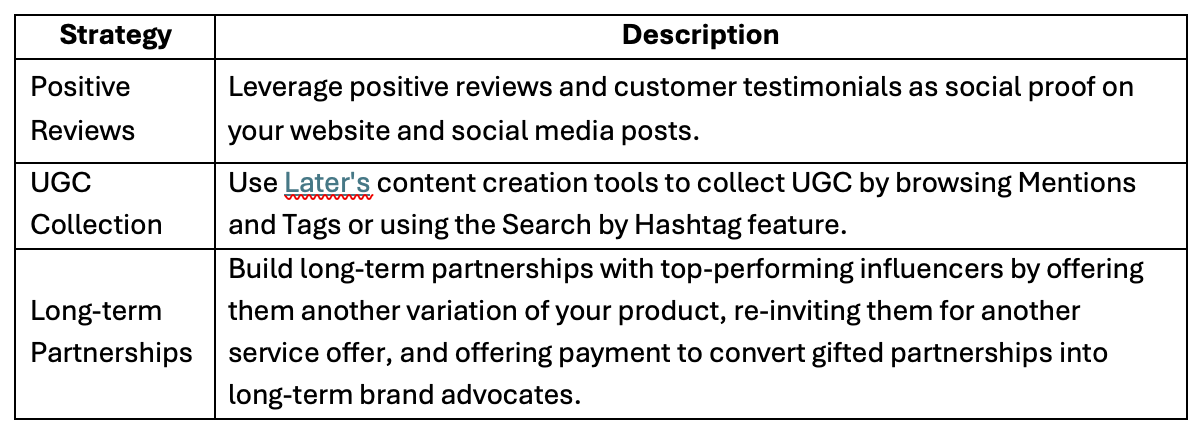
User-generated content (UGC) is a highly effective type of social proof as it feels like receiving a recommendation from a friend. UGC can encompass both influencer marketing campaigns and organic content shared by real customers. Integrating UGC into a marketing strategy can drive brand awareness and direct traffic towards websites. Expert endorsements from influencers or industry leaders can help establish credibility for brands. Influencer marketing campaigns serve as strong forms of social proof for enterprise brands since they drive conversions by promoting products in less sales-oriented ways that seem more natural.
Using UGC and Social Proof Effectively
Encourage the uniqueness of influencers whilst naturally incorporating your brand.
Keep promotional information to a minimum; ensure disclosure and openness in influencer collaborations.
Follow advertising regulations; respect copyright and intellectual property rights.
Repurpose influencer/creator content across your social channels and marketing collateral.
Test your top-performing influencer content as a social media advert.
Measuring & Scaling Your Influencer Campaigns
To effectively measure & scale your influencer campaigns set clear goals & metrics to determine the effectiveness of your strategy. Use key performance indicators (KPIs) such as engagement, follower or subscriber growth, sales & conversions. Collect data using tools/platforms; analyze it against campaign metrics tracking whether goals were met or not.
Plan Your Content Strategy and Identify KPIs:
Set campaign objectives & realistic expectations
Choose influencer marketing KPIs: visibility indicators, engagement indicators, community growth indicators, web traffic indicators, sales indicators, awareness indicators
Track sales generated using UTM tracking or promotional codes to measure the ROI of your influencer marketing campaigns
Assess fiscal impact & ROI:
Brands earn over $5 for every $1 spent on an influencer marketing campaign which is 11x higher compared with traditional banner ads
Use unique links/promo codes for each influencer to track individual performance
Google Analytics tracks all KPIs related to your websites
An Influencer campaign report details your influencer ROI and proves your effectiveness to higher-ups
Optimize & Scale Your Campaigns:
Streamline influencer marketing campaigns using templates, outsourcing platform, automating tasks
Identify top-performing influencers; nurture them into brand ambassadors
Replace underperforming influencers with new ones
Invest in influencer marketing technology/tools to identify, recruit & manage influencers
Monitor campaign progress; analyze data for data-driven decisions.
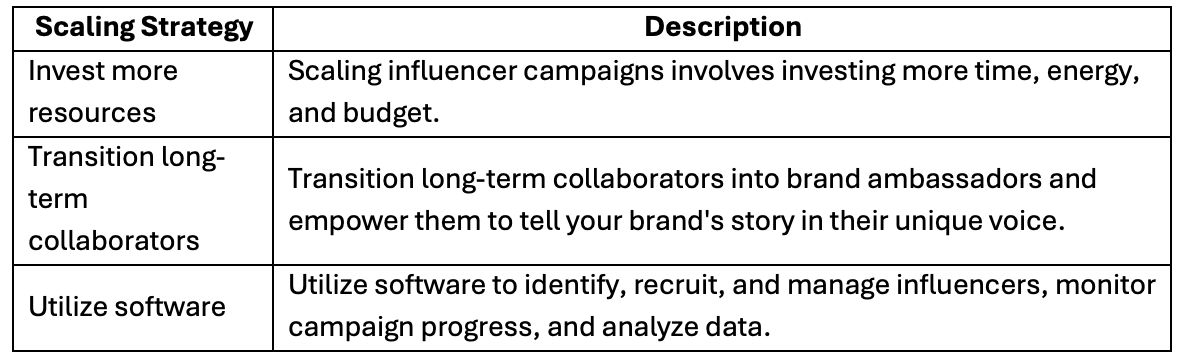
By setting clear goals, tracking KPIs, assessing ROI & optimizing campaigns you can effectively measure and scale your influencer marketing efforts driving brand growth and success.