Community Corner
Mikael La Ferla on Why Higher Income Does Not Always Lead to More Savings in Philadelphia
Philadelphia-based Mikael La Ferla explains how rising income often leads to higher fixed costs and spending limits savings growth.
This is a paid post contributed by a Patch Community Partner. The views expressed in this post are the author's own, and the information presented has not been verified by Patch.
Higher income is often assumed to solve financial pressure. In practice, many Philadelphia residents earning more still struggle to build savings because expenses increase alongside income.
The change usually happens through fixed costs.
A move from shared housing to a one-bedroom apartment increases rent. Upgrading neighborhoods within Philadelphia, such as moving closer to Center City or Rittenhouse, raises both rent and everyday costs. Parking, building fees, and higher baseline prices for food and services increase total monthly obligations.
Once fixed costs increase, they are difficult to reverse. Rent, insurance, and recurring bills adjust upward with income and remain consistent each month. This reduces flexibility, even if income continues to grow.
Data from the U.S. Bureau of Labor Statistics Consumer Expenditure Survey shows that household spending rises as income increases, with housing, transportation, and food accounting for a large share of that increase. Higher earners do not simply save more; they often spend more in proportion to income.
Higher income increases tolerance for convenience. More frequent dining out, delivery, rideshare use, and travel become standard rather than occasional. These costs are not tracked as major decisions, but they raise the baseline level of spending across the month.
Research from the Federal Reserve’s Survey of Household Economics and Decisionmaking shows that many individuals across income levels report limited ability to cover unexpected expenses, indicating that higher earnings do not consistently translate into higher liquid savings.
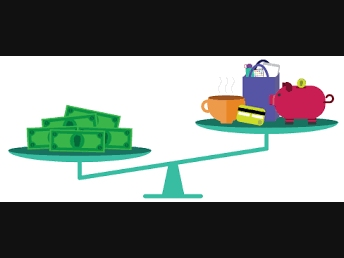
Income increases, but so do fixed and variable expenses. What remains available to save does not grow at the same rate. In some cases, it does not grow at all.
This pattern is reinforced in cities like Philadelphia where lifestyle adjustments are tied closely to location and convenience. Proximity to work, access to restaurants, and housing quality all influence spending decisions that become permanent once adopted.
This is one of the problems Shopden was built to address.
Instead of relying on income growth alone, Shopden tracks spending as it occurs. Transactions connected through Plaid are categorized shortly after they happen, allowing users to measure how much of their income is already committed.
Shared lists also help households plan purchases in advance, limiting unplanned spending that increases as income rises.
Higher income improves earning capacity, but it does not automatically improve financial outcomes. In Philadelphia, savings growth depends on controlling fixed cost expansion and maintaining visibility into how spending changes as income increases.
This post is an advertorial piece contributed by a Patch Community Partner, a local brand partner. To learn more, click here.