Health & Fitness
Coronavirus: Pittsburgh Scientists Detail Potential Vaccine
UPMC and University of Pittsburgh School of Medicine scientists have revealed information on the promising potential vaccine.


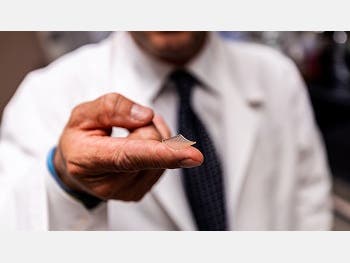
PITTSBURGH, PA - UPMC and University of Pittsburgh School of Medicine scientists on Thursday provided details on a potential coronavirus vaccine. The vaccine goes on like a Band-Aid, doesn't require refrigeration and could be massed produced rapidly to battle the global pandemic.
UPMC has approached the U.S. Food and Drug Administration about beginning clinical trials for the vaccine and UPMC officials expressed hope that the vaccine could be tested on people within a few months.
Don't miss local and statewide news about coronavirus developments and precautions. Sign up for Patch news alerts and daily newsletters.
Find out what's happening in Pittsburghfor free with the latest updates from Patch.
“Testing in patients would typically require at least a year and probably longer,” Dr. Louis Falo, professor and chair of dermatology at Pitt's School of Medicine and UPMC, said at a news briefing Thursday.
“This particular situation is different from anything we’ve ever seen, so we don’t know how long the clinical development process will take. Recently announced revisions to the normal processes suggest we may be able to advance this faster.”
Find out what's happening in Pittsburghfor free with the latest updates from Patch.
The vaccine - called PittCoVacc, short for Pittsburgh Coronavirus Vaccine — uses lab-made pieces of viral protein to build immunity. It is delivered by a microneedle array to increase potency.
The array is a fingertip-sized patch of 400 tiny needles that delivers the spike protein pieces into the skin, where the immune reaction is strongest. The patch goes on like a Band-Aid and then the needles — which are made entirely of sugar and the protein pieces — simply dissolve into the skin.
“We developed this to build on the original scratch method used to deliver the smallpox vaccine to the skin, but as a high-tech version that is more efficient and reproducible patient to patient,” Falo said. “And it’s actually pretty painless — it feels kind of like Velcro."
Mass-producing the microneedle array involves spinning down the protein-sugar mixture into a mold using a centrifuge. Once manufactured, the vaccine can sit at room temperature until it’s needed, eliminating the need for refrigeration during transport or storage.
Research on the possible vaccine is detailed in The Lancet's EBioMedicine and is the first peer-reviewed paper describing a candidate vaccine for COVID-19.
Full coverage of coronavirus in Pennsylvania can be found here
Get more local news delivered straight to your inbox. Sign up for free Patch newsletters and alerts.