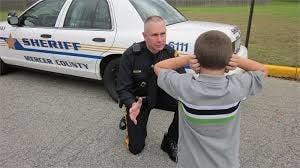
Our Police Officers face emergency crisis situations every day. As a core part of their job, they need to evaluate and respond to each situation quickly. They need to assess the nuances in an environment to determine risks. Further, they need to interpret and respond to a broad range of behaviors quickly to ensure safety. Police officers are trained to follow specific protocol to help them do this critical part of their job.
Autistic individuals are significantly more likely to have an encounter with law enforcement. Individual’s with Autism are different. They respond to the world in ways that may seem unusual to the untrained eye.
Unfortunately, when faced with a person with Autism, most police officers lack the training they need to understand how their behaviors differ from the neurotypical population. As a result, these well-meaning officers may misinterpret the situation and respond in a manner that potentially escalates the crisis rather than averting it.
Find out what's happening in Plymouth-Whitemarshfor free with the latest updates from Patch.
Here are 5 tips to help Police Officers recognize that a person might be Autistic:
First, it is important to acknowledge that Autism is a spectrum disorder and every individual on the spectrum is unique. These guidelines offer information about commonalities, however each situation and person will present differently.
Find out what's happening in Plymouth-Whitemarshfor free with the latest updates from Patch.
- Language and Communication: Communication issues are common in individuals with Autism. The person may be completely non-verbal or have limited verbal skills. They may use an assistive electronic device or other tools to communicate. Autistic individuals struggle to recognize and understand body language and social cues. They are very concrete and literal in how they interpret communication. Nuance, sarcasm and metaphor confuses them, so they may respond inappropriately or ask a lot of questions to try and interpret what you are saying. It also takes longer to process and interpret language, so their response may be slow and they may seem to struggle to understand you. Echolalia is also common, so the person may repeat words that you say.
- Sensory Processing: Sensory Integration Disorder is common with Autism. The person may be under or over sensitive and reactive to touch, sound, light or other sensations. They may seem clumsy or disoriented. Loud noises, sudden movements and touch can send them into extreme distress.
- Anxiety: Individuals with Autism are prone to extreme anxiety, compounded by sensory overload, which can lead to extreme distress and meltdowns very quickly. In addition to the above mentioned sensory challenges, unfamiliar people, situations and transitions trigger high levels of anxiety. The person may seem highly anxious, agitated or frightened. In reaction to their fear, they may run away or lash out. They may also display behaviors that look like a temper tantrum.
- Unusual or Repetitive Behaviors: Autistic individuals tend to engage in repetitive movements and behaviors, especially in times of distress or sensory overload. These behaviors are methods of self-regulating and self-soothing, however they may seem highly unusual or disturbing to the untrained eye. Common behaviors include hand flapping, vocalizing, rocking, slapping their head, spinning or pacing. These behaviors generally increase at times of high anxiety and can be a warning sign of a sensory meltdown.
- Responsiveness: An individual with Autism may seem unresponsive to your words or interactions. They may not make eye contact. The person may seem as if they do not hear you or are in their own world. If they do respond, their response or behavior may seem inappropriate or unusual.
Oftentimes, these behaviors are misunderstood and misinterpreted by Police Officers. The office responds as if confronting a dangerous criminal rather than a person with a disability. This has led to many unfortunate incidents that could have been avoided had the officers had the necessary training.
In addition to recognizing Autism, officers also need training on how to safely and effectively interact with individuals with Autism during crisis situations. We will be posting additional articles on the subject, however we encourage you to schedule Autism Training for Law Enforcement in your local precinct. Contact Justin Unlimited for more information.
This article was originally published at http://www.justinunlimited.org/police-officers-autism/. Reprinted with permission from the author.