Health & Fitness
Kiosk Parking--more business-related vehicles forced to park on residential side streets?
Proposed kiosk parking system--how many more employee vehicles will be displaced into residential side streets? On agenda for Monday's Board of Commissioners meeting.
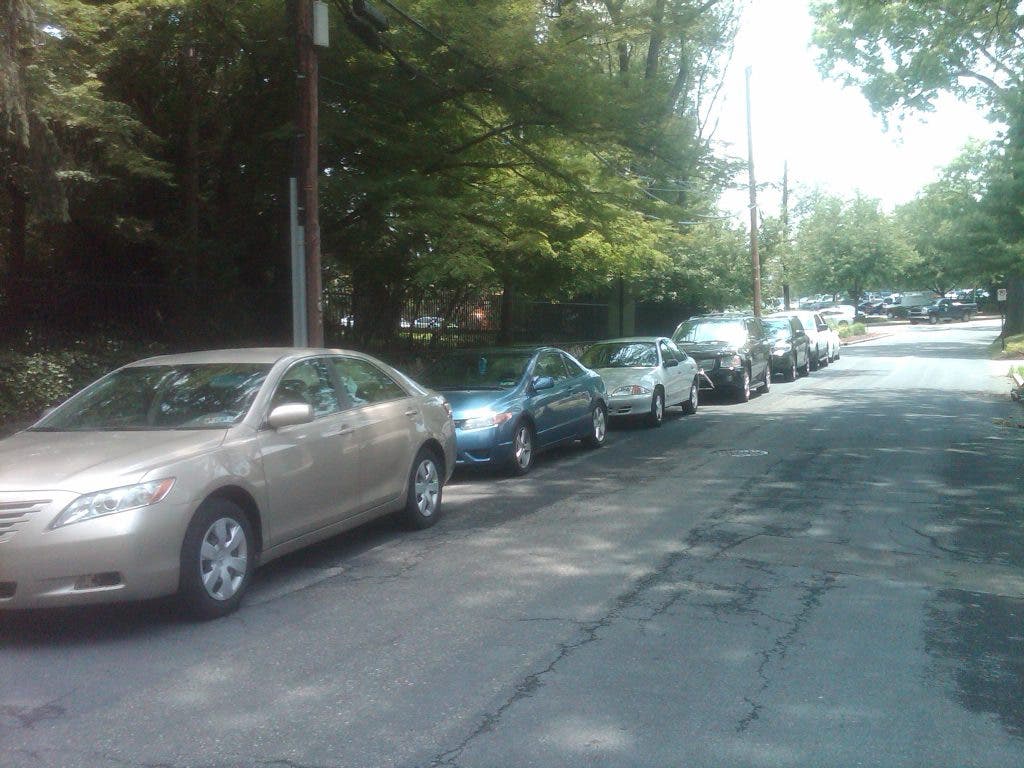

How many additional commercially-generated vehicles will be forced to park on residential side streets as a result of the proposed Wayne kiosk parking system?
As you know, a new kiosk parking system is about to be implemented at the Bellevue/AT&T, South Wayne, and Waynewood municipal parking lots. Here are the key facts as I know them about the proposed changes at the Bellevue/AT&T municipal parking lot—
1. Under the previous “permit” plan, the 102 spaces in the Bellevue/AT&T lot were 100% filled with business and related employee vehicles. I believe that the Township over-leased the 102 spaces by a factor of 2 or more, so there were, say, 200 or more business-related drivers competing for the 102 spaces.
Find out what's happening in Radnorfor free with the latest updates from Patch.
2. With the proposed “kiosk” plan, those 200 or more drivers will now be competing for the same 102 spaces along with customers, vendors, service people, and others. Whoever is the first to find an open parking space can then park their vehicle in that space and then pay for time at the kiosk.
3. To the extent that non-employees occupy ANY of the Bellevue spaces, employees that previously parked there will be forced to park elsewhere—including on nearby side streets. In addition, some employees will probably park in available spaces in other business parking lots such as Wayne Town Center and Rite-Aid.
Find out what's happening in Radnorfor free with the latest updates from Patch.
Also under the previous permit plan, employers leased parking permits from the Township. Employers then handed over a permit/placard to their employees who placed it on their dashboard when parking “for free” in the Bellevue lot. This was very convenient for the employee—free and relatively easy parking in the Bellevue lot if they could find an available space.
Under the new kiosk system, employees of Wayne Business District employers will be able to purchase 80% discounted parking cards that will enable them to park in the Bellevue lot for $1 per day. In order to obtain the kiosk cards, employees will need to visit the Township Administration building, present ID showing that they are current employees of Wayne businesses, purchase the cards, and then, hopefully, find an open parking space in the Bellevue lot.
Employees who are unable to find an open space in the Bellevue lot will be forced to park elsewhere even though they have prepaid to purchase time in the Bellevue lot. Rather than deal with the frustration of prepaying for but then not finding an available space in the Bellevue lot, why wouldn’t employees just park on a nearby side street such as Windsor Avenue and save $1 per day while avoiding the need to make periodic trips to the Township building to purchase kiosk cards? In addition, for Minella’s and Salon d’Artiste employees, Windsor Avenue is a shorter walk to where they work than the Bellevue lot.
My conclusion based on the above is that there will be fewer spaces available for employee parking in the Bellevue lot and that the kiosk system will not be as employee-friendly as the previous permit system—leading more employees to park on residential side streets. If the proposed plan is implemented, we will soon find out the result.
I understand that approval of the kiosk plan is on the agenda for Monday’s Board of Commissioner’s meeting. Hopefully, residents and others who are concerned about this issue should try to attend that meeting and/or make their opinions known to their Township Commissioner.
Background
How did Wayne town center arrive at the current state of parking problems? Here are my observations—
1. The Wayne business district has been overdeveloped with the number of restaurant customers and employees creating a parking demand far in excess of the available supply of off-street, metered, and municipal parking lot parking spaces.
2. Restaurants and other businesses have not been equitably required to provide adequate off-street parking for both employees and customers as specified under the Radnor Zoning Code. Some restaurants like Teresa’s have been required to lease 38 spaces in municipal parking lots while other restaurants like Great American have had no such requirement.
3. The parking ratios in the Zoning Code understate actual parking needs by more than 50%. The ratios in the Code (for restaurants--1 parking space for 3 seats and 1 space for 2 employees) reflect the needs from the 1960’s era or prior when the average vehicle arriving at a restaurant may have had 3 customers and when half of restaurant employees walked, bicycled, or car pooled to work.
4. White Dog Café and Minella’s Diner (and now Villa Strafford) materially understated the number of employees in their development/zoning applications—thereby increasing the number of seats.
5. After opening their new restaurant with double or triple the number of actual employees, White Dog and Minella’s then direct their employees to NOT park within their off-street parking lot so as to make room for more customers.
6. Under a recent settlement of zoning issues related to parking requirements with the Township, White Dog employees will be required to park in municipal lots rather than in the 158 spaces available within their parking lot—making room for another 50 seats of outdoor dining. White Dog’s originally-approved development application and occupancy permit specified 63 seats and 7 employees vs. the now-approved 168 seats and many more (30+) employees. My estimate is that at full seating capacity operation, White Dog customers and employees would require about 150 parking spaces or 100 spaces more than the 50 required spaces by Township zoning officials. The deficit of 100 spaces would fill almost the entire Bellevue lot. White Dog has certainly kicked Wayne’s parking shortage up a few notches.
As a result of the above reasons, the deficit in the number of parking spaces has been filled by the residential side streets that adjoin the business district. Major harm has been done to the “green country town” quality of life on our residential side streets. For example, residents on the west side of Farm Road can no longer park in front of their homes. On the east side of Farm, residents must now obtain parking permits to park in front of their homes. Similar parking restrictions have been enacted on almost all of the residential streets around the Wayne business center. Perversely, as the Township enacts restrictive parking ordinances to stop the intrusion of commercial vehicles into side streets, the total supply of available parking decreases for everyone including the residents.
Economically speaking, the restaurants (and Salon d’ Artiste with their 43 employees), have appropriated for their own use the parking amenities that residential citizens thought they were buying and paying real estate taxes when they moved into their homes. At an estimated capital cost of $25,000 per structured parking space, the loss of use value to residents for 100 off-street parking spaces has a total value of about $2.5 million. How many commercially-generated vehicles are now parking on residential street? How many homes have been impacted by restrictive parking regulations to prevent the commercial vehicles? Should the residential owners be able to obtain some tax relief now that their properties are no longer as “residential” since the overdevelopment of Wayne?
I have been unable to determine the main driver of the Township’s proposed kiosk parking system. It appears that by opening the municipal lots to non-employees, the kiosk system will reduce the total number of spaces available to employees which will not benefit the business owners. It is obvious to me that there will be even more commercial intrusion into residential neighborhoods. Is it possible that the main driver of the kiosk system is to increase Township revenue? To learn more about the kiosk plan, I attended the Monday evening information meeting hosted by Township staff at the administration building. There was no information presented at that meeting about the expected revenue impact of the new kiosk plan.
I’ve lived with my family in Wayne for 41 years. Wayne has been a great place to live! The 25 families who live on Windsor Ave. and adjoining Farm Road have referred to where we live as a “small gem of a neighborhood.” Windsor is one of the few streets near the center of Wayne that does not yet have any parking restrictions—but it is very close to major employers—Minella’s, White Dog, and Salon d’ Artiste whose day-shift employees total 80 or more and who have been instructed by their owners to NOT park in their Zoning Code-specified off-street parking lots (And, where even if those employees did park in the employer’s off-street parking lots, we know that the ratio of 1 parking space for 2 employees only provides about 50% of the actual requirement). Within the last year, a few Minella’s and Salon d’ Artiste employees have regularly parked on Windsor Ave. During the last 10 years, our little neighborhood has been subjected to an increasing bombardment of commercial intrusion.
John Sheehan
409 Windsor Ave.
Wayne, PA 19087
Phone: 610-687-4692
Mobile: 484-557-6113
Email: johnsheehan@yahoo.com