Business & Tech
Experts Teach Parents How to Install Car Seats at Lehigh Valley Hospital
Free car seat safety program at LVH helps parents learn how to properly install car seats and teaches them about new federal guidelines.
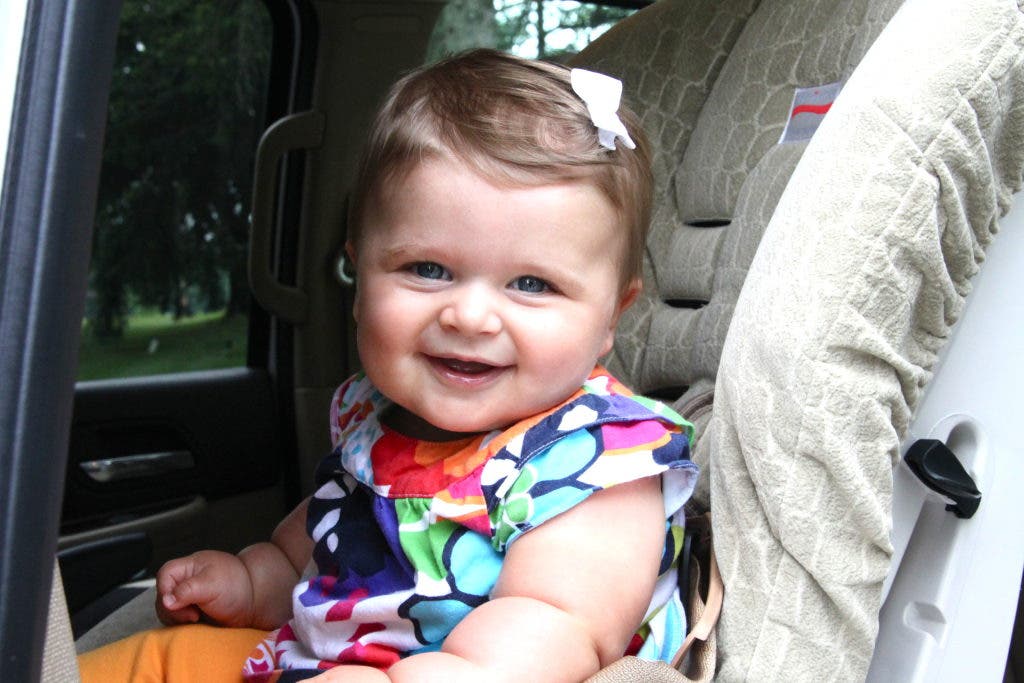


As many frustrated parents have discovered, installing a car seat can be extremely difficult.
In fact, it was recently reported in a Pennsylvania State Police study that three out of four car seats are improperly installed.
That's why Ryann Morrison of Coplay, whose daughter just turned 1, showed up at 's free car seat safety inspection last week, one of many classes the hospital holds throughout the year at its Healthy You Center on Fish Hatchery Road in Salisbury Township.
Find out what's happening in Salisburyfor free with the latest updates from Patch.
“I know installing it right will give her a better chance of not getting injured or worse,” said Morrison, who works as a physician assistant at the hospital.
Parents need to not only know how to correctly secure the seat in place, but also know the latest federal guidelines on which car seat their child should be riding in and what direction it should be facing.
Find out what's happening in Salisburyfor free with the latest updates from Patch.
In March, the American Academy of Pediatrics and the National Highway Traffic Safety Administration issued new policy guidelines on children's car seats.
The major regulation change: children should ride in a car seat that faces the rear of a vehicle until they are either two years old or until they reach the higher weight limit of the harnesses and the height of the seat.
“Just because your child turns 2 doesn’t mean you need to flip them forward-facing. If they’re still within the height and weight guidelines of the seat, then they should stay rear-facing,” said Bill McQuilken, trauma prevention coordinator at Lehigh Valley Hospital Network.
Another change: children won’t transition into booster seats until they weigh between 65 – 80 pounds. The current minimum weight is 40 pounds. McQuilken said children should be eight to 12 years old before they go to the booster seat. He said they can be in the harness in the convertible car seat until they’re eight.
McQuilken said the maximum weight for booster seats used to be about 80 pounds, now they go to at least 100 pounds and some of the newer ones go up to as much as 120 pounds.
“They want a child in a booster seat until they’re approximately 4 feet 9 inches in height,” he explained.
Children ages 13 and under should never sit in a front seat, he said.
“You’re 37% less likely to die sitting in the back seat,” McQuilken said
McQuilken and DeAnna Shisslak, program coordinator of parent education at LVHN, spent several hours on Wednesday at the Health You Center's parking lot, carefully checking the safety and security of car seats that parents had installed, or teaching them how to do it themselves.
Lehigh Valley Hospital's car seat safety program is about 10 years old and has grown and expanded, especially the number of new parents giving birth at the hospital has grown, McQuilken said.
"We’re always packed,” he said. “Everything is new to them, so they want to learn more about child passenger safety,” he said.
Prior to joining Lehigh Valley Health Network in 2006, McQuilken worked at the American Academy of Pediatrics.
Many of the new car seats have changed to comply with the new regulations. Newer models of rear-facing infant carriers now carry a weight range between 30 and 40 pounds. The rear-facing convertible seats, once 22-35 pounds, are ranging from 30-45 pounds.
The European standard on car seats has been studied for years, McQuilken said. In Sweden, for example, children ride rear-facing until they are four, he said. Children are much safer riding in this position because the seat absorbs the crash forces and distributes them throughout the seat instead of throughout the child, he said.
In terms of prices, Shisslak said that all car seats are safe as long as they passed the federal Motor Vehicle Safety 213 Crash Testing.
“All car seats that you buy off of a retail shelf have to meet those crash testing standards. They’re all safe. Price makes no difference in safety,” Shisslak said.
“If you’re paying $79 or $200, the $200 seats are just a little easier to use. They have much nicer features and those features are what make them easier to use. Then moms and dads are using the seats correctly.”
Car seats have a lifespan of six years, Shisslak said, after that they should be disposed of or recycled. Polymers in the seat can be affected by extreme cold and extreme heat, causing them to become unsafe in the case of an accident, she said.
Most seats have an expiration date, either stamped or printed on a label.
McQuilken said the key is for parents to read their child safety seat instructions and their vehicle owner manual instructions.
Vehicle owner manuals are very clear as to where you can install child safety seats in the vehicle and how to install them safely.
As an example, McQuilken said some parents might find they want to install the car seat in the center position of the rear seat, but the manufacturer may not allow it.
All newborns are required to leave Lehigh Valley Hospital in a car seat. Lehigh Valley Health Network offers two to three car seat checks per month, so if parents miss the safety checks before their baby is born, they can go home, catch their breath and come back to have the car seat checked, Shisslak said. Lehigh Valley Hospital lists the dates and times of its car seat inspections on its website, www.lvh.org, or you can have your car seat check by your local or state police department.
To stay up-to-date on the current and new regulations, McQuilken recommends www.NHTSA.gov and www.AAP.org as great resources for information.