Health & Fitness
Emerald Ash Borer: Boring But Never Dull
Emerald ash borers are on the way to the Lehigh Valley and it's going to be a problem.
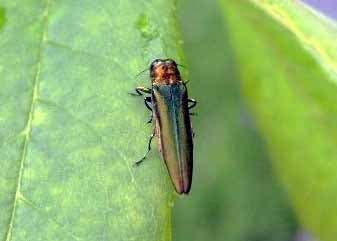

I can only think of one nice thing to say about emerald ash borers. The beetles look quite suave in their metallic green exoskeletons. The larvae spend their days boring ash trees, but at least the adults are not dull. The North American tour of emerald ash borers was first noticed around Detroit, back in 2002. Like our brown marmorated stink bugs, they have rapidly spread ever since. The adults don’t do any harm other than nibbling on leaves, but the larvae tunnel under the bark of ash trees and prevent them from being able to transport fluids. It typically takes about four years for them to kill a tree. So far, they have killed tens of millions of ash trees in their wake. Moving dead ash trees as firewood has been one of the most effective ways to spread them. Very bad idea!
One reason the emerald ash borer has been so successful in North America is a shortage of natural predators in their new home. The emerald ash borer is much less of a problem in its native stomping grounds. We do have native enemies of emerald ash borers, but not yet enough to save our ash trees. Active research is focused on the biological control of the emerald ash borer. This includes the evaluation of a fungus and the release of some tiny non-stinging parasitic wasps from Asia.
It’s going to be painful to watch the loss of the 300 million ash trees that live in the forests, towns and cities of Pennsylvania. Economic losses will impact families whose livelihoods depend on the conversion of ash trees into fine furniture, baseball bats and other high quality wood products. Ash trees represent nearly 4 percent of all of Pennsylvania’s forests but are more common in the counties at the northern tier of the state. They are especially common in urban settings, and can provide as much as one quarter of the shade tree cover. Emerald ash borers have been projected to cause about $10-20 billion in losses to North American urban forests over the next 10 years.
Find out what's happening in South Whitehallfor free with the latest updates from Patch.
Members of a new class of insecticides called “neonicotinoids” have been shown to be effective in protecting ash trees from emerald ash borer attack. These chemicals enter plant fluids and make the tree itself toxic to the insects. Neonicotinoids can migrate to the nectar of some flowering plants at levels that are known to be toxic to pollinators. Homeowners have been urged not to use them around the garden.
Ash trees are wind pollinated and are not a source of nectar for bees. However, bees are known to collect ash tree pollen. Neonicotinoid treated ash trees represent a potential, but unstudied hazard. This theoretical risk must be balanced with the known environmental and aesthetic costs of removing all of the ash trees from the urban ecosystem. Removing ash trees also takes away the shade, air pollution control and animal habitat they provide.
Find out what's happening in South Whitehallfor free with the latest updates from Patch.
Ash tree enthusiasts in the Lehigh Valley will soon be faced with two difficult options. We can remove beetle infested trees or treat our ash trees with insecticides. Leaving dead ash trees in place is not an option. It is possible to predict when emerald ash borers will invade with the help of those purple boxes that you can see hanging from trees. Next time you drive down to Philly on 476, you’ll see them. I don’t know why emerald ash borers like the color purple so much.
Whether it is economically feasible to treat ash trees with insecticide is partly a matter of scale. What works for a backyard or a city street will be different from what might be appropriate for a natural forest. Researchers at Purdue University has come up with a nifty “emerald ash borer calculator” to help homeowners, arborists and foresters decide whether it makes economic sense to get rid of infested ash trees, or treat them with insecticide. Sadly, both tree removal and insecticide treatment will kill all of the cicadas that have been harmlessly sucking on the ash tree roots.
I think it’s interesting to ponder why emerald ash borers only attack ash trees, including the five kinds of ash trees we find here in Pennsylvania. Some insects are extremely picky about what they eat, and some are not. A few insects pests, like whiteflies and oriental fruit moths, have switched their food preferences, compounding their menace to agriculture. We all know about the promiscuous feeding habits of brown marmorated stink bugs. According to recent USDA research, emerald ash borer larvae seem to be incapable of surviving in other trees. At least for now.
The perfect solution to the emerald ash borer is to turn back the hands of time, or fast-forward until native or introduced emerald ash borer enemies have had a chance to catch up. For now, we need to prepare ourselves for their arrival and plan an appropriate response.