Health & Fitness
What is the Tea Party Brand: Earl Grey or Herbal?
Lehigh Valley Tea Party brewed robust resolution against deficit spending, but then served a different brand and failed to take a stand when it mattered.
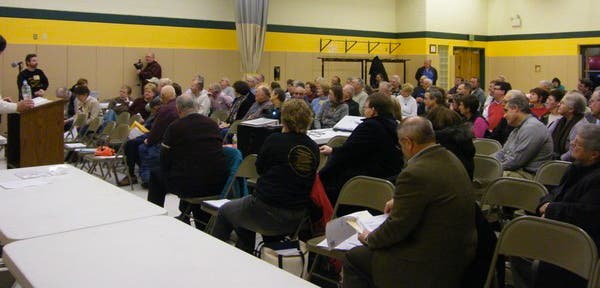
One of the more important and consequential developments on the political scene has been the emergence of the “Tea Party” as an active voice in the formation of public policy.
Locally we have a large and engaged group organized as the Lehigh Valley Project 9-12 Tea Party Group (LVTP).
I’ve attended several of LVTP meetings, participated in their candidate’s forum, and I frequently visit their website to follow the topics being discussed by their 500-plus members.
Find out what's happening in South Whitehallfor free with the latest updates from Patch.
Overall, my observation is that the LVTP consists of ordinary citizens who are concerned about the direction of our country. They want to get involved in the political process, many for the first time, in order to have a say in that direction. While much of their focus is on Washington and national issues, the LVTP is also active at the local level. The group has members who are welcome constructive additions to the small number of citizens that regularly attend meetings of local governments such as school boards or county council.
In addition, the LVTP took the step early last year of formulating and adopting a Limited Government Resolution (a copy is attached) to be used as a yard stick in measuring elected officials at the national, state and local level.
Find out what's happening in South Whitehallfor free with the latest updates from Patch.
I was (and still am) supportive of the major objectives of the Resolution. However, before it was adopted, I had questions about the apparent conflict among certain provisions or about how others would be implemented.
For example, the Resolution has as one of its goals the laudable objective of no increase in taxes. But the Resolution also allows spending to increase at the rate of inflation combined with the growth in population. Unresolved is the question of how these two goals would apply to government entities (such as school districts) where spending is driven by inflation and population growth but the supporting tax revenue (primarily real estate property taxes) is not impacted at all by inflation and may not be directly correlated to population growth.
Another example is the goal that existing debt can only be refinanced if it reduces the total debt obligation. Taken at face value that would mean the typical refinancing approach of keeping the debt the same but getting a substantially lower interest rate would not be an option.
Nonetheless, the LVTP considered a draft of that Resolution at two separate meetings early in 2010. Minutes from the second meeting record that the presentation of the Resolution was met with several standing ovations and was subsequently approved by a unanimous vote.
One of the listed goals of the Resolution is the elimination of operating deficits in government budgets. A detailed handout provided with the Resolution defines an operating deficit as one where spending exceeds money received. That is fairly straight forward and easy to follow. And eliminating deficits is something every government, especially the federal government, should have as a requirement.
As a result, I was surprised at the approach the LVTP took in the approval process for Lehigh County’s budget for 2012, given the salience of deficit spending to them and to their Resolution.
In early October, the Lehigh County Board of Commissioners considered a series of amendments to the 2012 budget. The amendments were developed by several candidates running for the Board of Commissioners and then presented by a current member of the Board.
The purpose of the amendments was to decrease the budgeted millage rate from 11.90 mils to 10.64 mils for 2012. As desirable as lower taxes are, the amendments failed to address any of the corresponding spending cuts needed to sustain the reduction. As a result, the net effect was that budgeted spending would have remained at $109 million for 2012 while budgeted revenue would have dropped to $94 million, thus creating a $15 million deficit for the year.
The rationale for this was that it would “inject money” into the Lehigh County’ economy. If President Obama’s trillion dollar deficit stimulus did little to help the U.S. economy, I’m certain a $15 million deficit would have much the same effect on Lehigh County’s $40 billion economy.
Oddly enough, a number of Tea Party members were in attendance when the amendments were discussed, and no one voiced any opposition or commented on the proposal to create a sizeable deficit for 2012. On the contrary, there were several who were in favor of the plan.
The LVTP has made great strides to become involved and engaged in the political process. One of their underlying themes is that governments are limited to the powers specified and enumerated in documents ranging from the U.S. Constitution to the Home Rule Charter for Lehigh County.
Viewed another way, I think the LVTP believes words mean what they say. Too bad the LVTP didn’t take that same position when their Limited Government Resolution had its first local test.