Schools
Honeybees Worldwide are Disappearing, but Devon Prep Sixth Graders Have a Plan
Devon students are trying to save the world. One honeybee at a time.


What started as a single lesson in Ms. Melanie Picard’s sixth grade Life Science class at Devon Prep, has become a long term project that includes research, fund raising, painting, live demonstrations, planting and maintaining a garden, and developing relationships with local organizations, the school said in a news release.
“We had just finished learning about plants and animals and were moving into ecology, the interaction between living and non-living things,” Ms. Picard was quoted in the release. “It was a really great opportunity to explain symbiotic relationships, which is how organisms can benefit, or not, from each other.
Ms. Picard showed her two classes of sixth graders a film describing the plight of the disappearing honeybee, the school said. They learned many things: that honeybees are not just dying but are actually vanishing, a phenomenon called colony collapse disorder. They also learned that bees from one hive can collect pollen from up to 100,000 flowering plants in a single day, pollinating many of them in the process. Honeybees pollinate one third of our food supply including many fruits and vegetables as well as many plants used for livestock feed. Americans wouldn't necessarily starve without them, but our diets would be a lot blander and a lot less nutritious.
Find out what's happening in Tredyffrin-Easttownfor free with the latest updates from Patch.
“We need to save the bees,” said 11 year old Thomas Walk of Chester Springs, “If all the honeybees were to disappear we’d lose so many of our fruits and vegetables.”
Armed with this information, and the desire to help save the bees, they decided that adopting a honeybee hive would be a good start. But they needed money to do that. The boys began fundraising in school, hitting up teachers, parents and fellow students every morning for a week. They raised enough money to adopt two beehives. Ms. Picard wanted to keep the hives local so a partnership with the Chester County Beekeepers Association, CBBA, was born. This was a first for the CCBA and the school, Devon Prep said.
Find out what's happening in Tredyffrin-Easttownfor free with the latest updates from Patch.
Once the connections were made, the CCBA provided the boys with two beehive boxes to paint in the Devon Prep colors of blue and gold and other images, according to the release.
“This is a very exciting initiative and will be a great educational opportunity,” said CCBA Vice President Mr. Walt Talunas. “The class adopted the beehives and excitedly painted them. When visiting the club apiary, it’s obvious which ones they put their touch on - their enthusiasm shows in their painting."
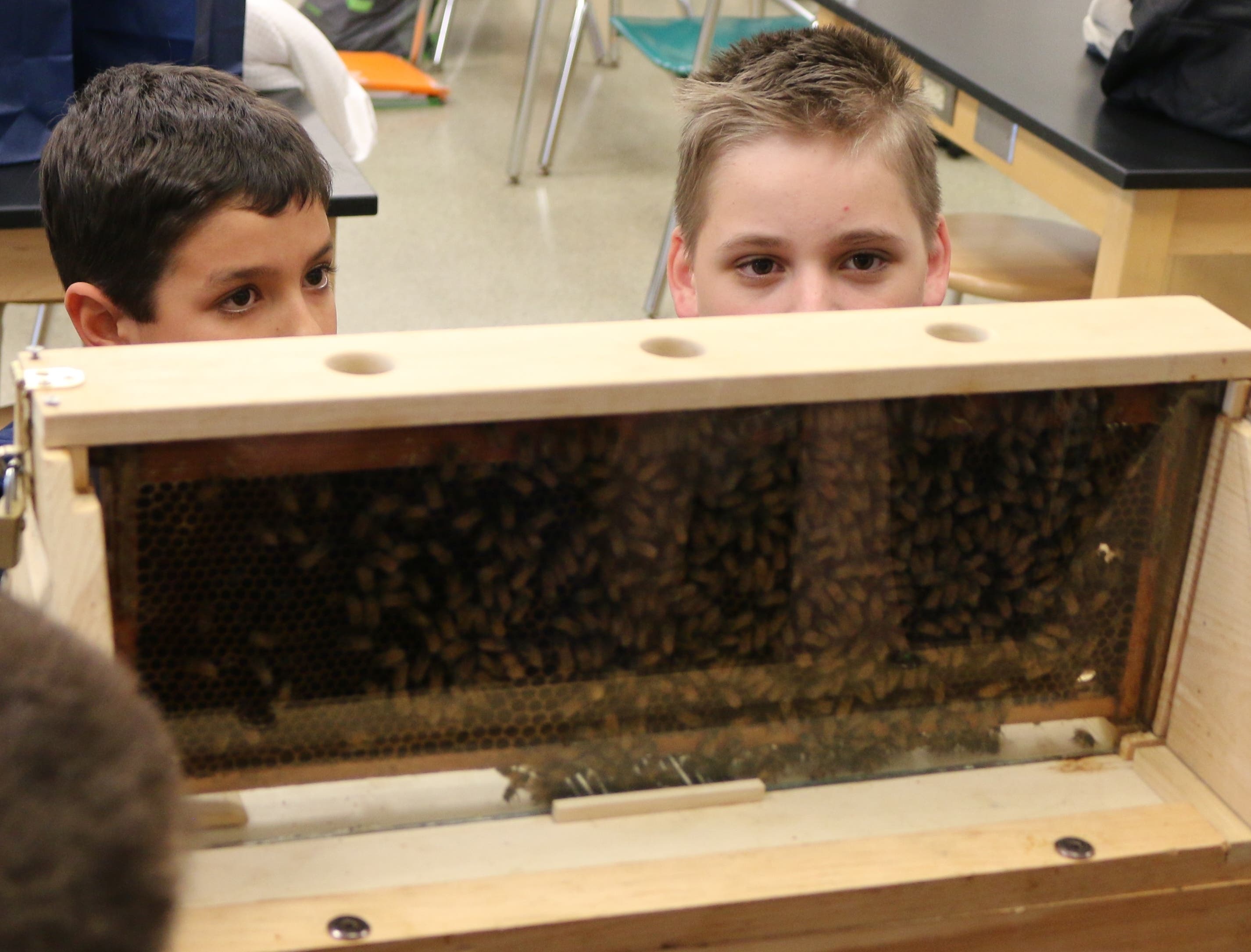
Talunas and fellow beekeeper and CBBA Treasurer Mr. Jack McMichael, also visited Devon Prep and did presentations on the life cycle, caste system, etc. of the honeybee for the sixth graders. They brought a honeybee hive with live bees for the boys to see, and a beekeeper suit to try on. Needless to say the boys were very excited to see the bees and learn so much about them. “This is really cool,” said Pablo Alonso of Phoenixville. “I learned a lot from their lesson in class and seeing the bees up close.”
The next part of the plan included a garden, but not just any garden – a Pollinator Garden. The boys researched various plant species and took soil samples from the area where the garden would be located. They tested the soil for nitrates, phosphorous and PH levels and tried to determine the proportions of clay, silt and sand in the soil. The plants they chose, which include blueberry and winterberry shrubs, golden alexander and false blue indigo among others, should draw such pollinators as honeybees, butterflies, and moths.
“The boys had to find plants that didn’t just attract pollinators, but also serve as a food source for their larvae,” Picard said. “If you don’t have anything for the caterpillars to eat you’ll never get butterflies.”
So one day after school, with help from Ms. Liz Alakszay, coordinator of the Chester County Master Gardeners, as well as several parents, the boys got busy with shovels and spades putting in the plants they hope will attract the pollinators that are so important to our food supply and environment.
And the plan continues. Ms. Picard created a summer watering schedule where the now rising seventh graders sign up to care for the garden throughout their summer break. When classes begin in the fall, the garden will have to be winterized, and the new sixth graders will have to raise enough money to maintain the beehives for another year. Ms. Picard is also considering ways to involve other classes with the project in the future. She feels it’s important to keep the project going.
“This project is important because in a lot of ways the content without context is useless,” she said. “Students get graded on content, which in some ways is appropriate, but it’s the context which makes them life-long learners. They’re not going to get graded after they finish school, but they’re still going to need to be learners.”
Get more local news delivered straight to your inbox. Sign up for free Patch newsletters and alerts.