Schools
The Bottom Line: Why T/E is Even Looking at the Possibility of an Earned Income Tax
"With what we know now, we're going to be out of money in three years."
Last year, the TE District was looking down the barrel of a $2 million budget deficit. State and federal funding was initially cut, and with the maximum percentage the district was allowed to raise taxes set then at 1.4 percent, revenue streams were beginning to dry up.
The projections improved and a potential budget crisis eased with the use of budget reserves, the reinstatement of $1.3 million in state funding, pay increase waivers agreed to by the district’s teachers and support staff. The district managed to whittle down its deficit to just over $777,000 by the end of the budget process.
The 2011-2012 Budget and Beyond
Find out what's happening in Tredyffrin-Easttownfor free with the latest updates from Patch.
In determining the current 2011-2012 budget, the district has made projections for future years that are ominous, to say the least. Rising pension expenditures, regulated by the state, are busting what’s left of the district’s budget. By 2016, the TE School District is projecting a $15 million deficit.
Factors including the tax index, (currently at 1.4 percent and projected for 1.7 percent next year) and the possibility of state and federal money, could bring that number down closer to $10 million. But the fact remains that there’s just not enough money in the district’s reserves to cover costs in the coming years.
Find out what's happening in Tredyffrin-Easttownfor free with the latest updates from Patch.
How the numbers break down
Right now, the district is carrying a $29 million Fund Balance, a savings account for the schools. During the 2011-2012 year, that $29 million has been committed; $2.1 million to bringing down the previous deficit, $1.9 to stay in reserves, $2.5 for capital projects, $7.6 for vested employee services, and a whopping $15.3 for future retirement rate stabilization, also known as PSERS or the Pennsylvania State Employees Retirement System.
It’s the cost of PSERS that will continue to drag the district’s budget into the depths of the unknown. The rate is set by the state, money is collected from state employees, pooled and then returned at an estimated 8 percent.
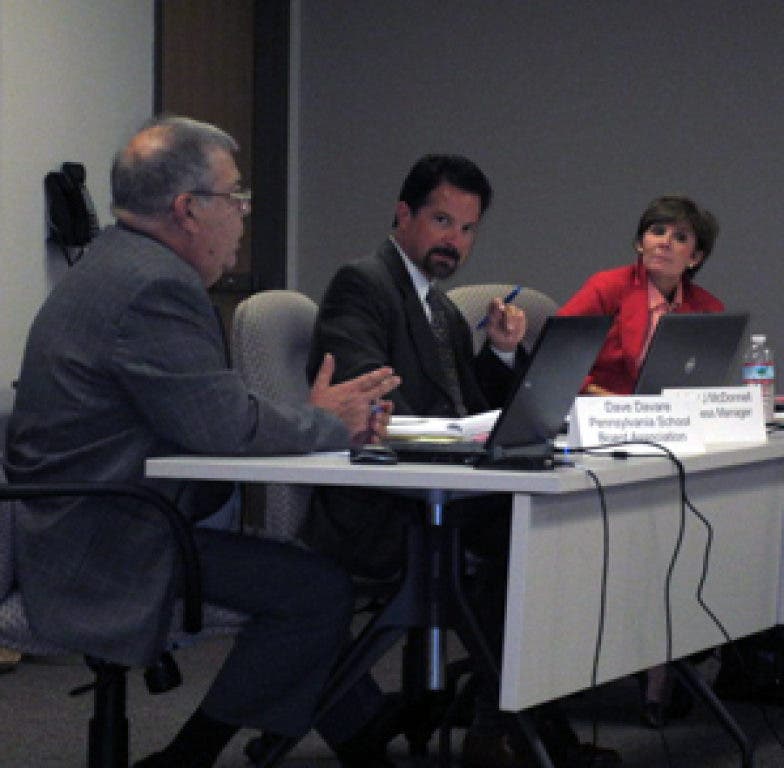
District representatives have voiced their worries to state legislators and according to TE District’s Business Manager, Arthur McDonnell, the PSERS issue is at the top of the district’s priorities.
Where the EIT comes in
With no control over the rising pension costs and restrictions in its taxing authority, the district has been left to find new revenue sources: namely, a proposal to seek an Earned Income Tax EIT.
The EIT is not a sure thing. It would have to be placed on the April 2012 Primary Election Ballot and approved by voters.
Without approval of the voters of both Tredyffrin and Easttown townships, the district's projected budgets would be in the red.
“It’s like a perfect storm,” said McDonnell. Between the reductions in state funding, the low tax index and low return rates making it nearly impossible to make a profit on the money the district does have it’s been a tough year for the district.
“I can’t predict the future,” he said. “But with what we know now, we're going to be out of money in three years.”
The EIT Tax Study Group will hold a public meeting, and take public comments on the proposed EIT Thursday at 7 p.m. at the District Headquarters.