Community Corner
Don’t Call Them Extracurriculars
Music, theater, sports are truancy prevention and shouldn't be targeted for cuts.
No matter how late my 15-year-old son goes to sleep at night he almost always makes it to school on time the next day.
It’s not due to his love of chemistry – his first subject of the day -- but rather because if he’s late or absent he can’t rehearse in the school play, run track or do whatever extracurricular activity is on tap.
That incentive to show up – which Woody Allen famously said is 80 percent of life -- is one of the least often cited reasons for why sports, music, theater and other after-school activities are key ingredients in education.
Find out what's happening in Upper Macungiefor free with the latest updates from Patch.
True, such activities also teach a strong work ethic, creativity, teamwork and other values that can’t be measured on the almighty Pennsylvania System of School Assessment tests, which got underway last week. And because those lessons don’t show up directly on standardized test scores, after-school activities might be most at risk of being cut in this school budget season that could turn into a bloodbath.
In the face of the state’s $4 billion deficit, Gov. Tom Corbett proposed an 8.8 percent cut to the basic education subsidy and other grant money, costing local school districts millions of dollars. Inevitably, some will argue that in a weak economy districts can’t afford to offer sports, music and theater and instead should focus solely on core academics.
Find out what's happening in Upper Macungiefor free with the latest updates from Patch.
That might make sense if kids were data-in, data-out robots. But try telling a recalcitrant 13-year-old that he has to study math, so he can get good grades, so he can go to college and get a decent-paying job in 10 years. That’s too far off.
Tell him he has to keep up his grades to play in Friday’s basketball game and that’s a carrot he can taste.
Which is why most school districts tie participation in after-school activities to maintaining good grades, so a student who is failing must bring up his or her grades before being allowed to take part again.
Parkland Athletic Director Jeff Geisel cites a 2006 study that found students who participate in interscholastic sports score two percent higher on standardized tests and are five percent more likely to attend college than those who don’t.
“Sports participation develops lifelong skills in time management, conflict resolution, goal-oriented lifestyles and mechanisms for coping with success and failure in stressful, yet controlled, situations,” he wrote in an e-mail. “In short, sports give students life skills that can’t be replicated in a classroom setting.”
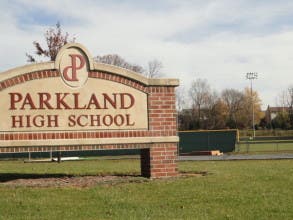
Parkland School Board Member Roberta Marcus of South Whitehall told me that Parkland purposefully calls after-school activities “co-curriculars” to show that the district sees music, art, theater, athletics, debate and other clubs as a part of students’ education, not as “extra” frills.
“There’s overwhelming research over many years that consistently says student activities in these types of programs motivates them more,” which improves their performance and behavior in school and out, said Marcus, who is past president of the Pennsylvania School Boards Association.
She has seen it in her own family. Her now-grown son ran track for Parkland High and always finished last. “The timekeepers were packing up by the time he came across the finish line,” she said.
But he never quit and the sport taught him about perseverance and teamwork and how to treat people who struggle to be good at something.
In this hard economic climate, school boards have to look at everything in their budgets and it’s understandable that they might put off buying new uniforms for teams or even shelve some clubs and activities with waning popularity.
But if schools are serious about bringing up attendance and graduation rates, the last thing they should cut are the activities that make so many kids want to come to school each day.
If we call extracurriculars “truancy busters” or “graduation rate boosters,” they might stand a better chance of surviving the budget ax.