Community Corner
Our Unhealthy Air Might Mean an Unhealthy Economy
Air quality problems can't improve without overhauling the way we manage land use.
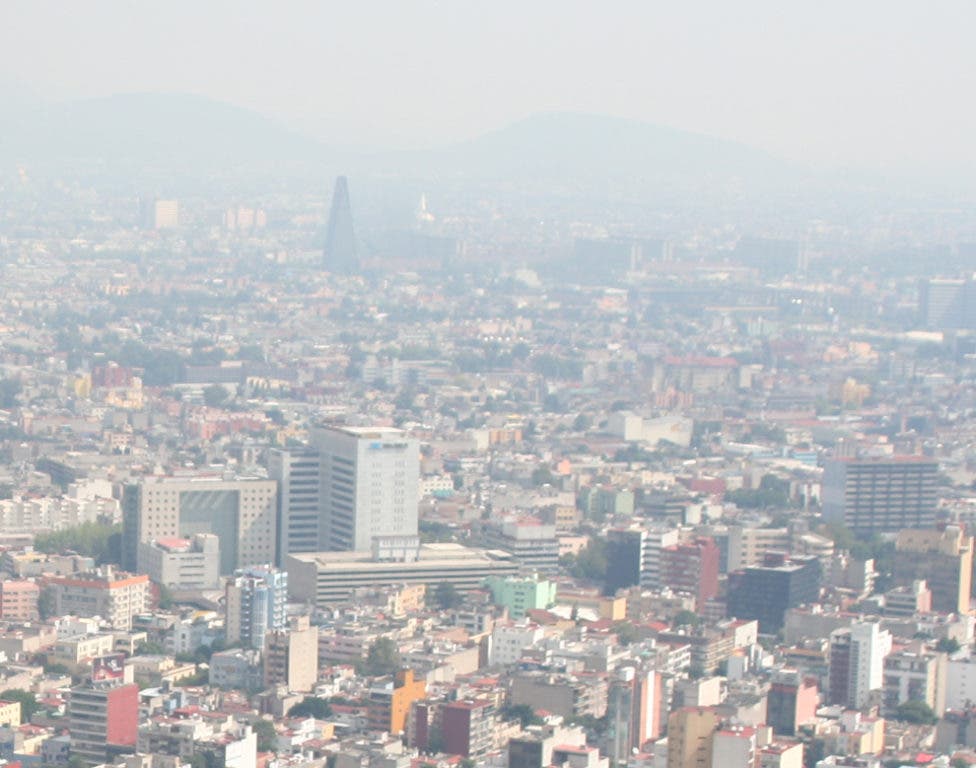
Nick Falsone of the Express-Times recently reported that Northampton County failed the American Lung Association's air quality tests for ozone and short-term particle pollution. You may recall hearing about this problem in the State of the Lehigh Valley report that was released earlier this year.
While you might think to blame coal-fired plants like GenOn's Portland Generating Station, one of the top 5 worst polluters in the country, the ALA actually singled out auto emissions as the primary culprit. Here is how Kevin Stewart of the ALA described the risks to Mr. Falsone:
"When you breathe these microscopic particles, you are inhaling a noxious mix of chemicals, metals, acid aerosols, ash, soot and others from diesel exhaust and other sources," he said. "It is as toxic as it sounds and can lead to early death, asthma exacerbations, heart attacks, strokes and emergency room visits in very substantial numbers."
Notably, the Lehigh Valley recently ranked 18th out of the top 100 "Asthma Capitals" in the U.S.
Not only is this terrible for residents' health, it may also be hurting the Valley's economy. A recent National Bureau of Economic Research paper found "robust evidence that ozone levels well below federal air quality standards have a significant impact on productivity: a 10 ppb decrease in ozone concentrations increases worker productivity by 4.2 percent."
The Air Quality Partnership Lehigh Valley-Berks responded to this dismal news with a neat contest, the Share The Ride Challenge, to encourage carpooling, public transportation, bicycling and walking. There are prizes, so there's a fun competitive incentive to try to rack up the most emissions savings.
While I hope people will continue to invent novel ways to help people pay more attention to their emissions, it should be obvious by now that awareness campaigns of this nature will not do nearly enough to meaningfully address this problem.
The real problem is the way the Lehigh Valley has been managing its development and land use. Before the housing bubble popped, the region experienced rapid population growth in new low-density greenfield developments in the second-class townships. The expanding sprawl led to more car dependence in the region, and thus more driving and more vehicle exhaust.
I think it's important to understand that these development patterns have very little to do with a free market for land. There are important policies at all levels of government that incentivize sprawl and make it illegal to build the kind of walkable mixed-use development that would reduce the need for driving.
State and federal transportation funding formulas strongly favor highways over regular roads and transit, and gas taxes are very low by international standards.
At the federal level, the mortgage interest tax deduction encourages ever larger homes because it pays out most to the biggest homes. At the state level, the municipal planning code makes it impossible to make the Lehigh Valley's comprehensive plan legally binding.
At the local level, zoning authority is diffused across , which means any one of them can decide to build a new Big Box development in the middle of some faraway cornfield.
Zoning policies like mandatory minimum parking requirements, height limits, and maximum lot occupancy rules all make dense mixed use development illegal or impractical in many of the Lehigh Valley's municipalities. Differences in tax rates across munis also distort the market by encouraging developers, businesses and homeowners to go shopping for favorable tax rates.
Add it all up and you've got a pretty serious set of tax and regulatory subsidies lowering the cost of low-density suburbanization. While I believe that suburbanization is driven to a large degree by a genuine preference for it, it seems very unlikely that we would have quite so much of it without the subsidies.
To get the air quality problem under control, the Valley should take a "first do no harm" approach--remove incentives that are pushing people and businesses toward low-density areas. And if that's not enough, it's time to start thinking about policies that nudge people and businesses toward high-density walkable areas.
Until the state municipal planning code can be reformed to create legally-binding regional plans, township officials should voluntarily adhere to the Lehigh Valley Planning Commission's comprehensive plan and resist new low-density greenfield development.
Local governments should also consider a "zoning budget." A new paper by the economists Roderick Hills and David Schleicher recommends that officials "create a local 'zoning budget' each year. All deviations downward from planned growth in housing supply expressed in the budget should have to be offset by corresponding increases elsewhere in buildable as-of-right land."
Planning staff could also look at Portland, Oregon's concept of 20-minute neighborhoods. A 20-minute neighborhood is defined as "a place with convenient, safe, and pedestrian-oriented access to the places people need to go to and the services people use nearly every day: transit, shopping, quality food, schools, parks, and social activities, that is near and adjacent to housing."
This requires relaxing or eliminating minimum parking requirements for businesses like grocery stores in many of the Valley's municipalities.
For longer trips, the Air Quality Partnership is right to emphasize public transportation and carpooling. And there are many ways that public transportation can become more user-friendly, frequent and reliable. But no one should be under the impression that the air quality problem can be fixed without a major overhaul of the way the region is managing its land use.
Interested in a follow-up to this article?