Politics & Government
Study: PA favors unions, lags in business climate
Changes could be coming during fall session
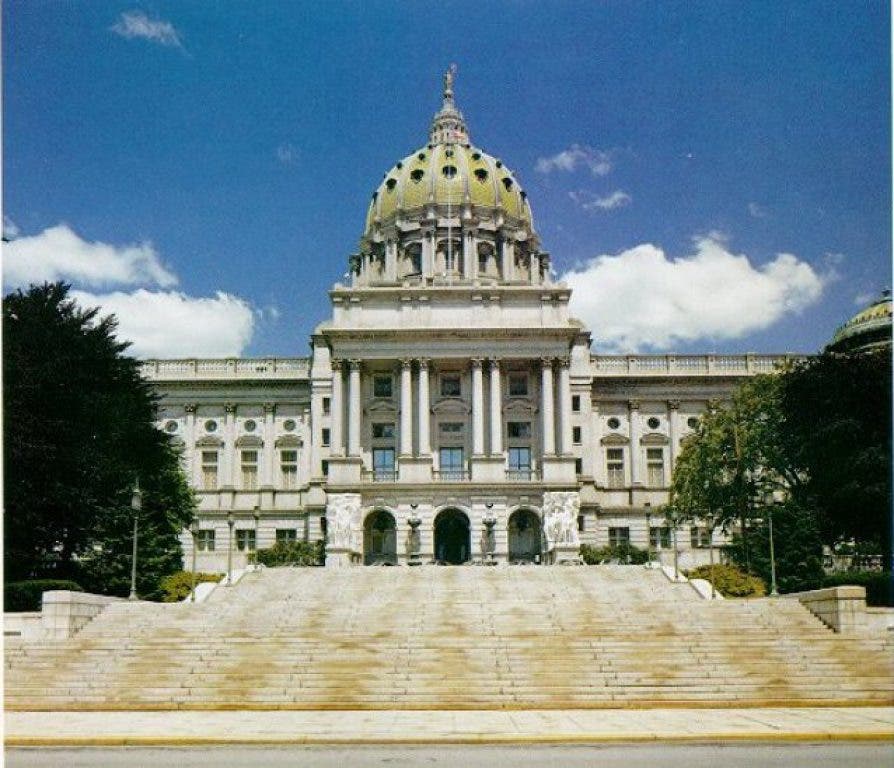
HARRISBURG — A new study ranks Pennsylvania as one of the most union-friendly states in the nation, but many in the Capitol have reason to hope — or fear — that those statistics may soon be changing.
Lawmakers will return to Harrisburg two weeks after Labor Day, and the fall session is shaping up to be a battle between labor unions and business groups on almost every front.
With Republicans in control of the state House, state Senate and governor’s mansion, business groups want to change labor laws to save taxpayers’ money, improve the business climate and give workers more freedom.
Find out what's happening in Upper Macungiefor free with the latest updates from Patch.
“We clearly need to address our very strict, stringent and uncompetitive labor regulations,” said Gene Barr, executive director of the Pennsylvania Chamber of Business and Industry, which represents the interests of the business community.
Barr said the creation of a right-to-work law, which would repeal requirements that workers pay a share of union dues if they choose to work in a union shop and not join the union, is the “holy grail” for the business community.
Find out what's happening in Upper Macungiefor free with the latest updates from Patch.
Frank Sirianni, president of the Pennsylvania Building and Construction Trades Council, a union representing 115 local construction unions in the state, said he did not want to see the state “race to the bottom” by passing labor reforms that he claims would result in lower wages.
“I think the workforce in Pennsylvania seems pretty happy with the way the state works now,” Sirianni said.
According to a new study released from the Competitive Enterprise Institute, a national pro-business nonprofit based in Washington, D.C., unions have plenty of reasons to feel good about the climate in Pennsylvania. The study claims that the state ranks near the bottom when it comes to labor policy that negatively affects taxpayers while helping unions.
Tennessee tops the rankings because of its right-to-work law, a relatively low per-capita public pension liability and other pro-business laws, including a ban on project labor agreements, which require that all government building projects are carried out in accordance with union collective bargaining arrangements even if they are done by non-union workers, which generally requires higher wages be paid.
Utah, Idaho, Texas and Florida round out the top five highest-ranked states, for reasons similar to Tennessee.
Pennsylvania was ranked 46th, ahead of only Connecticut, New Jersey, Illinois and New York. None of those states have right-to-work laws while all have prevailing wage guarantees and per-capita pension obligations ranging from $1,400 to more than $2,200, according to the report.
Other studies show Pennsylvania to have unfunded pension liabilities topping $100 billion, which would equal more than $8,300 per capita.
Pennsylvania also has a wide discrepancy in unionization between the private sector and public sector. In the private sector, only 9 percent of the state’s workforce is unionized, compared with 50 percent in the public sector.
The battle between labor unions and businesses is — in many ways — the quintessential political fight in Harrisburg. That fact should be readily apparent this fall, as the battle lines on almost every major Republican agenda item are drawn between those two longtime foes.
While most evident in the push for changes to prevailing wage laws or right-to-work laws, the business versus labor dynamic also plays a critical role in debates lawmakers will have on public school and charter school reform, school choice, changes to the state’s unemployment compensation system and the possible privatization of the state’s liquor stores.
“I think the only place where business and labor agree right now is on transportation,” Barr pointed out.
Even the redistricting process, which is the only item on the agenda that must be completed, faces influence from powerful labor unions, said Terry Madonna, professor of political science at Franklin and Marshall College in Lancaster.
"Organized labor’s goals would be that they want to have people elected who are going to protect the labor laws in the state and ensure that policies help working men and women," Madonna said.
But Sirianni said the labor and business communities enjoy a good working relationship, which he hoped to maintain despite the obstacles created by some Republican lawmakers.
“I don’t want to see any confrontation between the labor and the business community,” he said.