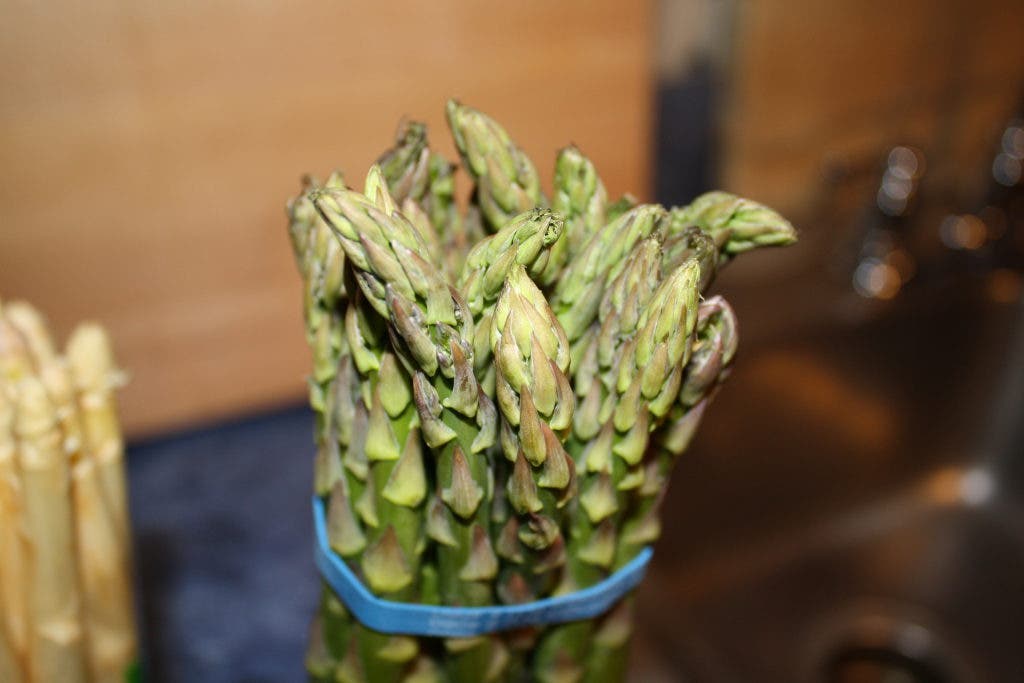


There are certain harbingers of spring’s imminent arrival: crocuses in the yard, birds chirping in the morning, and spring vegetables in the local farmers market.
Eating locally is a relatively new movement in the United States, but it is quickly gaining a strong following. Instead of eating mealy fruits and vegetables picked early to ripen during the trip from halfway across the world in the dead of winter, many people are choosing to eat fruits and vegetables when they are in season and available from local growers.
This may mean eating parsnips instead of pears in January, but the proponents of this movement argue that it helps the environment by saving fossil fuels used for shipping.
Find out what's happening in Upper Moreland-Willow Grovefor free with the latest updates from Patch.
And it tastes better, too.
These harvesting methods are commonplace in Europe, and while studying at the University of Freiburg, Germany, I experienced this first hand.
Find out what's happening in Upper Moreland-Willow Grovefor free with the latest updates from Patch.
As the weather gets warmer and the first few weeks of April arrive, so does the first harvest of asparagus.
During this time, if you ask many Germans what they are doing for the weekend, the answer frequently is simply, “Eating asparagus.” People get together just to eat white asparagus. This time of the year even has its own name: Spargelzeit, which translates, quite literally, to “asparagus time.”
Being abroad is all about new experiences, and since I had never eaten white asparagus, I got caught up in this adoration.
I wanted to personally understand the far-away look, akin to the adoring gaze usually reserved for chocolate, locals got when talking about a vegetable. I bought a bunch of white asparagus, brought it back to my apartment, and steamed it.
I sat down to eat it feeling like I was actually doing something of cultural importance. This white asparagus and I were going to share a moment. I took a bite ready to savor it, but I couldn’t bite through it. I gnawed and gnawed and managed to smash the interior, but the outside remained intact.
One of my German suitemates came into our kitchen and started chuckling at my futile chomping.
“You have to peel it first,” he laughed. “It’s not like the green asparagus you have in the States. White asparagus has a husk!”
Swallowing my humiliation, I bought a new bunch and tried again. I was glad I did. The European white asparagus is much milder in flavor than its American green counterpart. It was delicious, soft and silky, and I understood why people looked forward all year to eating it fresh from the local farm.
It is possible to grow asparagus in your own garden here in Pennsylvania, but it takes about three years to be mature enough to harvest. The plants should be left alone to grow to full height for the first few growing seasons, and then during the third spring, the stalks can be repeatedly cut or snapped off when they grow to be as thick as your finger and about eight inches tall.
White asparagus is buried in mounds of earth until harvest so that it never sees sunlight, and thus never produces chlorophyll.
Without chlorophyll, it doesn’t turn green.
If you plant this year, but don’t want to wait, the usually stocks both varieties.
Last week, perhaps a little early for the U.S. crop, the green variety was from Mexico, and the white variety was from Peru. Both were on sale for $2.99 per pound (down from $3.99), and I paid $3.23 for the green bunch and $3.02 for the white bunch. Choose your bunch by ensuring that each spear has a tightly closed bud and isn’t cracked at the bottom.
At home, leave the asparagus in the rubber bands and place it, buds-up, in a small bowl of water. It will keep like this for a few days, but be sure not to put it in direct sunlight, as the spear can still grow, separating the little nodes in the bud upward along the stem.
When you are ready to eat it, trim about two inches off the bottom, and steam or boil the green variety. The white asparagus can be handled the same way—just make sure you peel the stalk before cooking!
Alternatively, the asparagus can be grilled, which is all the rage in restaurants these days, by tossing the spears in olive oil and placing them directly on your grill. You can achieve similar results by roasting it on a sheet pan in a 400 degree oven until charred and softened slightly. Asparagus, like many other vegetables, is best with a little bite left in it.
Once cooked, expect the white asparagus to have a woody texture, with mild flavor and slight bitterness. The green variety will be lusciously full flavored with a tender bite. My favorite way to dress up either varietal is to toss it in a onion mustard vinaigrette and sprinkle it with parmesan cheese.
The recipe is as follows:
- 1 teaspoon finely grated onion
- 1 tablespoon Dijon mustard
- 2 tablespoons lemon juice
- ¼ cup cider vinegar
- ¾ cup canola oil
- Salt and pepper to taste
- Grated parmesan cheese
- Combine the grated onion, mustard, lemon juice, and vinegar in a bowl.
- Season with salt and pepper.
- Slowly whisk in the oil to emulsify.
- Pour over cooked asparagus.
- Sprinkle with parmesan cheese.
Enjoy!
Whether you choose to serve it as a side dish or over salad greens for a light meal, spring is here, and so is asparagus! Go out and grab a bunch!