Community Corner
'Fireballs' in the Sky: Peak Viewing Times for the Geminids
The Geminids are the best meteor shower of the year in terms of frequency and intensity of shooting stars. But will the weather cooperate?


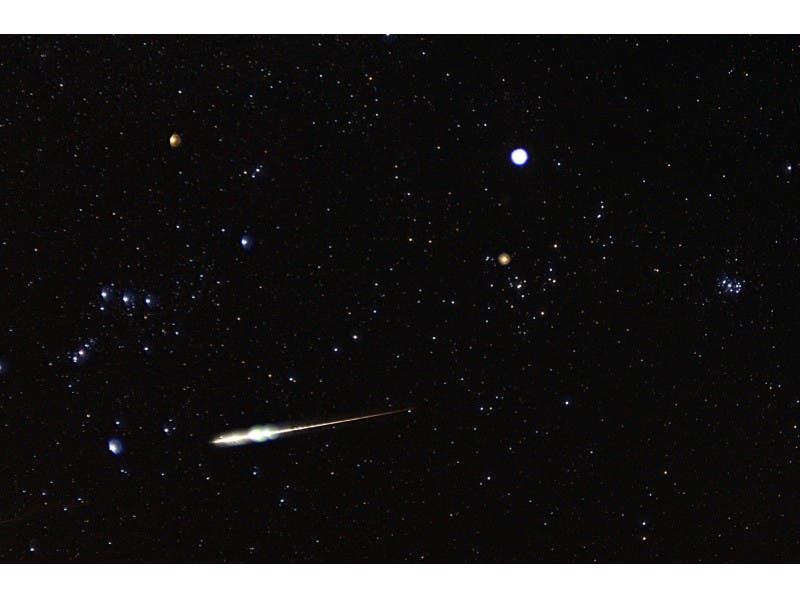
The best meteor shower of the year is queuing up for its peak.
The peak times for viewing the Geminids – known as the “fireball” meteor shower because of their frequency and intensity – are late Saturday night into Sunday morning
Find out what's happening in Upper Moreland-Willow Grovefor free with the latest updates from Patch.
Friday night and Saturday morning may offer a sprinkling of meteors, which tend to be brightest and the most prevalent as evening deepens into late night, EarthSky.org says.
That’s good news for the Philadelphia region. Overnight skies Friday into Saturday should be partly cloudy, the Weather Channel says. Saturday night into Sunday is also expected to be clear, with partly cloudy skies predicted again.
Find out what's happening in Upper Moreland-Willow Grovefor free with the latest updates from Patch.
NASA reports that the Geminids are a relatively young meteor shower, with the first sightings occurring in the 1830s with rates of about 20 per hour.
Over the decades the rates have increased, regularly spawning between 80 and 120 per hour at its peak on a clear evening.
Earthsky.org offers 10 tips for watching the year’s most spectacular meteor shower:
- Be sure you know which days the shower will peak.
- Find out the time of the shower’s peak in your time zone.
- Watch on the nights around the peak, too.
- Don’t take the notion of a radiant point too seriously.
- Find out the shower’s expected rate, or number of meteors per hour.
- You must be aware of the phase of the moon.
- Dress warmly.
- Bring along that thermos of hot coffee or tea.
- Bring a blanket or lawn chair.
- Relax and enjoy the night sky.
If the skies don’t cooperate, there’s one more chance this year to watch meteor showers with the Ursids, which peak Dec. 22-23, NASA says. Depending on cloud cover, darker new moon conditions mean the Ursids will radiate from the bowl of Ursa Minor, which you probably know as the Little Dipper.
Photo via EarthSky.org
Get more local news delivered straight to your inbox. Sign up for free Patch newsletters and alerts.