Politics & Government
Governor’s Office Anticipates Bond Sale in Coming Months
Treasurer Rob McCord or Auditor General Jack Wagner would have to approve it.
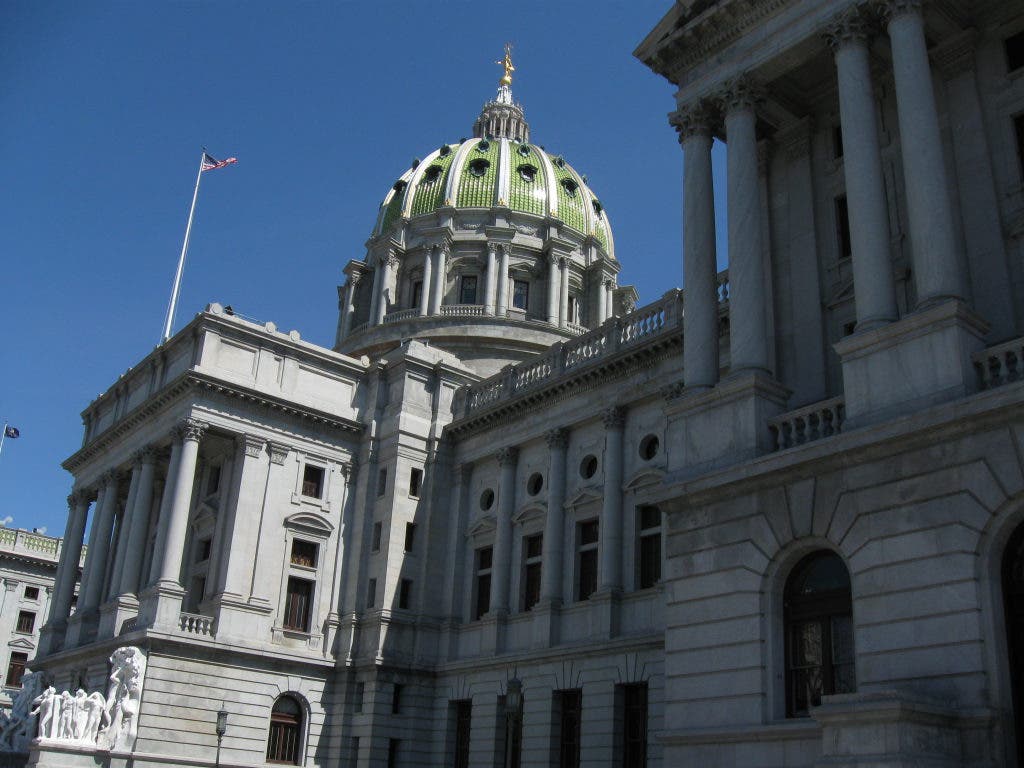
Pennsylvania’s cash flow for ongoing projects could dry up unless the state borrows more money.
“It is likely that the commonwealth will need to borrow additional funds in late summer or early fall to continue to fund costs of ongoing capital and voter-approved projects,” wrote Susan Hooper, spokeswoman for Gov. Tom Corbett's Office of the Budget, in an email earlier this month.
Without the additional borrowing, the state could not make contractually obligated payments, exposing it to possible lawsuits, Hooper wrote.
Find out what's happening in Upper Sauconfor free with the latest updates from Patch.
Pennsylvania has more than $9 billion in general obligation debt with debt service payments to creditors consuming more than $1 billion of this year’s budget.
The state’s Budget Office estimates a bond sale will be necessary within the next few months to cover capital projects, including infrastructure repair, environmental remediation and economic development initiatives.
Find out what's happening in Upper Sauconfor free with the latest updates from Patch.
More than $1 billion of last year’s capital budget has not been bonded, and lawmakers did not pass a new capital spending budget with the state budget in June. Since the Legislature had approved that level of borrowing, a bond sale could go ahead without any legislative action.
The state constitution requires the governor and either the state’s auditor general or treasurer to approve any proposed general purpose bond. Corbett is a Republican, and the other positions are held by Democrats.
In December, then-Gov. Ed Rendell, a Democrat, wanted a $1 billion bond sale to fund projects before he left office, but Auditor General Jack Wagner refused to sign off on the deal. Treasurer Rob McCord agreed only after Rendell scaled back his proposal to $650 million.
The larger amount, McCord said at the time, would be detrimental to the state’s financial health.
Last week, Wagner and McCord said they wanted to see a proposal from the Corbett administration before making a decision, but both cautioned against borrowing to fund nonessential projects.
“It is vitally important that we, as a commonwealth, live within our means,” Wagner said. “Wall Street is always going to signal to spend money, because they are making money on the transactions, so we have to be the ones to make good fiscal decisions.”
Wagner said the state needs a system to ensure projects, funded through borrowing, were creating permanent jobs.
Michael Smith, McCord’s spokesman, said the treasurer would not support borrowing to pay short-term obligations, but he would approve additional borrowing for “appropriate” reasons.
“The most appropriate uses for debt are to finance long-term growth or to make investments in Pennsylvania’s infrastructure that will help provide the basis for economic development and growth,” said Smith.
The general obligation debt is a small share of the state’s overall indebtedness, which includes nearly $4 billion in borrowing from the federal government to cover unemployment compensation payments, about $30 billion in unfunded public pension liabilities and $34 billion in debt accrued by 13 off-budget authorities. The debt held by those authorities is not considered direct obligations of Pennsylvania under the state’s constitution, but it is ultimately backed by the state’s taxpayers.
According to data from the Treasurer’s Office, the state’s per capita debt is $41,924.
The state also may have to pay back $800 million, taken from a fund to help doctors pay for medical malpractice insurance to help balance the state budget two years ago. A decision on repayment is expected from the Commonwealth Court within the next few months, Wagner said.
Payments on the state’s general obligation debt topped $1 billion in fiscal year 2010-11, accounting for more than three percent of the general fund budget. Even if no further borrowing takes place, debt service payments will exceed $1 billion each of the next two fiscal years.
General obligation debt is usually paid over a 20-year period. Using current interest rates, the state’s taxpayers could be on the hook for about $1.2 billion, if the administration borrowed $1 billion.