
Sports
Sports-Related Concussion Panel Talks About Silent Menace
The Lehigh Valley Coalition on Sports Ethics hosts an educational panel on sports-related concussions at DeSales University
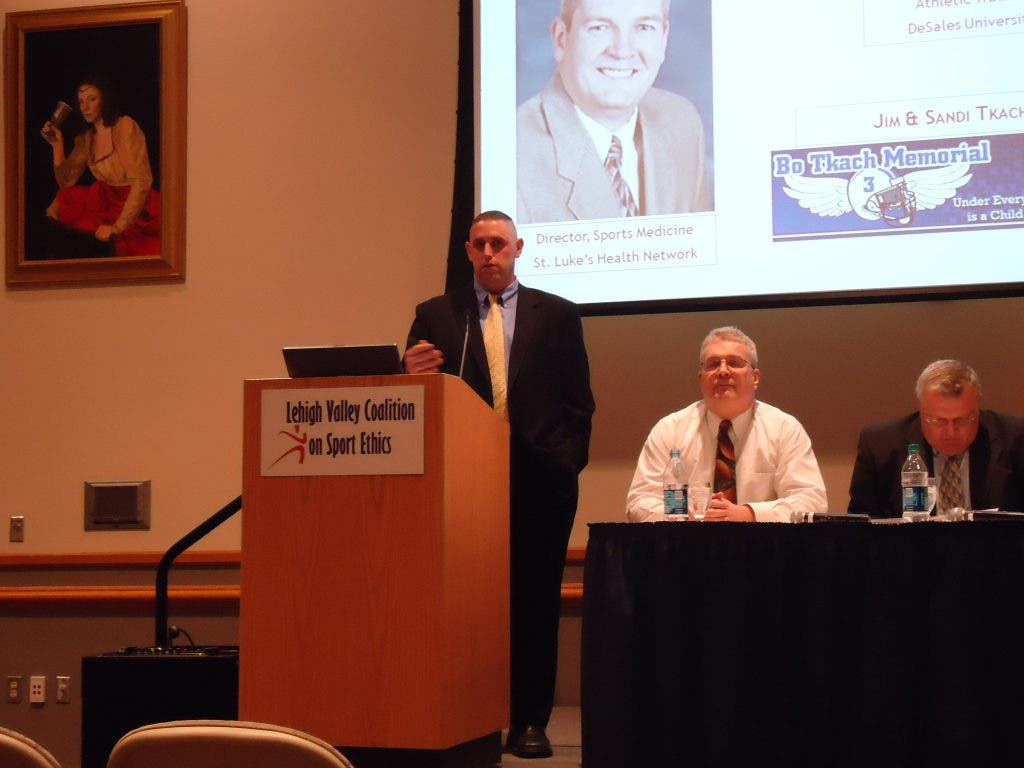


Sports-related concussions are not always treated properly, and youth sports are at the highest risk for untreated or improperly treated concussions. That was the topic of a panel discussion March 24 at DeSales University. In front of a crowd of student athletes, coaches, and parents, panelists discussed the seriousness of concussions.
Concussions have been front and center in the media, following the premature deaths of several National Football League and National Hockey League players due to chronic traumatic encephalopathy, also known as brain disorders. A bill now before the state legislature would regulate how concussions are treated in youth sports.
The panel consisted of Dr. Kevin Waninger, director of sports medicine at St. Luke’s Hospital; Mark Wojciechowski, DeSales’ athletic trainer, and Jim Tkach of the Bo Tkach Foundation, which raises awareness of Obsessive Compulsive Disorders and mental health screening for children. The panel stressed the importance of understanding what a concussion looks like and how long players should be off the field.
Find out what's happening in Upper Sauconfor free with the latest updates from Patch.
“What we need to do is educate the coaches and the players,” Waninger said.
The panel stressed that it is often not the first concussion that causes serious injury to a player but rather a second injury that occurs before the first has had time to properly heal. “Very few players suffer serious injury from the first hit,” said Waninger. “The most important thing is that the athletes tell the truth [about having concussion symptoms].”
Find out what's happening in Upper Sauconfor free with the latest updates from Patch.
Waninger explained that the younger a person is the more dangerous a head injury could be because the brain is still forming.
Often, it is youth sports that lack a certified athletic trainer. It then falls to the coaches to recognize a concussion and prevent the athletes from playing until they have recovered. “Coaches need to learn about concussions, how to deal with them,” Wojciechowski said. “Every school needs to have a protocol.”
Despite the recent media furor, the panel agreed that information on sports-related concussions has improved considerably in recent years. “I think a lot of progress is being made,” said Tkach. “I think the rules are changing in football for the better.”