Politics & Government
Dire Forecast for 2012 Upper Saucon Township Budget and Beyond
Budget committee predicts $800,000 deficit at the end of 2013 and $3.8 million deficit in 2016.
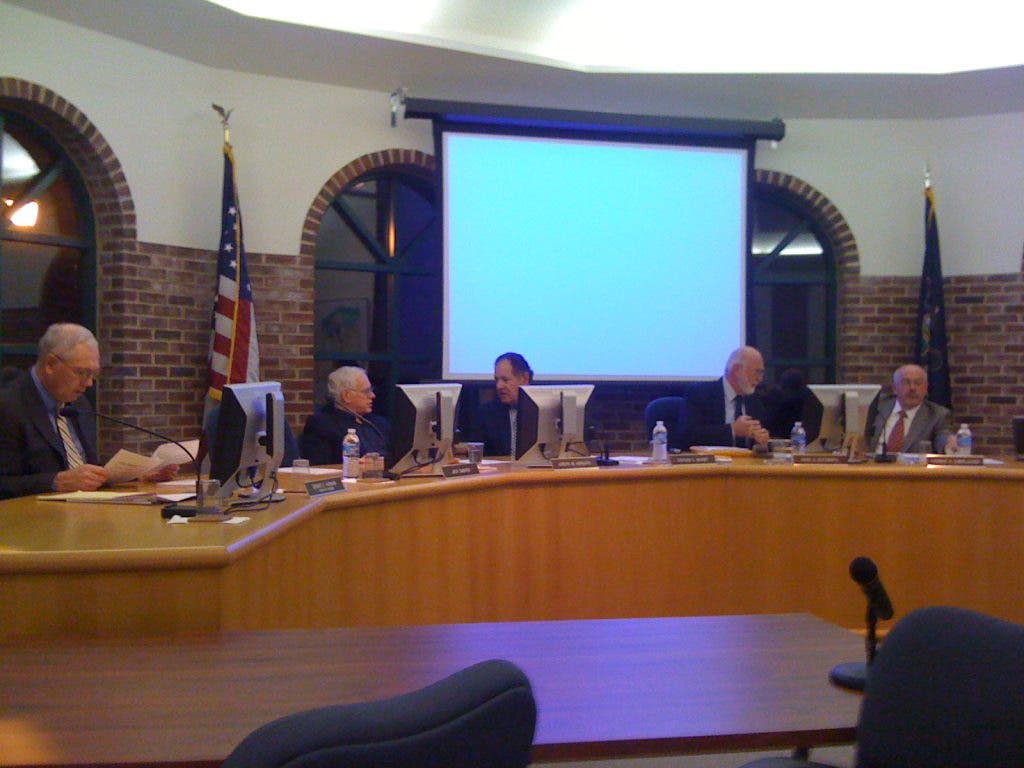


“There is a budget problem in the township,” James Largay of the Upper Saucon Budget Review Advisory Committee told the Board of Supervisors Monday night.
The problem, according to Largay:
--A project budget deficit of $800,000 by the end of 2013, fueled by declining revenue from earned income and real estate transfer taxes.
--The depletion of the township's "Rainy Day Fund" during 2012.
--A projected deficit as high as $3.8 million at the end of 2016.
How to handle the problem? Largay had a list of recommendations, including possible tax increases (but the committee could not reach a consensus on this), the sharing of police and fire services, the possible sale of the township's water system and not filling two open jobs in the roads department.
"There are going to be very hard decisions to make," Largay said.
The committee -- consisting of Largay, Steven Annunziato and Peter Staffeld along with township staff -- met to provide transparency and a citizen's view of the budget.
The committee found that due to the economic downturn, township coffers received less revenue from earned income and real estate transfer taxes.
Largay said revenue from real estate transfer taxes went from around $804,000 in 2006 to $320,000 in 2010, and revenue from the earned income tax went from around $2,863,000 in 2008 to $2,600,000 in 2010.
Find out what's happening in Upper Sauconfor free with the latest updates from Patch.
“The main problem now is revenue,” he said.
A forecast shows the “Rainy Day Fund" will be depleted during 2012 and that there will be an $800,000 deficit by the end of 2013.
Find out what's happening in Upper Sauconfor free with the latest updates from Patch.
Largay presented the following recommendations to the supervisors:
- Not filling the roads department's two open positions -- for a savings of possibly $130,000 a year.
- Researching ways to share municipal services, including police and fire, zoning code enforcement and building inspections.
- A possible sale of the township's water system. The committee did not have a specific dollar amount for the sale but projected the sale would provide cash over several years.
- Changing the pension plan for new employees from "defined benefit" to "defined contribution" and asking employees to contribute more toward medical benefits. “It won't pay quickly but it will in the long term,” Largay said.
- Reducing engineering and legal costs by using other methods.
- Measuring the township's performance by comparing it to that of other municipalities.
- Supporting the Environmental Advisory Council's energy efficiency program. “We are 110% behind continuing this,” Largay said.
The committee presented other ideas on which it could not reach a consensus.
One idea was saving police department expenses by examining evening staff against demand, but the committee said it would like to confirm that with experts.
Another idea was using the Open Space Fund and other unspent money totaling around $100,000 for the Capital Reserve Fund. The committee added that it should not compromise the preservation of open space.
Last but not least was possible tax increases. The township has kept its real estate tax at 4.2 mills since 1989. The committee reported that the Southern Lehigh School District had raised its tax rate -- possibly absorbing all of the tax capacity.
“We're still going to try and hold the tax line,” supervisors chairman Miro Gutzmirtl said.
Largay displayed a graph showing the school district's tax rate at 45.3 mills compared with the township's 4.2 mills in 2010.
“Taxpayers can only pay so much,” township manager Thomas Beil said.
The budget process continues with a preliminary budget due Nov. 21 and a final vote scheduled for Dec. 19.