Arts & Entertainment
Don't Miss the Final Days of the Jamie Wyeth Exhibit
Don't miss the final days of "Farm Work," a family-friendly exhibit featuring Jamie Wyeth's lively vision of life on the farm.

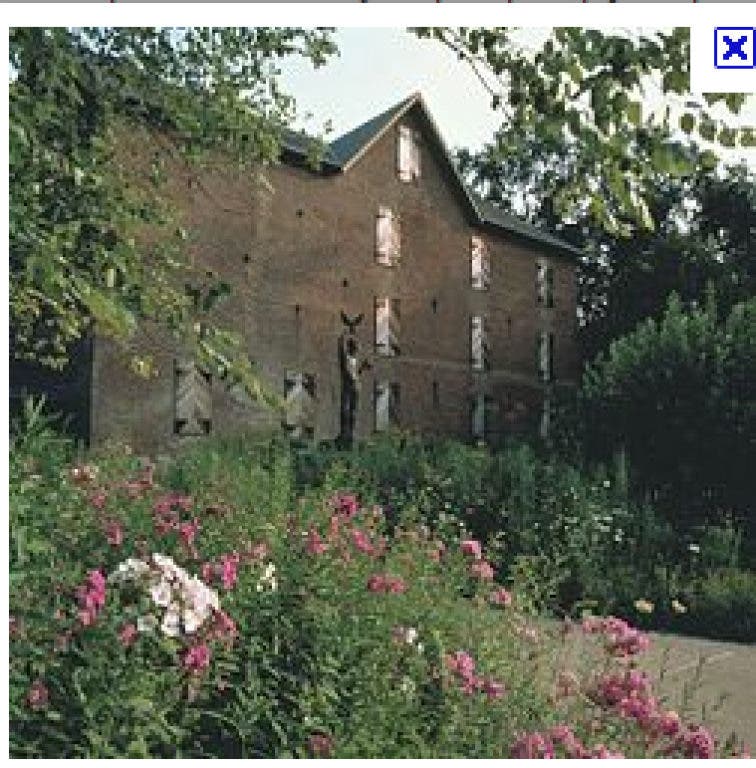

If the free Sunday morning admission doesn’t prod you to finally visit the wonderful Brandywine River Museum – a place the Smithsonian magazine once hailed as the best “rural” museum on the East Coast – then knowing that that a major exhibition is about to close may be a good incentive.
“Farm Work” is not only the hallmark of the museum’s family-friendly curatorial style, the exhibit appeals to a broad range of visitors, from the art intelligentsia to those who don’t know a pallet from a palette.
The exhibit is aptly named. The double entendre describes the exhibit’s comprehensive focus on five decades of work by James ``Jamie'' Browning Wyeth, who has always avoided “the cute factor,” as a press release described it, by staying true to his own artistic vision in his depictions of barnyard animals, farm equipment, and the surrounding landscape.
Find out what's happening in West Chesterfor free with the latest updates from Patch.
Indeed, Wyeth , who has made a career of painting the famous - his posthumous portraits of President John F. Kennedy and of artist Andy Warhol are perhaps the best-known - is noted for making the obvious interesting. His 1970 painting, Portrait of Pig, which gives a life-size, eye-to-eye view of a 600-pound pig named Den Den, is as routinely linked to Wyeth as the portrait of the lone, crawling figure in Christina's World is to his father, the late Andrew Wyeth.
Jamie Wyeth fans – an enthusiastic lot judging from the exhibit’s packed opening night reception – generally delight in his seemingly endless creative energy in discovering new themes by using favorite subjects. Two past exhibits, “Dog Days” and “Seven Deadly Sins,” come to mind : the first being nearly a visual diary of what makes a Jack Russell tick, and the second, a portrait of lust, gluttony, greed, sloth, wrath, envy and pride, with gulls as the subjects.
Find out what's happening in West Chesterfor free with the latest updates from Patch.
As this exhibit clearly reveals, the Wyeth of recent years finds his artistic challenges in his use of bright, crayon-like greens and blues, and his interest in capturing textures and surfaces (pig skins and wiry dog hair are a case in point).
Still, much like his father, the late Andrew Wyeth, the artist sees his subjects as almost a magical link to his imagination. He must know them intimately before he begins to paint. Remarking on the large herring and black backed gulls he watched from his studio along the coast of Maine, Wyeth has said, “I don’t drive around looking for scenes. Almost everything I paint is something I know very well.”
While we may marvel over his father’s technical mastery, the younger Wyeth takes the family’s genus for discovering a composition – finding the “soul” of a subject, as elder Wyeth liked to say - and applying it to the barn yard.
In many of the earlier works, the focus seems to be on un-ordinariness of ordinary objects. These include a recycled bathtub used for a water trough; the random but orderly pattern of hay bales left in a field; the strange adornments, like a lottery ticket stubs, attached to the left ears of cows ; and a milk pail left to rust in a field, an old feed bucket sitting like a crown on its lid.
Taken as a mini history of one artist’s vision, “Farm Work” unfolds in unusual ways. Some of the early watercolors, for instance, resemble Andrew Wyeth’s in their messy detail and somber tone. However, Jamie Wyeth’s time in the Warhol “factory” and his longtime fondness for materials such as cardboard and toned paper has clearly set him apart from both his father and grandfather, N.C. Wyeth.
In casual interviews conducted during a recent visit, animal lovers only slightly edged out visitors who said that they made a point of following Wyeth’s career, marveling at his diversity and decorative appeal. A museum guard said that she never grew tired of looking at Wyeth’s 1964 painting of a corn crib, which resembles an Oriental screen.
Elsewhere, we see paintings that appeal to the animal lover in the way Wyeth captures an apt expression – that tiny smile pigs seem to sport, for instance – or an animal mannerism (or is it instinct?) such as the way a herd of cows will face the same direction when standing in a field.
As Wyeth observes in one of the exhibit’s many extended captions, “I love the cattle at Point Lookout. They all go one way – eat the field – eat all the grass and they turn and go back the other way.” Speaking of the rusted milk pale with its tin “hat,” Wyeth says it’s “more than informed by the Wizard of Oz.” He adds, with characteristic modesty and chagrin, the suggestion that he is merely the messenger and that typically, the objects and animals he paints take on a life of their own. Whenever he indulges in his “farm obsession,” as he calls it, he becomes “a latter day Dorothy,” surrounded by “real and imagined creatures.”
It may be Wyeth’s own blend of magic realism, embracing an approach that at times part illustrative and part observational, that has given Wyeth a broad fan base and indeed, a celebrity status. People tend to both identify with his work and view it as something strange and wondrous – to use a phrase Wyeth fans will recognize. At a special catalogue signing event in June, the line of visitors resembled that of fans in a book store, eagerly awaiting their chance to meet the artist and to get his autograph .
Ann and Billy Houck, an elderly couple from South Carolina said that they missed the Belmont Stakes, the final leg of the triple crown of horse racing, and drove 11 hours to attend the opening.
Gerald Jones, an illustrator and artist from Baltimore, said he was drawn to the exhibit by Wyeth’s visual sense of humor and his continued growth as a painter.
The consummate observer and admittedly compulsive “recorder,” Wyeth nevertheless has a knack for being at the right place at the right time – all the more remarkable considering the artist does not rely on photography, much like his father. These paintings could be described as “up close and personal,” and include a cow caught in the animal equivalent of the human sneeze. Displayed at the exhibit entrance, the painting shows a cow making an awkward licking maneuver, one eye bulging in the process. Like most of the animals seen here, the cow seems unalarmed to see you, the visitor who wandered into the scene.
“Farm Work” featuring the works of Jamie Wyeth
• Where: The Brandywine River Museum, U.S. Route 1, Chadds Ford, Pennsylvania, 19317
• Date: through September 11th
• Time: Open daily from 9:30-4:30 p.m. Closed Christmas Day.
Features: “Farm Work” is a comprehensive exhibit featuring five decades of Jamie Wyeth’s lively depictions of barnyard animals, farm equipment, and the surrounding landscape.
Website: www.brandywinemuseum.org.
Phone:(610) 388-2700
• Price: Free admission on Sunday mornings from 9:30 to 12 noon through November 20th (except Memorial Day weekend.) Admission is $10 for adults; $6 for seniors ages 65 and over, students, and children ages 6 to 12; free for children under six and Brandywine Conservancy members.