Kids & Family
Bridge Bike Lanes, Crossings Nixed
The RI Department of Transportation has turned thumbs down on a Barrington man's request to make special accommodations for bike riders on the new 'White Church' bridge.


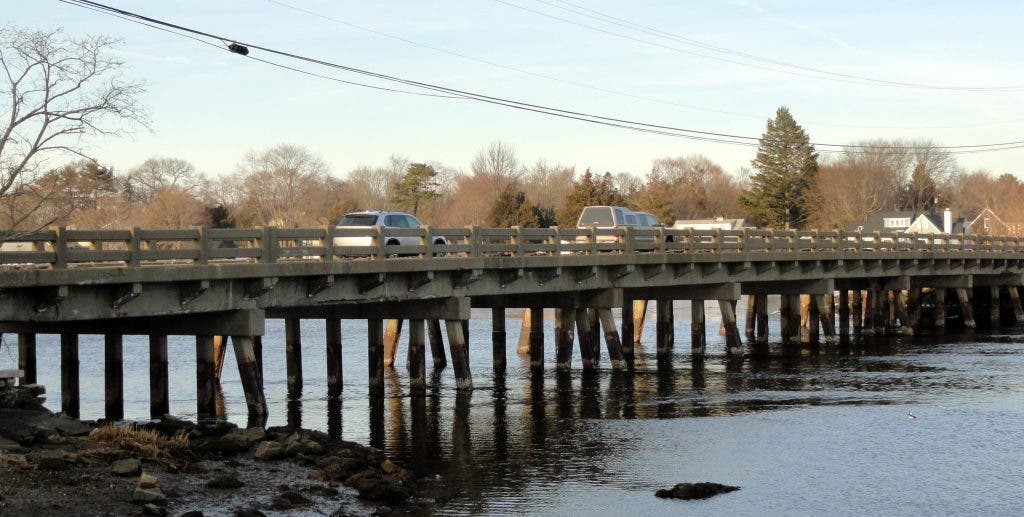


Plenty of “Share the Road” signs will dot the new Massasoit Avenue bridge over the Barrington River to make motorists aware of bike riders.
And RIDOT is considering using shared–lane markings or “sharrows” in the travel lanes of the Central Bridge to tell motorists that bicyclists as well as motor vehicles may use the full lanes, said David Fish, managing engineer for bridge engineering for the RI Department of Transportation (RIDOT).
But there will be no other options to specifically accommodate bicycles on the new higher and wider bridge, said Fish, such as bikes lane or wider approaches to the County Road intersection, or ramps that allow bicyclists to use the sidewalks, or signs directing bicyclists on and off sidewalks.
Find out what's happening in Barringtonfor free with the latest updates from Patch.
For the lanes or wider approaches, he said: “We would need to take additional private and historic property, which would have an impact on the ‘White Church’. And we would need additional fill in the pond (Hundred Acre Cove).”
“We need to balance environmental concerns with traffic concerns,” Fish said.
Find out what's happening in Barringtonfor free with the latest updates from Patch.
RIDOT’s rejection of those options for bike riders is spelled out in a July 16 letter to Town Manager Peter DeAngelis Jr. It puts an end to a push by Tim Faulkner of Barrington and local bicycle groups to “do what other cities and towns have done elsewhere to accommodate bike travel,” he said.
Faulkner had approached RIDOT and Barrington officials last fall about making certain changes to the bridge plans for bike riders. At least one joint meeting was held with Faulkner to consider certain options for bicyclists, including the many students who use the bridge to get to the high school from Hampden Meadows.
“Of course I am disappointed,” said Faulkner. “It’s a missed opportunity to make travel safer … and make things more accessible.”
Faulkner suggested options such as bicycle lanes, bicycle crossings and bike boxes to go along with the "Share the Road" signs.
Because there will be no bike lanes, said Fish, bike crossings are inappropriate. And “bike boxes,” which allow bicycles to sit in front of motor vehicles at intersections, “are currently in an experimental phase and more date is needed concerning their application," Fish said.
Plans and designs for the new bridge are 100 percent complete, said Fish. RIDOT is waiting now for the RI Department of Environmental Management to complete its water-quality review. That will “trigger reviews” by the Coastal Resources Management Council, the Army Corps of Engineers and the fish and wildlife agency.
“We’ve had successful conversations with DEM on our re-submission based on their principal concern,” he said, which was "disruption to the bottom of Hundred Acre Cove."
To lessen and, perhaps, eliminate any impact on the river bottom, Fish had said previously, RIDOT will be erecting “steel sheeting in the river to separate worker” from the wildlife and to “not disrupt the river bottom.”
Fish said he expects to go out for bids by November. The construction timetable calls for work to start toward the end of April next year. It is expected to take about two years to construct the new bridge.
Fish reiterated that at least two lanes of traffic will be open at all times across the river. Traffic will not stop during the work, he said, with the new span being built just north of the existing bridge.
DEM also has asked RIDOT to work with Barrington on reducing vessel speeds in Hundred Acre Cove. That effort will involve Barrington Harbormaster Ray Sousa and the Harbor Commission, said Fish.
“We want to try to move the 5 mph wake zone farther south in the cove,” he said.
The plan for the new bridge calls for it to be two-feet higher and one-lane wider with low density lighting to minimize glare, navigational lights, and no-fishing signs only on the center span of the five spans to be built over the water.
The additional height of the bridge is expected improve access for emergency and rescue boats at high tides – the primary reason the Town Council asked RIDOT for a two-foot higher bridge.
Get more local news delivered straight to your inbox. Sign up for free Patch newsletters and alerts.