Health & Fitness
Notable Buildings by Women of Note
Bristol's women have built some fascinating houses. Come learn more about their historic buildings and this amazing group of women.
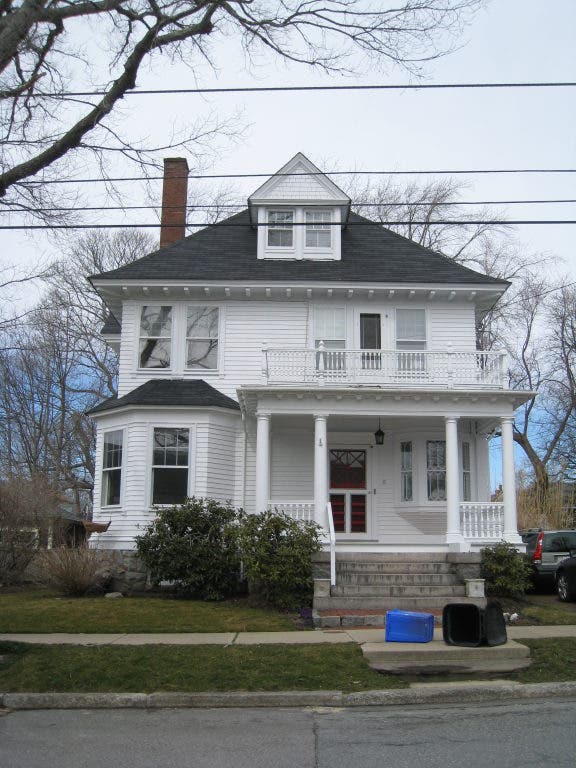


In honor of Women’s History Month, I thought it would be interesting to learn more about those buildings in our area built by and/or for women. I have to admit that I was pretty surprised by what I found. I knew of two buildings, Blythewold and Longfield, that had women behind their history. But, it turned out that there a whole lot more—22 more, in fact. And, almost all of these had an even stronger connection to a woman than the two big houses. Here’s what I learned.
There is no time in Bristol’s history when women weren’t involved in building. I found Colonial-era buildings, Victorian period buildings, and twentieth century buildings. And, all the styles in between were represented—Colonial Revival, Gothic, Italianate, Second Empire, Greek Revival, and so forth. With the exception of the 1840s, when there was a small spike in the number of buildings by women, the pace of construction was constant.
The buildings cluster into two neighborhoods. One is the block framed by Thames, Constitution, Hope and Church Sts. The other is the area between Union and Burton and Hope and High Sts. It’s tempting to speculate that these women knew each other and wanted to live together. But, I don’t think that was the case. With only 24 buildings for a survey sample, this is probably a coincidence. And, I don’t have much information about buildings outside the Historic District; there may be other “neighborhoods” of women elsewhere. If you know of any, please let me know.
Find out what's happening in Bristol-Warrenfor free with the latest updates from Patch.
Hardly any women employed an architect for their designs. A handful were married to housewrights (i.e. builders) who probably provided both design and construction services. The rest must have employed professional carpenters. This is interesting to think about because it suggests that the women themselves may have had tremendous input in the design. There were only four architects represented in my group, and two of these were Russell Warren, for Longfield, and Kilham and Hopkinsin, for Blythewold. Are you starting to see something different about those buildings? Yeah, me too. They don’t represent the general trend.
There is much to learn about the women themselves. They were single, married, and widowed. Some were independently wealthy. Some got the land from their fathers (but interestingly, not their mothers). Some owned businesses; one owned a salon (which was a place to get together and talk, not a place to get your hair done. Wikipedia has a good discussion of women and salon culture. One seems to have built her house on spec, since she sold it only two years after purchasing the land. Several were the wives or daughters of significant Bristolians, like Sarah Herreshoff, Katherine DeWolfe, and Josephine Gibson Knowlton. I like that there is no trend as to who these women were. They were all unique individuals. And, as you’ll see, it’s the architecture that tells their stories better than anything else.
Find out what's happening in Bristol-Warrenfor free with the latest updates from Patch.
A reasonable question to ask would be “How do you know a building was built by a women?” For most of my twenty-four buildings, this information comes from historic deeds. The deeds document whether a property was empty or contained “improvements”, like a house. But, you ask, didn’t husbands put their properties in their wives names to avoid taxes? Not really. Tax incentives like those are a mid-to-late twentieth century invention. And besides, if it were really an advantage, more men would have done so, and we’d have a whole lot more historic buildings attributed to women.
Over the next week, I’ll be profiling five examples from my group. I’ve picked those buildings from the Union/Burton neighborhood and they are proximate to each other. If you want, you can save it all to the end and take it as a tour. Or, you can follow along as an “armchair traveler”. The stories of these women are really interesting—and the architecture is just fabulous.