Health & Fitness
The Roots of Bristol’s 4th of July Celebration: Part II
Every year since 1785, prayers of thanksgiving, oratorical praise for the principles of liberty and freedom, combined with music and singing are performed.
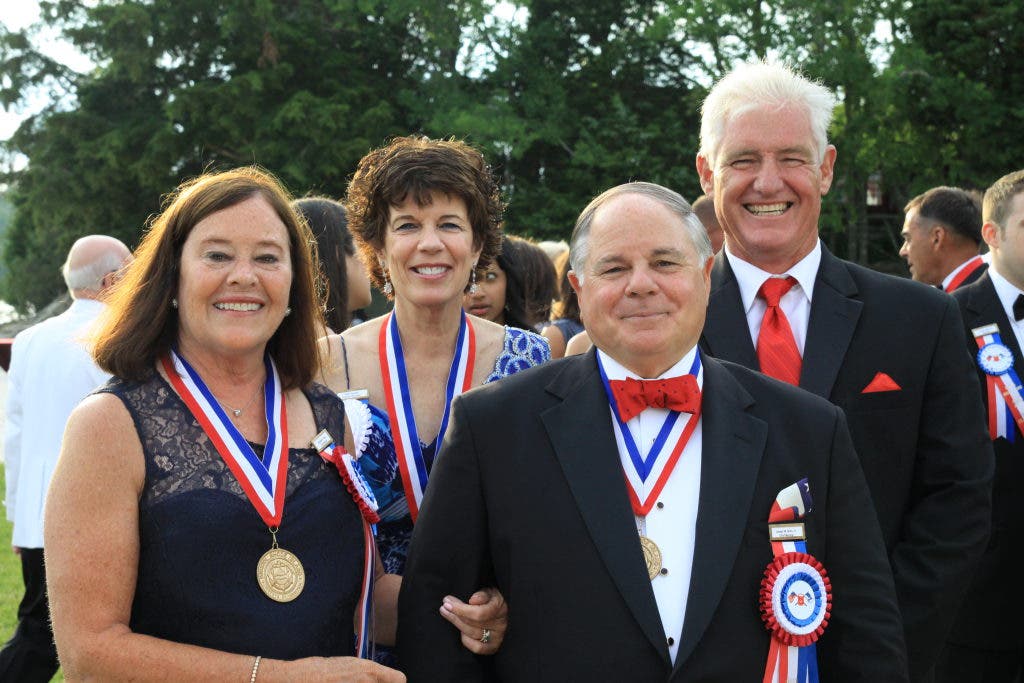


Every year since 1785, when the nation’s natal day rolls around, organized “exercises” where prayers of thanksgiving, oratorical praise for the principles of liberty and freedom, combined with music and singing are performed.
Official town records and copies of the public press from early to mid-1800s have been searched and they yield much valuable information. Now, most of the gaps in the history of Bristol’s celebrated Independence Day observances can be filled. The names of participants and the dates and types of events presented here are as complete and correct as they can be, until other facts yet unknown to exist are discovered.
As you read on, you will discover that through the years 1815-1850, occasionally, groups of citizens took it upon themselves not only to celebrate the Fourth of July, but also to espouse their “holy cause” of Temperance! You will also discover the events that make the years 1815-1850 so significant to this history.
Find out what's happening in Bristol-Warrenfor free with the latest updates from Patch.
There are only six years during 1815-1850 in which no records of an officially appointed arrangements committee, a Chief Marshal, or an orator could be found; those years were 1818-1820, and 1831-1833; but, that does not necessarily mean that parades, celebrations or observances with oratory did not take place because other years are documented as not having an official committee, yet, parades and/or observances with prayers and orations were part of the activities of the day. During those 36 years one or more of the several temperance societies active in the town controlled seven celebrations. Not least among active organizers of the popular temperance movement was Mr. William H.S. Bayley, editor of the local weekly newspaper. His spirited editorials on the evils of strong drink were moving factors in forming the opinions of townsfolk. For more than a decade and one-half (1835-1850), even when the Town Council did appoint an official arrangements committee, the temperance societies took prominent places in the parades, and the themes of the speakers always managed to get around to the subject of abstinence from “spirituous liquors.”
Patriotic Exercises
The celebration of America’s birthday by the town of Bristol, Rhode Island really began as the town’s observance of “Patriotic Exercises,” a full day of organized proclamations of patriotic pride and thanksgiving through speech-making, prayer, music, and song.
Find out what's happening in Bristol-Warrenfor free with the latest updates from Patch.
The first such observance was conducted in 1785 under the guidance of the Reverend Doctor Henry Wight, Pastor of the Congregational Church of Christ in Bristol, a Revolutionary War veteran. Although these ceremonies have swelled in content over two-hundred-plus years, Bristol’s tradition of celebrating this kind of “Exercise” has changed little since the first orations and prayer offerings were delivered in the town’s Congregational Church.
During the nineteenth-century, citizens most often gathered at the various houses of worship to hear the oratory: 1854, St. Michael’s Episcopal Church; 1855, Congregational Church; 1857, Old Methodist Church. During the 1860s these gatherings took place at the Town Hall, but that may be misleading unless we mention that the Congregational Church building was donated to the town, for use as Town Hall. The July 4, 1895, and 1906, gatherings were held at the Opera House; but again, the strength of the Bristol tradition of Patriotic Exercises persists. The Opera House is none other than the same Church-Town Hall building, thus demonstrating the ease with which Bristolians, eager for the inspiring speeches and prayers, found their way to the designated meeting place¾no matter what its current function. In 1907, the Grand Army Hall was the site of the ceremonies; the following year the exercises returned to the Opera House. This same auditorium continued in use despite changes in location (the building was moved from the center of Bradford Street, to the side of the street), name, and function, until warn out, it was demolished in place, circa 1930
The traditional Exercises survived the demise of the original location for the ceremonies, as they moved quickly to the new Town Hall (1914), outside to the Town Common (1916), to the Hotel Belvedere (1924), and to several of the town’s public schools, until in 1951, the Exercises moved to Colt Memorial School, where the proud tradition continues.
The modern Patriotic Exercises open with the National Anthem sung by a soloist accompanied by the Band, and the pledge to the flag. Next, invocation prayers are offered by a member of the clergy from one of the Bristol churches followed by introduction of guests and dignitaries in attendance, and the young women chosen as are presented. Following the exchange of plaques and citations between the Town Administrator, commander of the visiting U.S. Navy ship and the Fourth of July Committee, a United States flag that has flown over the Nation’s Capitol is presented to that stalwart Bristol-born person who has traveled the greatest distance in order to be home for the Fourth of July festivities. Oratory by the Speaker of the Day and an address by the Chief Marshal close the ceremonies.
Today, as in previous centuries, the position of “Speaker of the Day” is a very honored one. Alas, originally the principal position in the day’s celebration it is now second to that of the Chief Marshal. The list of speakers has come to include many church officers and town officials, prominent barristers, captains of industry, distinguished educators, ranking military, and citizens¾favorite sons and daughters of Bristol.
Parade Origins
The idea of a “procession” or “parade” may have started simply as a walk by the celebrants to the Congregational Church to participate in the “Exercises of the Day,” or as a result of families, neighbors, and friends meeting at various places in town and proceeding in small groups to the meeting house. Eventually, these groups may have become more organized, forming a general procession, and later adding music. Perhaps the musicians were on their way to the exercises to lend their accompaniment to the patriotic and religious songs of the observances. This scenario of the origins of the parade may be considered accurate because until 1957 the parade always moved to the site of the patriotic exercises.
According to Town Council meeting minutes of 1815, an official Committee for Arrangements was appointed; this is the earliest record known of such a committee being formed. Since there are no records that indicate what the committee was tasked to arrange, it is fair to assume that the official town arrangements for the day included the usual oratory, music, amusements, and fireworks.
Between 1815 and 1850, the Town Council did not always appoint an official Committee for Arrangements; sometimes, there were non-official celebrations and parades and at other times there were no celebrations. This may seem a contradiction to the statement about an annual observance since 1785; but patriotic ceremonies with prayers of thanksgiving have always taken place.
We have numerous accounts of “young bloods” parading the streets, of “hooting and hollering” and the discharge of firearms on the “night before.” Displays of “Antiques and Horribles” would march at daybreak and young boys, in the various neighborhoods would gather, form themselves into a line, and march while banging on drums and tooting on conch shells, causing a racket at an early hour. Militia units met at their armories, paraded to the Town Common, and presented mock skirmishes.
Exactly when the idea came about of having one organized parade is not certain, but this multifaceted stream of marching citizens may have been one reason why the town Fathers decided to appoint a Chief Marshal, someone who could establish some order to the growing number of celebrating Bristolians.
What appears to have been the town’s first official Fourth of July parade is when, in 1826, Colonel Giles Luther was Chief Marshal, and Luke Daring headed the Arrangements Committee. This indicates that a parade had become an important and well-organized element of Bristol’s now traditional celebration of the day.
The Town’s charge to Luke Daring and the committee for the 50th anniversary (1826) was to “make all necessary arrangements for the celebration.” The sum of $30 was appropriated from the town treasury to defray expenses of the day; townsfolk thinking that amount might not be enough collected another $35 by public subscription. The Fourth of July in Bristol has always been met with generous public support.
Extensive research of public records yields no information for seven years (1827-1833), of names of Chief Marshals or anything else that would indicate there were official town-organized parades. Documentation reveals that, with only few exceptions since 1834, a parade has been part of Bristol’s Fourth of July celebration. Evidence exists to demonstrate that the several years since 1834 when there were no parades, were years when the country was experiencing hard economic times, or when a lack of funds may have been a reason to cancel the official parade. Another exception to the annual parade was in 1881. The elaborate celebration planned for the day, with William T.C. Wardwell as Chief Marshal, was not held because of the shocking assassination of President Garfield. The resulting feeling of respect due the Chief Executive forced the town to cancel that year’s festivities.
Originally, the parades seem to have consisted of two separate elements: “citizens” and “strangers.” Early parades included soldiers and sailors of the Revolution, the town militia, volunteer firefighters, elected town officials, clergy, and members of fraternal organizations. These would be the “citizens,” joined by such invited “strangers” as visiting militia members, including members of revolutionary war chartered units, elected state officials, firefighters taking part in the annual field day and muster competition, and invited fraternal organizations. We know who the marchers were because early sources refer to the procession as the Civic, Military, and Firemen’s Parade; with few exceptions, this has always been the parade’s title.